

Author: Kiley Wang
Mentor: Dr. Rosalyn Abbott
Manhasset Secondary School
Abstract
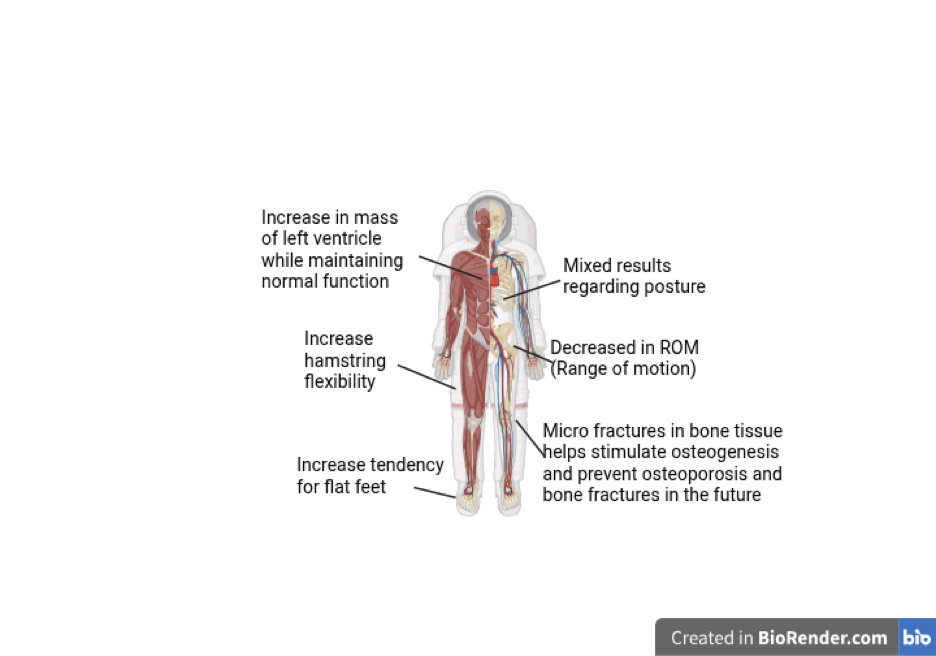
Participation in martial arts like karate has risen globally and therefore, interest in how training, kata, and kumite affects human physiology has also increased. Understanding how is vital for both optimizing performance and benefits and ensuring long-term health. Practicing karate produces beneficial effects on the human body, including increased left ventricular mass under normal function, enhanced hamstring and quadriceps flexibility and micro-fractures in bone tissue that stimulates and encourages osteogenesis, which can help protect the bones against osteoporosis and other bone diseases in the future. However, the exact impact of karate on the skeletal system remains very controversial regarding posture, and whether the effects are positive or negative. Studies demonstrate karate corrects existing posture defects in children while causing a decrease in ROM of the hip for elite-adult practitioners. The exact biomechanical trade-offs explaining these conflicting structural and physiological results have not been thoroughly synthesized. In this paper, we will show how karate has both beneficial and negative effects on the human body, where training can enhance internal health while also causing muscle fatigue and skeletal system problems. We found that karate training does benefit the cardiovascular system while increasing bone density, but permanent lumbar hypolordosis, a posterior pelvic tilt, and decreased ROM in hip rotation occur due to the low stance of elite kata practitioners. This contradicts the claim that karate is a purely corrective exercise modality. Our analysis shows that karate can improve internal health, yet compromise lower-body and spinal mechanics. Ultimately, these findings provide insight on the critical trade offs between athletic performance and structural health that must be balanced during training. These insights help redefine our understanding of the physiological effects of martial arts, combining mechanical strain with improved internal organ health. By proving this connection, it can eventually lead to the advancement of prevention techniques and advanced sports medicine protocols to help combat long-term musculoskeletal degeneration.
Introduction
Martial artists are a subset of athletes who practice self-defense and combat. All trained martial artists, regardless of their practice, should be proficient in both attacking and defending (Su et al., 2024). Today, martial arts is considered a part of the fitness industry with schools in every town. It’s estimated that 100 million people practice martial arts worldwide (Corcoran, 1997). In that group, approximately 73% of practitioners are male while the remaining are female.
Karate has one of the highest female participation rates at around 30 – 40%. Also, the largest age group practicing is adults ages 25 – 34 at about 22.1%, with children ages 6 – 11 close behind at 17.5%. The smallest age group of practitioners is ages 65 and up at less than 2.6% (Sports & Fitness Industry Association, 2024). Karate in particular is a martial art with a wide variety of styles and techniques that have evolved over time. The core physical and mental practices of karate also increase success in combat situations (Clements, 2011). Karate has mainly three components: kihon – which translates to basic karate techniques, kata – the sequence of offensive and defensive techniques and kumite – sparring/fighting an opponent. Kata is performed without interruption by the judges, as it is a predetermined sequence of karate techniques performed at maximal intensity. This, in turn, leads to kata having a great effect on body posture with kyphosis, lordosis, and increased range of motion (ROM) (Gaweł & Zwierzchowska, 2024). Kumite, on the other hand, requires a higher level of metabolic power than kata, as practitioners need explosive, powerful kicks to score points. Also, they are constantly interrupted between techniques to announce point penalties; therefore, kumite focuses on high-intensity anaerobic recovery rather than purely continuous aerobic endurance (Doria et al., 2009). By the 20th century, master practitioners were teaching karate worldwide (Piepiora, 2025). Also, karate practitioners require correct posture and body position for correct technique execution, which is essential to the art. This entails correct spinal posture, shoulder, head and hip placement in the physiological system. (Bălăiasa et al., 2024).
While karate is beneficial for all ages, with factors like bone mass, it has a greater effect on children, as they are still growing, and it provides preventive benefits as they grow older (Barbeta et al., 2019). Regarding gender, males do gain more bone mass, but both genders do gain bone mass (Barbeta et al., 2017). Also, practitioners of more elite levels and older than 19 often experience more hip pain than those of lower levels and younger (Mack et al., 2022). As karate becomes increasingly popular, it’s essential to understand the risks and benefits for the athlete’s body. The effects of karate on the human body can be varied (Figure 1). In this paper, I will discuss how karate affects bone mass and health; the cardiovascular system; the skeletal structure; and the muscular system.
A systematic search using Google Scholar and MDPI Open Access Journals using keywords such as ‘karate physiology’, ‘posture’, ‘bone mass’ and ‘cardiovascular’. Review articles were also considered during the selection process. Studies were included if they focused explicitly on the physiological effects of karate training on the human body.
Bone Mass and Density
Given the high impact nature of karate, its effects on bone health are highly dependent on the nature of contact. Controlled mechanical impact from karate training can cause microfractures in bone tissue, which stimulates osteogenesis and promotes beneficial effects on bone mass. This can help prevent osteoporosis. Acquiring bone mass during childhood and adolescence is vital for preventing osteopenia (low bone density) and future diseases such as osteoporosis and bone fractures in adulthood (Barbeta et al., 2019). But also, an incorrectly executed block during sparring can result in a direct collision between the arm and the incoming leg, causing fractures in the weaker bones of the arm (Su et al., 2024). Furthermore, while combat sports such as karate benefit all ages of people regarding bone mass, it’s also important to note there are other factors that could be the cause, like vitamins, calories and mineral intake and daily habits like smoking, alcohol and volume of exercise (Barbeta et al., 2019).
Research indicates a demographic debate on whether age or training volume controls the magnitude of skeletal benefits. On one hand, karate is beneficial for all ages with factors like bone mass, but it has a greater effect on children, as they are still growing, and it provides preventive measures as they grow older. In regard to gender, males do gain more bone mass, but both genders gain bone mass (Barbeta et al., 2017). On the other hand another study indicates an increase in bone mass primarily benefits adults due to longer training, higher impact forces from increased muscle mass, and fully matured skeletons. They argue it has a small effect on children because they are still growing, and skeletal energy supports growth rather than bone density (Drozdzowska et al., 2011). Despite this debate on age in relation to effects, studies confirm karate practice fundamentally alters bone remodeling profiles at a cellular level. A study conducted on 17 year old male practitioners also shows they have lower amount of C-terminal telopeptideotype I collagen (CTX) and osteocalcin; N-terminal propeptide procollagenase type 1 (P1NP) (bone resorption markers) in their system than a group of sedentary group of the same demographic. This means that the martial artist’s bones won’t break down as fast as the sedentary group (Nasri et al., 2015). In the end, while external life habits can affect individual outcome, the over consensus is that karate training acts as a powerful mechanical stimulus for bone mass optimization, though its exact effect on different age groups needs to be further studied.
Cardiovascular system
While Karate had mixed effects on bone mass and density, literature suggests only beneficial effects on the cardiovascular system. These systemic enhancements directly translate to a valid indicator of the cardiovascular system being a cooperative function is the rate called VO2max, which means the highest rate your body can consume oxygen in exercise (Impellizzeri & Marcora, 2007). It has also been shown that six months of karate classes increase the mass of the left ventricle, which pumps oxygenated blood throughout the body, while maintaining optimal function. This shows a safe increase in heart muscle in new practitioners and benefits heart parameters specifically in first-year students (K.k et al., 2024). Furthermore, a study conducted with 70 obese people split into 2 groups, 35 teenagers practicing 3 times a week for 12 weeks and the other 35 not practicing and receiving basic psychological and nutritional care, showed the karate group having a lower resting heart rate (beneficial), increased high-density lipoprotein cholesterol, as well as a reduction of low-density lipoprotein, and triglycerides. These findings suggest that karate training can improve cardiometabolic parameters and inflammation in overweight adolescents (de Souza, 2022).
Research consistently demonstrates baseline training benefits apply to sedentary individuals and accommodate the extreme, dynamic demands of competitive matches. A study showed that sedentary collegiate women who completed 10 weeks of 30 minutes of karate training could reach the minimal threshold for increasing cardiovascular fitness in that demographic. Showing how karate can enhance cardiovascular fitness, which most likely extends to other groups of people as well (Yoshimura & Imamura, 2010). While these cumulative adaptations lower overall strain at rest, the cardiovascular system remains highly responsive to acute athletic demands. It’s also important to note that karate has a significant effect on heart rate, with resting rate being 55.73 ± 5.17 beats/min rising to 144.20 ± 9.16 beats/min during a karate match and lower to 69.33 ± 5.96 beats/min 10 minutes after the match (Bhattacharya & Chatterjee, 2020). Finally, the consensus from the articles is that karate is excellent for the cardiovascular system; whether to the youth, adults, weight and intensity.
Skeletal structure
Karate has shown mixed effects on skeletal structure, with outcomes heavily influenced by the practitioner’s age, skill level, and training sub-discipline. Research strongly supports karate being highly corrective in the bodies of young, developing practitioners. A study with 20 practitioners ages 10-12 who exhibited postural defects, such as kyphotic attitude, nonstructural scoliosis and spinal straightness, were tested for 7 months. During this time, participants did exercises focusing on the trunk and limbs for 20 minutes during their regular training sessions. Afterward, their posture was measured and 60% of athletes displayed no postural defects while 40% only displayed minor deviations, proving how karate is beneficial to posture (Mischenko et al., 2020). Similarly, another study showed that 57 children aged 9-12 who practiced karate for 11 months reduced trunk rotation, thoracic kyphosis, lumbar lordosis angles, and shoulder asymmetry, therefore improving their posture (Brzęk et al., 2022). According to Bălăiasa et al., indicates that individuals experience major gains in body posture, decreased lower and upper spinal curves, and more balanced shoulder and hip alignment (Bălăiasa et al., 2024).
However, a contrast appears when examining elite, adult athletes, where positive adaptations for athletic performance can translate into chronic mechanical strain on the body. In karate, a flattened lower back (decreased lordosis) creates a highly stable, impact-resistant base for karate stances, which is great for performance (Bălăiasa et al., 2024).Yet, maintaining these adaptations require physiological strain. For example, a posterior pelvic tilt may be beneficial from a technical standpoint, as it allows the body to be in the correct position for stance and hips. But excessive posterior pelvic tilt can shift your head forward, cause lumbar hypolordosis, and disrupt the balance between the pelvis and spine, weakening core strength and placing extra stress on the knees and lower body (Gaweł & Zwierzchowska, 2024). One study of elite adult athletes found that elite-level karate training for 225 minutes induces acute changes, such as a decrease in lumbar lordosis (lumbar hypolordosis) and pelvic tilt, in the short term immediately after the session. Long-term, the body’s positioning changes with permanent lumbar hypolordosis, a posterior pelvic tilt, and a decreased ROM (range of motion) in internal and external hip rotation. This permanent loss of the natural lower back curve (lumbar hypolordosis) strains the knees and forces the head forward (Gaweł & Zwierzchowska, 2024).
This structural degradation is primarily driven by the constant contraction of the hip flexors required to maintain deep stances, a requirement that varies heavily by competitive style (Khorasani et al., 2020). For example, study involving 18 kata practitioners and 20 kumite practitioners revealed distinct structural differences based on training style: while kata athletes—who rely heavily on deep, static stances—showed a higher prevalence of flat feet, kumite practitioners displayed a greater tendency for increased lumbar lordosis (Hosseinzadeh et al., 2019).
As you can see, many studies contradict one another regarding how karate affects the human body. But that is due to the fact that karate cannot be generalized as a singular influence on the skeletal system. It’s clear that while training has a corrective and stabilizing effect for developing skeletal structures, elite-level mastery demands localized repetitive strain that compromises adult spinal and lower-body mechanics.
Muscular system
Karate is shown to enhance muscle strength, flexibility and core stability, yet can cause the risk of muscle fatigue and over use. Research supports that, to punch correctly, it’s important to rely on the whole-body momentum generated by the core muscle groups from a stable stance rather than on the muscles in the shoulder and elbow. Doing this and bracing the core muscles is beneficial as an “internal brace” for the spine (Su et al., 2024.). But in contrast, the extensions of the humeral joint of that limb during a basic punch could overload the muscular force deficits in the body’s segments and joints, which can cause musculoskeletal pain (Gaweł & Zwierzchowska, 2024). Independent of technique, karate is shown to have beneficial effects on the musculoskeletal system by reducing muscle tension, work-related overload syndromes, musculoskeletal diseases, occupation overuse syndromes while enhancing musculoskeletal strength and improve muscle tone (Mastnak, 2017; Piepiora, 2025).
Research reveals that effects rely heavily on the amount of training and the age of the practitioner. In youth development, karate acts as a powerful preventative tool against the natural loss of flexibility that typically occurs during pre-adolescence. For example, hamstring flexibility increased from 29° to 40.2° (11.2° gain) as well as increasing quadricep flexibility from 130.4° to 143.1° (12.7° increase) in a study of 14 boys ages 8-13. This showed a positive correlation between right knee extensor strength (Concentric Peak Extension) and knee flexor strength (Concentric Peak Flexion) (Violan et al., 1997). Yet, training in high volume with multiple repetitions of the same movements can also cause changes in the muscular system through external compensation: producing musculoskeletal pain in certain areas (Gaweł & Zwierzchowska, 2024). Elite karate practitioners also have greater strength in their quadriceps and hamstrings, but it’s worth noting that most people suggest that karate practitioners engage in additional training to improve muscular fitness (Shaw, 2020). Motion capture (MoCap), camera and sensor technology to analyze human movement patterns, revealed that experienced martial artists usually have a lower center of body mass, due to low stances and the large core muscles. But MoCap also revealed that repeat kicking can cause muscle fatigue and loss of proper form, which can result in higher injury risk. Specifically, they found that the primary hamstring muscle–the bicep femoris (BF)- is where the fatigue occurred rather than the quadriceps where the vastus lateralis (VL) and rectus femoris (RF) didn’t show any sign of peripheral fatigue (Quinzi et al., 2016). Ultimately, the muscular research reveals that karate is excellent for structural stability, core action and strength while causing muscle fatigue and localized overuse injuries due to repetitive movements and the large volume of training.
Conclusion
In conclusion, karate affects the physiological system is both positive and negative as it’s seen as a highly effective conditioning modality but also a source of mechanical stress. On one hand, karate has shown many physiological benefits across many body systems. Cardiovascularly, training is seen to safely increase left ventricle mass, while maintaining optimal pumping efficiency and improving oxygen consumption capacity (VO2max). In relation to bone mass and density, the high-impact nature of karate downregulates bone resorption markers like CTX and P1NP and creates microfractures in bones which encourages osteogenesis. These cellular changes permanently enhance adult bone density and significantly reduce long-term risks for age-related conditions like osteoporosis and others. Furthermore, karate can be a corrective tool in youth for successfully rectifying pre-exist postural defects like thoracic kyphosis and nonstructural scoliosis while increasing hamstring, quadriceps flexibility, musculoskeletal strength and improving muscle tone.
However, these physiological benefits exist alongside mechanical trade offs, specifically seen with competitive combat, high training volume and advanced age. The intense, repetitive movements of martial arts practice create specialized damaging effects on the musculoskeletal system. Maintaining the deep, static stances required in elite-level kata training can cause the constant contraction of the hip flexors, long-term permanent lumbar hypolordosis, a posterior pelvic tilt, and a severe reduction in internal and external hip rotation. While a flattened lower back provides a highly stable and impact resistant structure that is helpful for athletic performance, it can create a forward head posture, cause lumbar hypolordosis, lead to weakening core strength and placing extra stress on the knees and lower body. Additionally, high-frequency repetitive movements—such as continuous kicking— can cause muscle fatigue and more stress on the knees.
With these findings, karate cannot be classified simply as a purely corrective or an inherent structural hazard. Rather, its physiological outcomes are heavily dictated by age, training volume, and structural positioning. As karate gains popularity, it is essential to study its effects on practitioners’ health to practice safely and derive optimal benefits.
Works Cited
Amiri Khorasani, A., Amiri Khorasani, M. T., & Mohammadipour, F. (2020). Comparison of the maximum angular velocity of lower limb joints in different methods of Zenkutsu-dachi in karate. Journal of Sport Biomechanics, 6(1), 12–21. https://doi.org/10.32598/biomechanics.6.1.3
Bălăiasa, D.-G., Cojocariu, A., Betarice Aurelia, A., Neculaes, M., & Ungurean, B.-C. (2024). THE IMPACT OF KARATE ON BODY POSTURE: A SYNTHESIS OF SCIENTIFIC EVIDENCE. SPORT AND SOCIETY, 1–7.https://doi.org/10.36836/2024/02/18
Barbeta, C. J. D. O., Krahenbühl, T., Gonçalves, E. M., & Guerra-Júnior, G. (2019). EFFECTS OF COMBAT SPORTS ON BONE MASS: SYSTEMATIC REVIEW. Revista Brasileira de Medicina Do Esporte, 25(3), 240–244.https://doi.org/10.1590/1517-869220192503163185
Barbeta, C. J. de O., Gonçalves, E. M., Ribeiro, K. D. S., Ribeiro, R., Roman, E. P., & Guerra-Júnior, G. (2017). BONE MASS BY QUANTITATIVE ULTRASOUND OF FINGER PHALANGES IN YOUNG KARATE PRACTITIONERS. Revista Paulista De Pediatria: Orgao Oficial Da Sociedade De Pediatria De Sao Paulo, 35(4), 436–442.https://doi.org/10.1590/1984-0462/;2017;35;4;00003
Bhattacharya, P., & Chatterjee, S. (2020). Immediate Effect of Single Bout of Karate Exercise on Heart Rate. In M. H. A. Hassan, A. M. Che Muhamed, N. F. Mohd Ali, D. K. C. Lian, K. L. Yee, N. S. Safii, S. M. Yusof, & N. F. M. Fauzi (Eds.), Enhancing Health and Sports Performance by Design (pp. 223–234). Springer Singapore.https://doi.org/10.1007/978-981-15-3270-2_25
Brzęk, A., Knapik, A., Brzęk, B., Niemiec, T., Przygodzki, P., Plinta, R., & Szyluk, K. (2022). Evaluation of Posturometric Parameters in Children and Youth Who Practice Karate: Prospective Cross-Sectional Study. International Journal of Environmental Research and Public Health (or BioMed Research International), 19(13), 7781 (or Art. ID 5432743).https://doi.org/10.3390/ijerph19137781
Clements, J. (2011). The Humanist Component within Renaissance Martial Arts Teachings—Ido Movement for Culture. Journal of Martial Arts Anthropology.https://imcjournal.com/index.php/en/volume-xi-2011/contents-number-2/432-the-humanist-component-within-renaissance-martial-arts-teachings
Corcoran, J. (with Graden, J.). (1997). The American Council on Martial Arts Instructor Certification Manual. Graden Media Group.
de Souza, R. A. (2022). Effects of Karate Training on Cardiovascular Risk Factors and Oxidative Stress in Obese Adolescents. Pediatric Exercise Science, 34(2), 85–92.https://doi.org/10.1123/pes.2021-0074
Doria, C., Veicsteinas, A., Limonta, E., Aschieri, P., Maggioni, M. A., Eusebi, F., Fanò, G., & Pietrangelo, T. (2009). Energetics of karate (kata and kumite techniques) in top-level athletes. European Journal of Applied Physiology, 107(5), 603–610.https://doi.org/10.1007/s00421-009-1154-1
Drozdzowska, B., Pluskiewicz, W., & Skiba, M. (2011). Skeletal status assessed by quantitative ultrasound at hand phalanges in karate practitioners. Journal of Clinical Densitometry, 14(3), 312–317.
Gaweł, E., & Zwierzchowska, A. (2024). The Acute and Long-Term Effects of Olympic Karate Kata Training on Structural and Functional Changes in the Body Posture of Polish National Team Athletes. Sports, 12(2), 55.https://doi.org/10.3390/sports12020055
Hosseinzadeh, B., Zandi, S., & Baban, K. (2019). Common postures and sport injuries in elite karate athletes. Journal for Research in Sport Rehabilitation, 7(13), 111–123.https://doi.org/10.22084/rsr.2019.19156.1455
Impellizzeri, F. M., & Marcora, S. M. (2007). The Physiology of Mountain Biking: Sports Medicine, 37(1), 59–71.https://doi.org/10.2165/00007256-200737010-00005
K.k, S., A.v, D., I.n, M., & O.a, R. (2024). Influence of karate training lessons on functional parameters of the heart in first-year students. Theory and Practice of Physical Culture, (1), 28–30.http://tpfk.ru/index.php/TPPC/article/view/924
Mack, A. Q., Ankem, H. K., Kyin, C., Jimenez, A. E., Saks, B. R., Sabetian, P. W., Knott, P., Lall, A. C., & Domb, B. G. (2022). Hip Pain Increases With Age and Experience Level in Adult Karate Athletes: A Statewide Survey Study. Arthroscopy, Sports Medicine, and Rehabilitation, 4(2), e325–e333.https://doi.org/10.1016/j.asmr.2021.10.003
Mastnak, W. (2017). Karate-based prevention of work-related musculoskeletal syndromes: A study on the possible benefits of martial arts in sports medicine and for occupational health. Sciences for Health, 13(1), 1–8.https://doi.org/10.1007/s11332-016-0331-5
Mischenko, N., Kolokoltsev, M., Romanova, E., Ilyina, G., Kotlyar, N., Tsapov, E., & Ustselemova, N. (2020). Posture correction methods and physical qualities development in 10–12-year-old karate athletes. Journal of Physical Education and Sport (JPES), 20(Supplement issue 6), 3146–3152.https://efsupit.ro/images/stories/noiembrie2020/Art%20426.pdf
Nasri, R., Hassen-Zrour, S., & Rebai, H. (2015). Combat sports practice favors bone mineral density among adolescent male athletes. Journal of Clinical Densitometry, 18(1), 54–59.https://doi.org/10.1016/j.jocd.2013.08.016
Piepiora, P. A. (2025). The Health Effects of Karate Training: A Review of 21st Century Research. Healthcare, 13(2), 118.https://doi.org/10.3390/healthcare13020118
Quinzi, F., Camomilla, V., Di Mario, A., Felici, F., & Sbriccoli, P. (2016). Repeated Kicking Actions in Karate: Effect on Technical Execution in Elite Practitioners. International Journal of Sports Physiology and Performance, 11(3), 363–369.https://doi.org/10.1123/ijspp.2015-0162
Shaw, I. (2020). Lower-body strength, power and flexibility in karateka: Implications for musculoskeletal health. Archives of Budo, 16.https://archbudo.eu/index.php/latest-publication/2020-volume-16
Sports & Fitness Industry Association. (2024). 2024 U.S. Martial Arts Participation and Demographic Trends Report (Single Sport Report Series). SFIA Research Core.https://sfia.org
Su, A. W., Johns, W. L., & Bansal, S. (2024). Martial Arts: Orthopaedic Injuries and Related Biomechanics. The Journal of the American Academy of Orthopaedic Surgeons, 32(1), e1–e12.https://doi.org/10.5435/JAAOS-D-23-00261
Violan, M. A., Small, E. W., Zetaruk, M. N., & Micheli, L. J. (1997). The Effect of Karate Training on Flexibility, Muscle Strength, and Balance in 8- to 13-Year-Old Boys. Pediatric Exercise Science, 9(1), 55–64.https://doi.org/10.1123/pes.9.1.55
Yoshimura, Y., & Imamura, H. (2010). Effects of Basic Karate Exercises on Maximal Oxygen Uptake in Sedentary Collegiate Women. Journal of Health Science, 56(6), 721–726.https://doi.org/10.1248/jhs.56.721
About the author
Kiley Wang
Kiley Wang is a senior at Manhasset High School in Long Island, New York. She is drawn to the medical field and hopes to pursue a career as a doctor. A dedicated musician, Kiley sings in the school’s Select Ensemble, plays flute in her school’s marching and holiday bands and recently earned All-State Flute selection in her home state New York.
She has also trained in a Korean martial art since she was 5 years old and now holds a 2nd-degree black belt. She now teaches karate to children at her home studio while also doing academic tutoring in her free time.