

Author: Zubin Narula-Green
Mentor: Professor Kurt Teichert
United Nations International School
Abstract
The South Bronx is one of New York City’s most diverse and densely populated neighborhoods and hosts a range of industrial facilities and highways that serve the city. These facilities affect the health of residents in the South Bronx, who face immense environmental burdens, including air pollution, water contamination, and loss of green space. Addressing these issues requires examining their historical roots, identifying current patterns and causes, and highlighting the community-led efforts already underway to fight environmental injustices in the area. This analysis reveals that while the South Bronx continues to contend with ecological harms, community-driven initiatives and resilience play a crucial role in addressing local inequities. It also identifies the need for equitable urban planning and policy interventions to advance environmental justice in the South Bronx and similar communities.
Introduction to The South Bronx
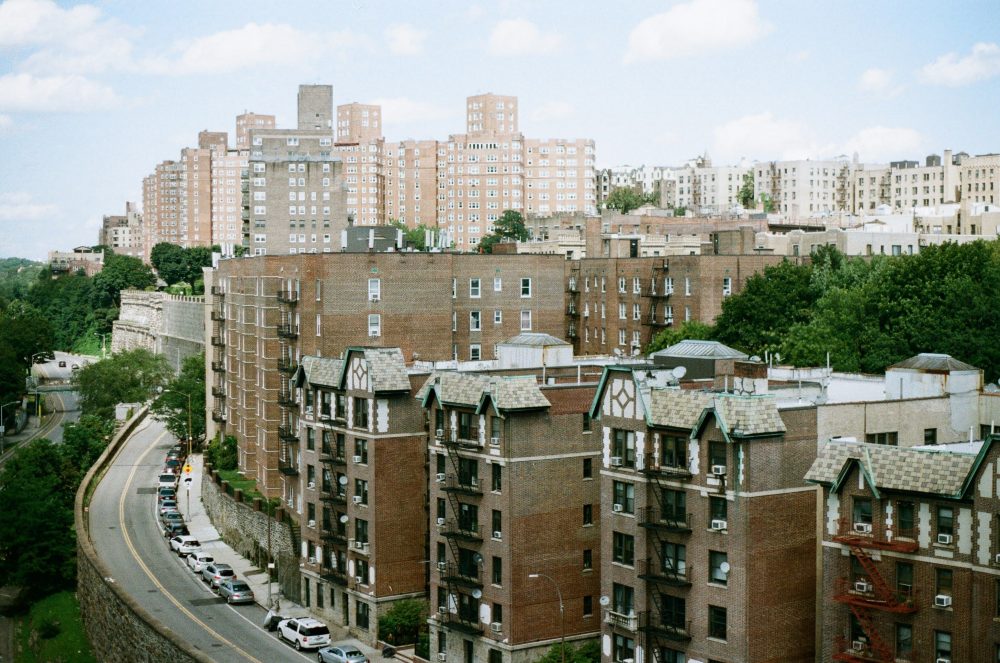
The South Bronx is a densely populated urban area in New York City bordering Bronx Park and the Bronx River. This region serves as a critical intersection between urban development and the health of natural ecosystems, reflecting broader challenges faced by communities throughout the South Bronx. Accordingly, land use has been a source of controversy throughout NYC’s rapid rise to one of the world’s most notable cities for its economic and cultural riches. Use of the land as a hub for industrial infrastructure, at the expense of expanded greenspace for community residents, is evidenced by the construction of the Cross Bronx Expressway and the Sheridan Expressway (now Sheridan Boulevard) from the 1950s to the 1980s, which tore through neighborhoods to provide benefits to communities and companies that reside elsewhere. These major roads have affected environmental conditions in communities adjacent to or within the South Bronx, with the most prominent examples being consistently poor air quality, increased heat exposure, and greater vulnerability to climate-related impacts. Demographically, the locality is made up of predominantly low-income communities of color,
populations that have long faced socio-economic disruptions and challenges. Because of this unique combination of dense urban development and environmental challenges, the South Bronx neighborhood provides a valuable case study for examining environmental justice and community-led climate resilience in New York City.
The History of Environmental Racism
The disproportionate exposure to ecological harms that the South Bronx faces is not accidental. For decades, urban planning officials have purposefully sited toxic or hazardous facilities in communities of color, with one of the most frequent places being the South Bronx. This process is often referred to as environmental racism, and it has been a growing issue.
According to South Bronx Unite, a community-led organization that advocates for social, environmental, and economic justice in neighborhoods of the South Bronx, the majority of The Waterfront Place, located in the Port Morris neighborhood of the South Bronx, sits on a 96-acre plot of public waterfront land leased in 1991 to Harlem River Yards. The plot is currently subleased to a range of industries, most notably FreshDirect, a 5,000-ton-per-day waste transfer station, and several fossil-fuel peaker power plants. This issue, in an area that has accumulated many hazardous facilities emitting pollutants into nearby residential areas, has been a longstanding one throughout the Bronx (“The Mott Haven-Port Morris Waterfront Plan”).
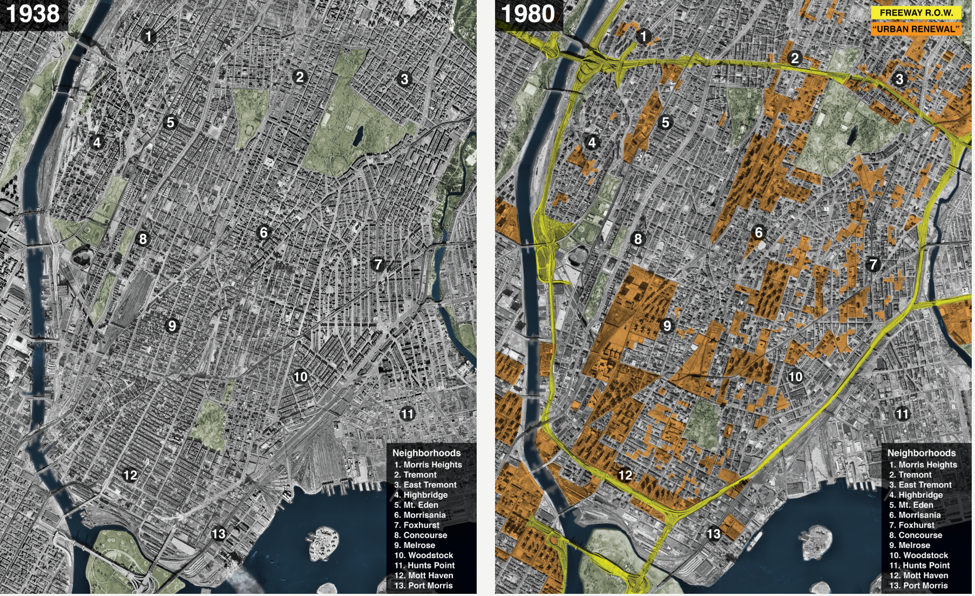
Figure 1: Freeways intersecting South Bronx neighborhoods. (“Reimagine the Cross Bronx Expressway Final Vision”)
Figure 1 above, included in a recent report by Segregation by Design, visualizes the rapid development in the South Bronx in the 1900s and further shows how prior city planning has foregrounded the environmental racism that groups in the Bronx now face. The report explains how the construction of expressways and urban projects in the 1950s and 1960s physically divided the South Bronx, displaced more than 60,000 residents, and hindered the progress of hundreds of homes and businesses, with the latter also bearing economic consequences. The Cross Bronx Expressway was constructed from 1948 to 1972 under Robert Moses, a U.S. state and municipal official who oversaw much of New York’s landscape transformation through public works planning. The expressway (the broad horizontal yellow highway, in Figure 1) split densely populated neighborhoods and demolished thousands of homes and businesses, harming much of the area’s economic potential and making it a key factor behind the low income rates and stifled economic growth the area now faces (“Reimagine the Cross Bronx Expressway Final Vision”). Despite backlash from tenant activism and community protests, the expressway was built, permanently altering the socioeconomic status of the South Bronx.
Asthma Alley and Its Economic Consequences
Unfortunately, the South Bronx’s designation as “Asthma Alley” is not an overstatement; the area has recorded asthma hospitalization rates up to five times the national average (“Asthma Alley”).
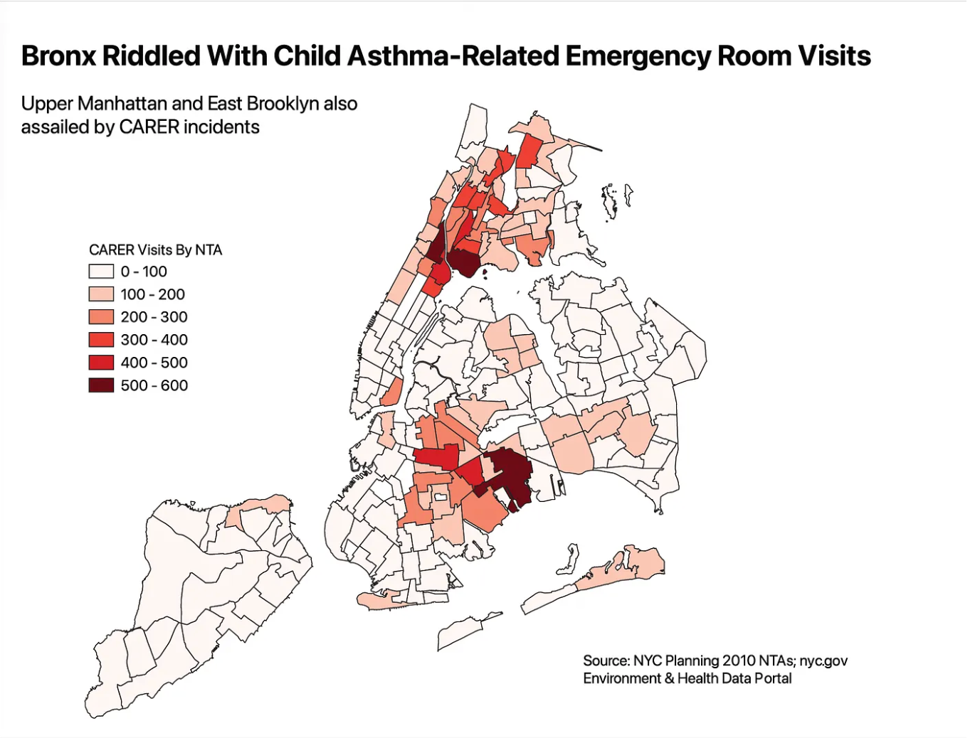
Figure 2: Distribution of Youth Asthma-Related Emergency Room Visits in NYC (Monegro)
Figure 2 illustrates the growing impact of air pollution in the South Bronx (highlighted within the black circle) by showing the stark distribution of Child Asthma-Related Emergency Room (CARER) visits across NYC neighborhoods. Highways release large amounts of nitrogen dioxide (NO₂) and fine particulate matter (PM₂.₅), mainly from tire wear, vehicle exhaust, and brake dust. Children in close proximity to these roadways repeatedly inhale these pollutants, which can clog airways and trigger inflammation, damage lung tissue, and increase the frequency and severity of asthma attacks (“Health – Respiratory Diseases.”). Hence, the density of major roads and highways in the South Bronx area correlates directly with asthma rates among youth. As seen in Figure 2, wealthier and predominantly whiter neighborhoods, such as Lower Manhattan, Williamsburg, or Long Island City, experience little to no CARER visits. Emergency room visits in lower-income areas, often in the Bronx, can be especially costly, as some families either cannot afford health insurance or are underinsured, resulting in high out-of-pocket costs. Repeated emergency room visits, medications, and follow-up care associated with childhood asthma can create significant financial strain. Out-of-pocket healthcare costs reduce the money families can spend on improving their standard of living and their children’s education. This financial burden associated with asthma treatment, coupled with the fact that caregivers often lose wages when caring for sick children, creates a cycle of poor health and financial hardship, which reinforces itself.
Why the South Bronx is a “Sacrifice Zone”
“Sacrifice zones” are often defined as populated areas with high levels of pollution and environmental hazards due to nearby toxic or polluting industrial facilities, because the health and safety of people in these communities are being sacrificed for the economic gains and prosperity of others (“Sacrifice Zones”). Historical racism is why many label the South Bronx as a sacrifice zone, highlighting the unequal consequences of industrial development for its residents.
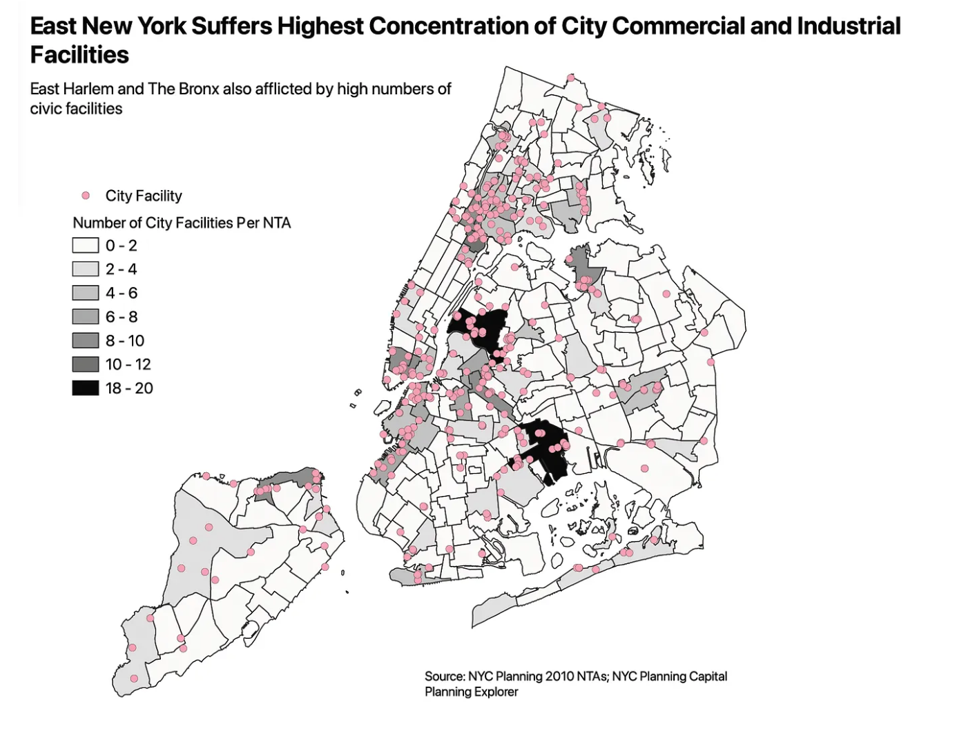
Figure 3: Map showing industrial facilities in Harlem and the Bronx. (Monegro)
The map above (Figure 3) shows the uneven distribution of industrial facilities in East Harlem and the Bronx (the area inside the black oval). The proposed benefit of these facilities, according to the NYC industrial plan, is that the overall concentration of facilities in the area supports 16,900 industrial jobs, accounting for 33% of all private-sector employment. However, these facilities have severe environmental impacts on nearby residents. In a 2018 interview, Joyce Hogi, then-president of the Bronx Council for Environmental Quality, discusses the implications of the facilities surrounding the 145th Street Bridge. She states that the neighborhood off the interstate bridge is among “the most polluted in America,” as it also maintains a recycling center that creates lines of garbage trucks up every street. Hogi explains that the community never wanted this development; instead, they advocated for a community park. She also frankly states that she feels her community is being “pissed on” and “not considered” when it comes to choices regarding development (Bronx Council for Environmental Quality), underlining how other forms of development that would enhance their quality of life, such as investment in green spaces, have been ignored by city officials.
Highlighting Key Trends Using Tree Equity Score
There is a clear relationship between proximity to industrial development and environmental and public health harms. Industrial facilities also benefit other parts of NYC, such as the Upper East Side, Brooklyn Heights, and Tribeca, which reputedly have some of the best waste management, food distribution, sanitation, and electricity services, all of which are made possible by the location of polluting facilities in the South Bronx. This leads to vast differences in many key variables between these affluent neighborhoods and areas throughout the South Bronx.
A valuable tool for measuring these discrepancies is the Tree Equity Score, an index created by American Forests, the oldest national nonprofit conservation organization in the United States. The score reflects whether a neighborhood has sufficient tree canopy, considering both existing tree cover and community characteristics such as income, race, health burdens, heat exposure, age, and unemployment.
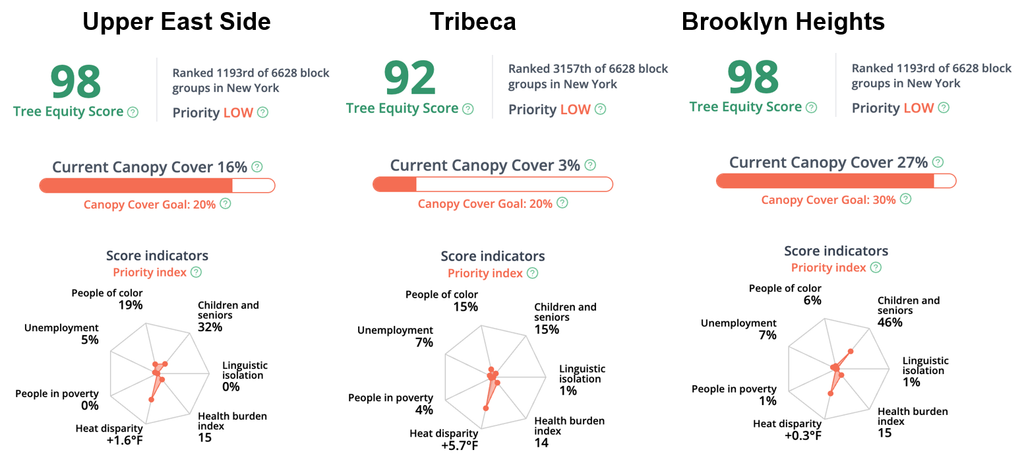
Figure 4: Tree Equity Scores in affluent NYC neighborhoods. (“Tree Equity Score”)
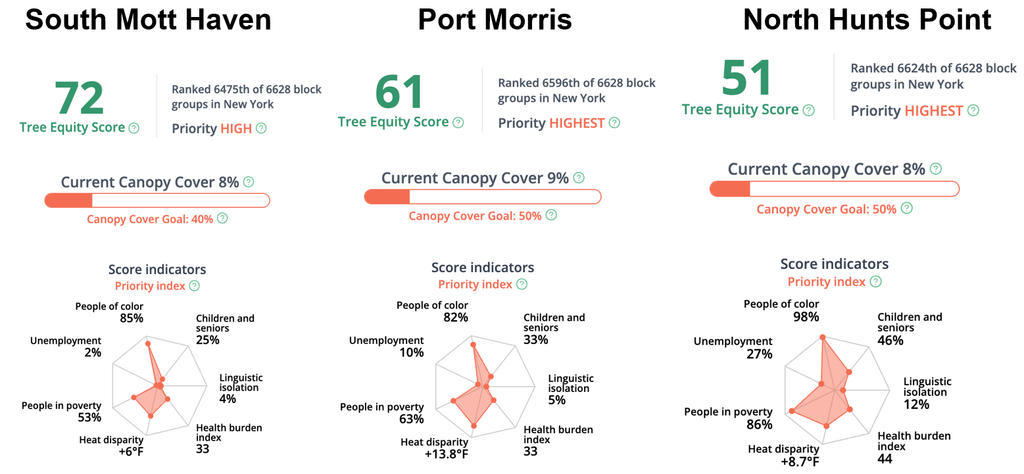
Figure 5: Tree Equity Scores in South Bronx neighborhoods. (“Tree Equity Score”)
Figures 4 and 5 compare the Tree Equity Scores of wealthier NYC neighborhoods with neighborhoods in the South Bronx. Each score is taken from a specific segment of city blocks within each neighborhood; however, these scores are indicative of the broader circumstances of each respective area. Despite discrepancies between variables in the two types of neighborhoods, some trends are apparent.
First is the correlation between race and poverty. The South Bronx neighborhoods, which have 82–98% people of color and 53–86% poverty rates, receive low Tree Equity Scores (51–72) and are designated as high- or highest-priority for canopy coverage. By contrast, affluent neighborhoods with 6–19% people of color and 0–4% poverty rates score 92–98 and are considered low priority.
Furthermore, communities with the greatest need have the least canopy coverage. South Bronx neighborhoods have only 8–9% tree canopy coverage, compared with a recommended 40–50%, whereas upscale areas have around 20–30% canopy coverage and already have higher overall equity scores. Neighborhoods most vulnerable to environmental and health risks are also the most underserved in terms of urban greenery.
Tree Equity Scores corroborate multiple forms of disadvantage, not just a lack of trees or canopy coverage. The South Bronx scores were consistently worse, along with unemployment, poverty rates, health burden indices, and heat disparities. This indicates that low tree equity is part of broader socio-environmental inequality, rather than an isolated environmental issue.
How Resilient is the South Bronx?
Resilience in any society or environment is important, as it ensures that a community or system can maintain stability in the face of disruptions. Resilience, in this case, can be assessed through the ecological, social, and infrastructural components of the South Bronx. Ecological resilience is perhaps the weakest of the three.
Ecological Resilience
As evidenced by tree equity data, the South Bronx lacks sufficient tree canopy coverage to remedy environmental harms. Higher canopy cover coincides with improved air quality, as increased tree canopy helps filter airborne pollutants and reduce particulate matter. A lack of tree cover and vegetation also impacts stormwater management. Combined sewer overflows (CSOs) are one of the South Bronx’s most persistent environmental challenges (Bronx River Alliance, “Green Infrastructure”). During heavy rainfall, the city’s combined sewer system becomes overwhelmed, causing untreated sewage mixed with stormwater to be discharged directly into the Bronx River, reducing water quality and damaging aquatic habitats. This leads to lower biodiversity. With fewer marine species and less vegetation, the ecosystem’s resilience to environmental damage is hindered. Because of CSOs, habitat fragmentation is extensive. A recent study of the Bronx River found benthic macro-invertebrate (aquatic) diversity to be extremely low, with only 2–7 species recorded at study sites and almost no pollution-sensitive species (Mahmud et al.).
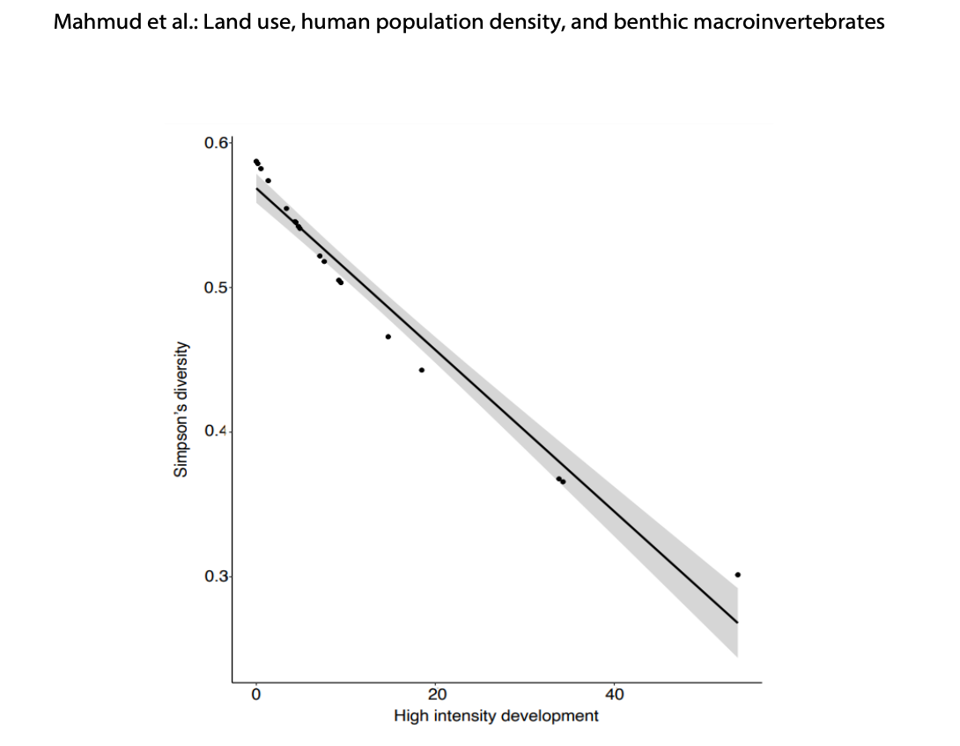
Figure 6: Graph: Development vs. Ecological Diversity (Mahmud et al.).
As shown in Figure 6, the team conducted a study on how development affects Simpson’s index of the Bronx River. The Simpson index ranges from 0 to 1 (0 indicating one species dominates the ecosystem, and 1 indicating an even distribution of many species throughout the ecosystem). Clearly, there is a negative correlation between development and ecological diversity. This highlights how limited tree coverage, CSO protection, and biodiversity constrain the ecological resilience of the South Bronx.
Social Resilience
The South Bronx’s social resilience is strengthened by grassroots organizations that have come together to advocate for a more equitable present and future for their community. The Green Space Program, for example, fights to reclaim the land the South Bronx lost to buildings in the 1960s and 1970s. Included in the initiative is the Maria Sola Community Garden. The Garden is part of New York State’s “Adopt-a-Highway” program, which began in the 1990s. In 2018, when many founding members of South Bronx Unite found it underused, they stepped in to help steward it. The Garden has created a space for initiatives such as pollinator planting, stormwater management, compost, and year-round neighborhood events (The Green Space Program — South Bronx Unite). Mothers on the Move (MOM), founded in 1982, works with Latina women in the South Bronx toward a sustainable future for younger generations. MOM and the Natural Resources Defense Council (NRDC) filed a public nuisance lawsuit against New York City and the New York Organic Fertilizer Company (NYOFCo) over years of sewage odors affecting Hunts Point residents. The resulting 2010 statement in a press release by the New York City Department of Environmental Protection ended the City’s shipments of sewage sludge to the NYOFCo facility, required stronger odor-control standards for future sludge-processing facilities, funded the restoration of 1.2 acres of waterfront green space adjacent to Barretto Point Park, and mandated an independent study of odor emissions from the Hunts Point wastewater treatment plant. The outcome of this case remains one of the most significant victories in the fight for environmental justice, demonstrating the value of community organizing and resistance (New York City Department of Environmental Protection).
Resilience of Current Infrastructure
Infrastructure resilience and the South Bronx’s productive capacity are limited. Bronx Park, Starlight, and Concrete Plant Park are different types of green infrastructure, each strengthening the resilience of the South Bronx in its own way. Bronx Park has a natural floodplain and restored river habitat, which stabilize riverbanks and help reduce intense urban heat during hotter periods. Starlight Park has rain gardens and infiltration basins, both of which reduce erosion and filter runoff during heavy rainfall. Concrete Plant Park is home to both native wetland vegetation and permeable green space, allowing residents to reconnect with the river and buffer flooding. While these South Bronx parks are effective at mitigating natural or seasonal harms, the effects of global warming have become increasingly severe, reducing their ability to meet future challenges. Additionally, the concentration of environmentally harmful facilities tends to outweigh the benefits of environmentally friendly or green infrastructure in the South Bronx, resulting in overall poor infrastructure resilience.
Case Studies of Solutions
The issues seen in the South Bronx, while unique, are also more broadly evident in other case studies in Northeast America, with two comparable examples in Philadelphia and Providence.
In Philadelphia, as in the South Bronx, there is a risk of billions of gallons of stormwater and diluted sewage flowing into local waterways each year. To address this, the Philadelphia Water Department has devised the “Green City, Clean Waters” initiative. Implemented in 2010, with all goals set to be met by 2036, the initiative primarily focuses on developing and introducing “Green Tools” (Sell). Green Tools help absorb sewage-laden runoff after periods of intense rainfall, proving crucial for a city like Philadelphia, situated between two major rivers.
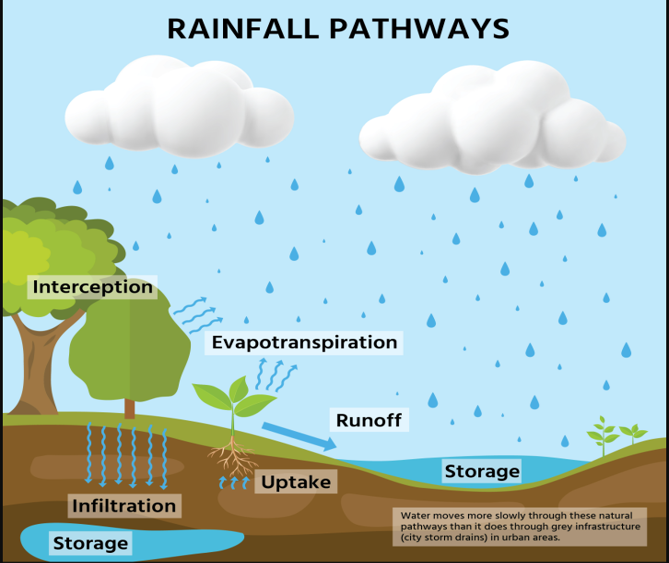
Figure 7: Diagram of green infrastructure types in Philadelphia. (“Green Infrastructure: BREC”)
Figure 7 visualizes the process of green tools and how they effectively sequester and minimize pollution in rivers. The most common types of green tools include rain gardens, bioswales, permeable pavements, green roofs, and urban tree canopies (“Green Infrastructure: BREC”).
The initiative brings greater benefits to the city as a whole. Environmentally, the increase in citywide greenery offsets much of the air pollution from car use, provides a natural means of cooling, with shade reducing the energy needed for widespread air conditioning, and improves ecosystem services such as pollination through an increase in native plants and flowers. Economically, the project creates local jobs, allowing Philadelphia youth to become more involved in the process; additionally, green spaces near residential areas can increase property values, and clean rivers encourage recreational tourism, boosting the local economy. Socially, “Green City, Clean Waters” increases access to green space, fostering community growth through more pleasant outdoor areas and collaboration in maintaining parks and neighborhood streets. Overall, it addresses all three pillars of sustainability—social, environmental, and economic (Purvis et al.)—for Philadelphia’s future.
The Providence Climate Justice Action Plan foregrounds a more social approach to addressing such environmental impacts. These consequences, extreme heat, flooding, poor air quality, and limited green space, are disproportionately experienced by low-income communities and communities of color (“Providence’s Climate Justice Plan.”), underscoring a parallel to the circumstances in the South Bronx. Examples include the inclusion of environmental justice organizations, youth leaders, and local advocacy groups, who worked alongside city officials from the start of the planning process. The city gave frontline communities a meaningful role that greatly influenced final policy decisions. An example of this was the creation of Green Justice Zones, in which residents helped identify priority neighborhoods and directed public funding toward necessary projects (“Providence”).
Proposed Plan for the South Bronx
Drawing on the successes in Providence and Philadelphia, a solution to many of the South Bronx issues could be to expand green infrastructure through community-led planning that prioritizes neighborhoods with the lowest Tree Equity Scores, while minimizing automobile traffic and the further development of major roadways.
EPA Environmental and Climate Justice Grants awarded around $1 million to the Bronx River Alliance in 2024 to improve heat mitigation and air quality through tree planting and rain gardens (Crawford). While improvements have been made, they have not been enough to combat the overall environmental conditions that have consistently worsened, with summers in particular becoming dangerously hot due to the combination of concentrated energy-intensive facilities and a lack of canopy cover. However, city planners have consistently rejected proposals to locate these types of facilities in other, wealthier areas. These facilities need to run continuously, as most of New York City relies on industries based in the South Bronx. It is therefore unlikely for these facilities to be shut down or relocated from the South Bronx.
There is an opportunity for further social advocacy and grants for the South Bronx community. Groups such as the U.S. Forest Service, the Kresge Foundation, the Surdna Foundation, and the JPB Foundation fund community-based environmental justice and green infrastructure projects. There are several tangible examples. In 2023, the U.S. Forest Service received $1.5 billion under the Inflation Reduction Act, which was subsequently converted into $1 billion in grants to community-based and tribal organizations across all 50 states (“Urban Forests”). More recently, in 2025, the Kresge Foundation reported giving out $160 million in grants, of which $38.4 million was designated for environmental causes (“Grants & Social Investments”). Lastly, in 2022, the Sundra Foundation approved one of its largest grants, $2.1 million to the Right to the City Alliance (“Grants Database), with the aim of funding sustainable and affordable homes (“Home – Right to the City”)
As demonstrated by the histories of both the Bronx River Alliance and South Bronx Unite, continuous advocacy against environmental racism and for climate justice yields tangible results. Hence, through sustained campaigning, and specific grant proposals to the previously listed organizations, these organizations can gather the required funding for street tree planting, bioswales, rain gardens, and the expansion of green roofs, ensuring that future community efforts for environmental justice in New York City prioritize the communities that currently and historically bear a disproportionate share of New York City’s environmental burdens, with perhaps the most important being the South Bronx.
References
“‘Asthma Alley’: Why Minorities Bear the Burden of Pollution Inequity Caused by White People.”
The Guardian, Guardian News and Media, 4 Apr. 2019, www.theguardian.com/us-news/2019/apr/04/new-york-south-bronx-minorities-pollution-inequity?scrlybrkr=66c948bf.
Bronx Council for Environmental Quality. “Gateway to the South Bronx Pollution.” Bronx Council for Environmental Quality, 3 May 2018, https://bceq.org/2018/05/03/gateway-to-the-south-bronx-pollution/.
Bronx River Alliance. “Green Infrastructure.” Bronx River Alliance, https://bronxriver.org/restoration-access/restoring-the-ecology/green-infrastructure.
“Climate Justice in Providence.” One Square World, www.onesquareworld.org/climate-justice-in-providence. Accessed 10 Aug. 2026.
Crawford, Iris M. “EPA Announces Nearly $1 Million to Support Involving South Bronx Communities in Climate Resiliency Planning.” EPA, Environmental Protection Agency, 25 July 2024, www.epa.gov/newsreleases/epa-announces-nearly-1-million-support-involving-south-bronx-communities-climate?
“Grants Database.” Surdna Foundation, 11 May 2020, surdna.org/grants-database/?program_id=11&sub_program_id=all&grantsYear=all&sort_column=amount_recommended&grantsSearch=.
“Grants & Social Investments.” Kresge Foundation, 6 Aug. 2026, kresge.org/grants-social-investments/.
“Green Infrastructure: BREC.” BREC.Org, www.brec.org/green-infrastructure. Accessed 3 Aug. 2026.
“Home – Right to the City.” Home – Right to the City, www.righttothecity.org/. Accessed 11 Aug. 2026.
Mahmud, Meleha, et al. “The Impact of Land Use and Human Population Density on Benthic Macroinvertebrate Diversity in a Highly Urbanized River.” CATE – Cities and the Environment, Digital Commons, May 2024, digitalcommons.lmu.edu/cate/vol17/iss1/5/.
Monegro, Taína. “Asthma Alley: The Health Plight of Being BIPOC in Urban Spaces.” Medium, 2025, https://medium.com/@tm4733/asthma-ally-the-health-plight-of-being-bipoc-in-urban-spaces-4a623c0d495b. Accessed 17 July 2026.
New York City Department of Environmental Protection. Statement of NYC Environmental Protection Commissioner Cas Holloway On Agreement with Mothers on the Move to Study Air Quality and Increase Open Space in Hunts Point (June 30, 2010). https://www.nyc.gov/html/dep/html/press_releases/10-66pr.shtml. Accessed 27 July 2026.
NYC Industrial Plan Final Report, www.nyc.gov/assets/planning/downloads/pdf/our-work/plans/citywide/nyc-industrial-plan/nyc-industrial-plan-final.pdf. Accessed 20 July 2026.
Purvis, B., et al. “Three Pillars of Sustainability: In Search of Conceptual Origins.” White Rose Research Online, The Author(s) 2018, 3 Sept. 2018, eprints.whiterose.ac.uk/id/eprint/136715/7/Purvis2018_Article_ThreePillarsOfSustainabilityIn.pd.
“Providence.” ACEEE, 24 Jan. 2025, database.aceee.org/node/113?
“Providence’s Climate Justice Plan.” City of Providence, 7 July 2026, www.providenceri.gov/sustainability/climate-justice-action-plan-providence/.
“Providence Comprehensive Plan.” RIDSP, 22 Jan. 2026, planning.ri.gov/sites/g/files/xkgbur826/files/2026-04/Providence%20Plan%20Final%20State%20Approved%201.29.2026.pdf.
“Reimagine the Cross Bronx Expressway Final Vision.” Reimagine the Bronx Park Expressway, NYC PLANNING, www.nyc.gov/html/dot/downloads/pdf/reimagine-cross-bronx-final-vision.pdf. Accessed 19 July 2026.
“Sacrifice Zones.” The Climate Reality Project, 13 July 2026, https://www.climaterealityproject.org/sacrifice-zones.
Sell, Lauren. “Green City, Clean Waters.” Philadelphia Water Department, Philadelphia Water Department, 4 Mar. 2026, water.phila.gov/green-city/.
The Green Space Program — South Bronx Unite, www.southbronxunite.org/land-reclamation. Accessed 27 July 2026.
“The Mott Haven-Port Morris Waterfront Plan — South Bronx Unite.” Edited by South Bronx Unite, The Fight for Clean Air in the South Bronx, https://www.southbronxunite.org/community-managed-waterfront. Accessed 18 July 2026.
The South Bronx — Segregation by Design, www.segregationbydesign.com/the-bronx/the-south-bronx. Accessed 18 July 2026.
Tree Equity Score. National Map, www.treeequityscore.org/. Accessed 24 July 2026.
“Urban Forests.” US Forest Service, www.fs.usda.gov/managing-land/urban-forests. Accessed 11 Aug. 2026.
U.S. Environmental Protection Agency. “Health – Respiratory Diseases.” America’s Children and the Environment, U.S. Environmental Protection Agency, 13 Apr. 2026, https://www.epa.gov/americaschildrenenvironment/health-respiratory-diseases. Accessed 17 July 2026.
About the author

Zubin Narula-Green
Zubin Narula-Green is a senior at the United Nations International School, where he is pursuing the International Baccalaureate (IB) diploma. In recent years, Zubin has taken a strong interest in humanitarian and environmental issues and has become a passionate advocate for the rights of marginalized communities, including those highlighted in his work on the South Bronx. In the future, Zubin hopes to study Environmental Economics with a focus on Sustainable Development.