


Author: Maggie McIntyre
Mentor: Dr. Hong Pan
Glenbard South High School
Abstract
Western dietary patterns, characterized by high intake of saturated fats, refined carbohydrates, and added sugars and low intake of dietary fiber, have been associated with metabolic dysfunction and changes in the gut microbiome. This study investigated whether Western diet consumption was associated with alterations in the cecal metabolome of mice using publicly available metabolomics data from the NIH Common Fund Metabolomics Workbench.
Cecal metabolite profiles from mice fed Chow, high-sugar, high-fat, or high-fat high-sugar diets were analyzed using principal component analysis (PCA), one-way analysis of variance (ANOVA), Tukey’s honestly significant difference test, and linear discriminant analysis (LDA). PCA revealed separation between Chow and Western diet samples, with the first two principal components explaining 42.7% of total metabolic variation.
Multiple metabolites differed significantly among dietary groups, including riboflavin, methionine, and pyruvate. These three metabolites were selected for further interpretation because they represent vitamin, amino acid, and cellular energy metabolism, respectively. Riboflavin, methionine, and pyruvate were 4.1-, 2.9-, and 6.8-fold more abundant in Western diet samples than in Chow samples. Overall, the findings demonstrate that Western diet consumption is associated with substantial alterations in the murine cecal metabolome and suggest changes across multiple metabolic pathways.
Introduction
Diet impacts significantly more than the amount of energy a person consumes. The types of nutrients regularly consumed influence metabolic pathways, immune activity, inflammation, and the microorganisms inhabiting the gastrointestinal tract (GIT) (Hills et al., 2019). The Western diet (WD) is characterized by high consumption of saturated fats, refined carbohydrates, red meat, and added sugars, accompanied by low intake of fruits, vegetables, whole grains, and dietary fiber. This dietary pattern is strongly linked to obesity, insulin resistance, cardiovascular disease, metabolic syndrome, and type 2 diabetes (David et al., 2014). Although excessive caloric intake contributes to these conditions, previous studies show that Western diets affect immune function, intestinal barrier integrity, mitochondrial activity, and systemic inflammation through interactions between the host and the gut microbiome (Mills et al., 2019).
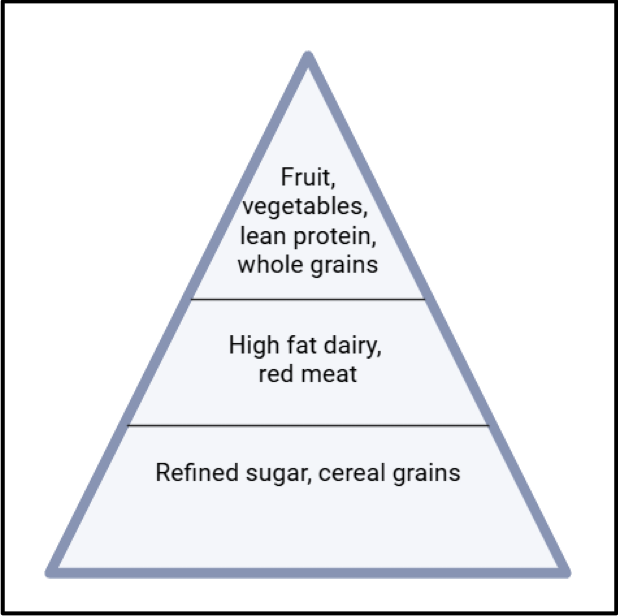
Figure 1. The figure illustrates the standard composition of a Western Diet, characterized by high intake of saturated fats, refined carbohydrates, processed meats, and added sugars, with relatively low consumption of fruits, vegetables, whole grains, and dietary fiber. This dietary pattern has been associated with obesity, insulin resistance, cardiovascular disease, and metabolic dysfunction.
The gut microbiome is the community of all microbes and their genes that live in the GIT. The human GIT houses an estimated 100 trillion microorganisms, including bacteria, viruses, yeasts, fungi, and several other microbes. A variety of factors influence the gut microbiome, including diet, age, genetics, lifestyle, and environmental exposures, making its composition and function highly personalized (Hills et al., 2019). The community of microbes in the gut plays a crucial role in several bodily functions. Predominantly, the gut microbiome aids in nutrient and drug metabolism.
Metabolism is defined by the biological reactions responsible for converting nutrients into energy required for cellular function (Lamichhane et al., 2018). Metabolites are defined as products created when the body breaks down food, drugs, or chemicals, or its own tissue. Metabolomics is the study of metabolites present within biological systems (Yang et al., 2019). Because metabolites represent the end products of metabolism, changes in metabolite abundance provide insight into the effects of dietary patterns on host health (Yang et al., 2019). High-throughput techniques such as liquid chromatography-mass spectrometry (LC-MS) allow hundreds to thousands of metabolites to be quantified simultaneously (Yang et al., 2019).
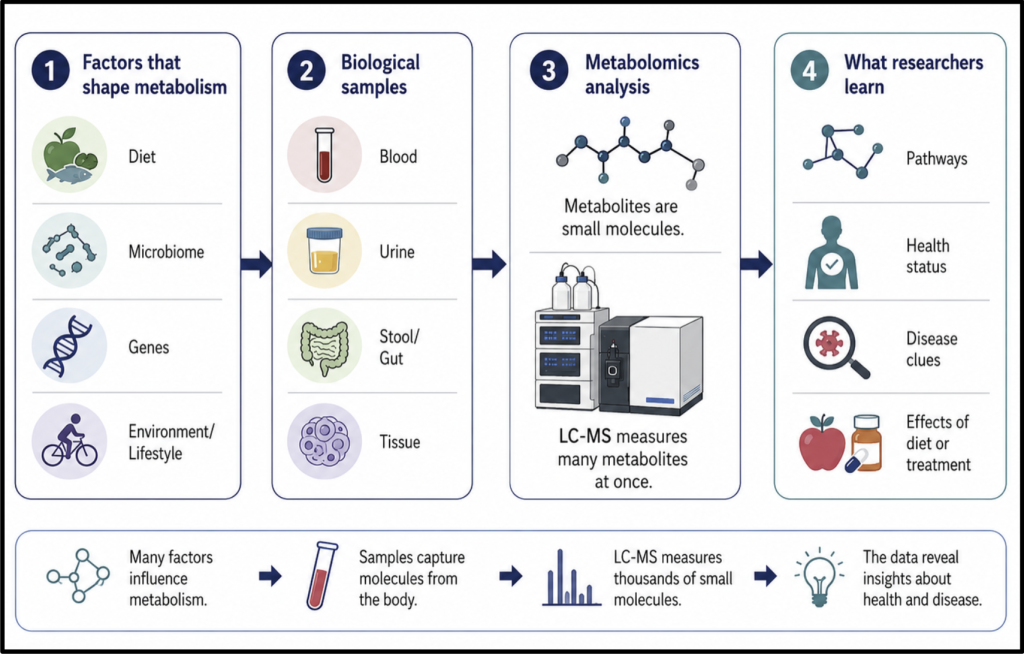
Figure 2. This figure provides a summary of metabolomics, the study of small molecules, or metabolites, found in biological samples. Biological and environmental factors influence the metabolites found in biological samples. These metabolites can be measured using techniques such as LC-MS and analyzed to identify differences in metabolic pathways and physiological processes.
The gut microbiome and host metabolism are connected through the production of microbial metabolites (Li et al., 2026). Gut microbes convert nutrients from food into bioactive compounds that can influence a variety of host processes, including glucose homeostasis, lipid metabolism, amino acid metabolism, immune signaling, and energy production (Lamichhane et al., 2018). Consequently, dietary changes that alter microbial composition also alter the host metabolome.
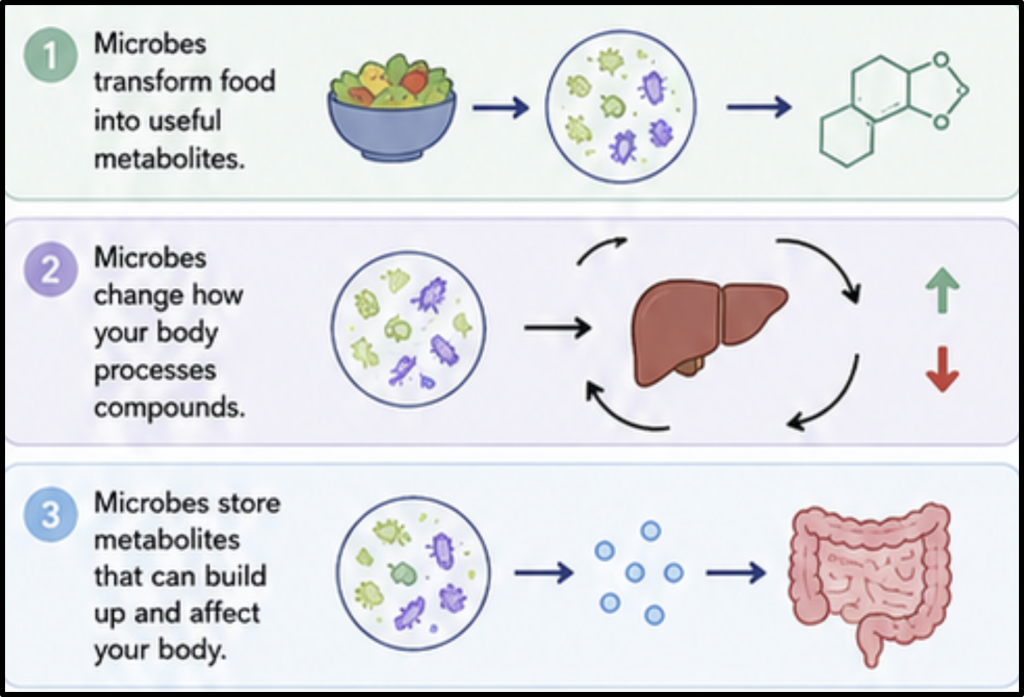
Figure 3. The figure illustrates the multiple ways in which gut microorganisms influence host metabolism. Gut microbes can directly transform dietary compounds into active or inactive metabolites, indirectly alter host metabolic pathways, or accumulate metabolites that affect physiological function. These interactions link dietary composition to metabolic health.
Although previous research has demonstrated that Western diets alter both gut microbial communities and host metabolism, the specific metabolic consequences are not completely understood. The objective of this study was to investigate whether consumption of a Western diet significantly alters cecal metabolite profiles in mice using publicly available metabolomics data. Principal component analysis, one-way analysis of variance (ANOVA), Tukey’s honestly significant difference testing, and linear discriminant analysis (LDA) were used to identify metabolites that contribute most strongly to metabolic differences among dietary groups. We hypothesized that Western diet consumption would produce a distinct cecal metabolite profile compared with the Chow diet
Methods
Metabolomics data were obtained from the publicly available NIH Common Fund Metabolomics Workbench (Study ID: ST003695). The dataset included cecal metabolite profiles from mice fed one of four diets: Chow (control), High Sugar Diet (HSD), High Fat Diet (HFD), and High Fat, High Sugar Diet (HFHSD), also referred to as a Western diet (WD). Metabolites were measured using liquid chromatography-mass spectrometry (LC-MS) in both positive and negative ionization modes. Each sample represented one mouse.
Data preprocessing and statistical analyses were performed in RStudio. Positive and negative ion mode datasets were imported separately and merged into a single metabolite matrix. Missing values were replaced with the median value for each metabolite, negative values were replaced with zero, and metabolite abundances were transformed using log₂(x + 1) to reduce the influence of extreme values. Metabolites with no variation across samples were removed before analysis.
Principal component analysis (PCA) was used to visualize the overarching patterns in the metabolomics data. Because the focus of this study was the effect of a Western diet, PCA was performed using only the Chow and WD samples. PCA loadings were used to identify metabolites that contributed most strongly to sample separation. A PCA biplot displaying the ten strongest loading vectors was generated, and cos² values were calculated to evaluate how well each metabolite was represented by the first two principal components.
One-way analysis of variance (ANOVA) was performed for each metabolite using all four dietary groups (Chow, HSD, HFD, and WD) to identify metabolites whose abundances differed significantly among diets. To reduce false-positive results caused by multiple testing, p-values were adjusted using the Benjamini–Hochberg false discovery rate (FDR) method. For metabolites with significant ANOVA results, Tukey’s Honestly Significant Difference (HSD) test was performed to identify which pairs of diet groups differed significantly.
Linear discriminant analysis (LDA) was used to identify metabolites that differed most significantly between the Chow and WD groups. Metabolites were first ranked using the ANOVA results, and the highest-ranking metabolites were selected as predictors for the LDA model. Standardized LD1 coefficients were examined to determine which metabolites contributed most strongly to the observed separation.
Results
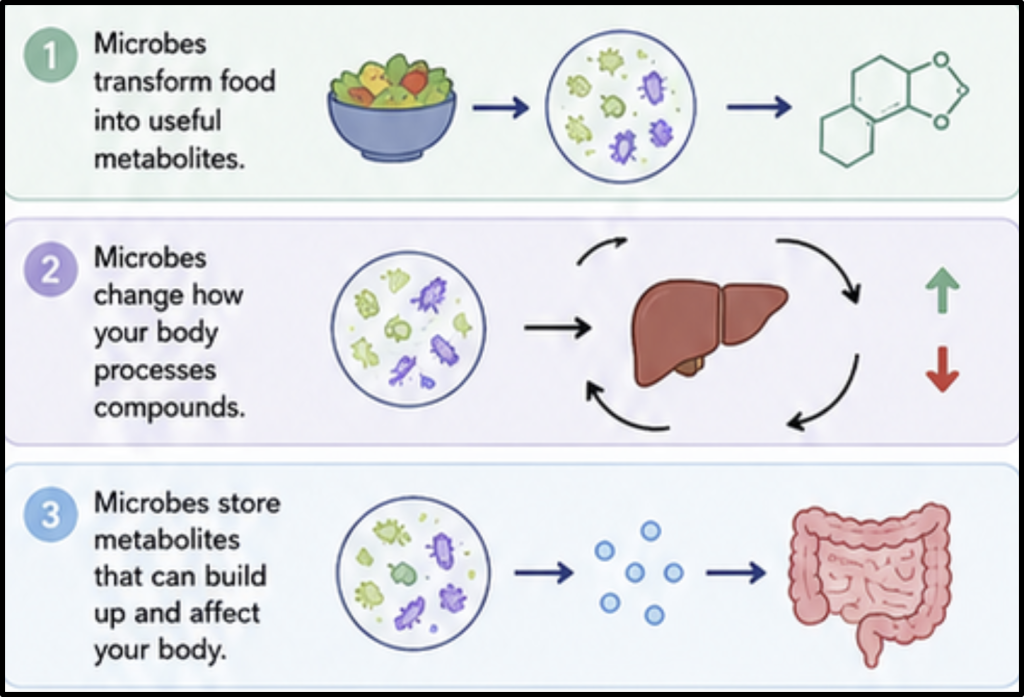
Figure 4. PCA score plot of cecal metabolite profiles from Chow and WD mice. PC1 and PC2 explain 24.5% and 18.2% of total variation, respectively, for 42.7% combined. The separation between groups indicates broad differences in cecal metabolite profiles associated with diet.
To identify the metabolites responsible for this separation, PCA loading scores were examined using a biplot. Metabolites including riboflavin, methionine, phenylalanine, tyrosine, valine, isoleucine, threonine, urate, and MetSul contributed strongly to the first two principal components (Figure 5).
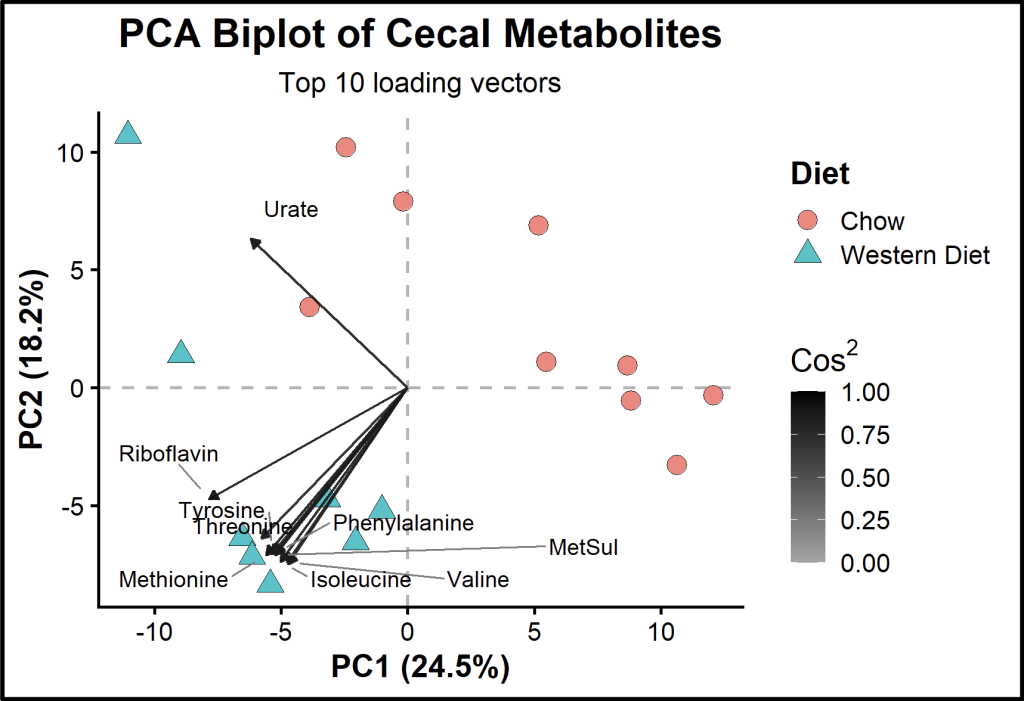
Figure 5. PCA biplot showing the strongest metabolite loading vectors for Chow and WD samples. Vector direction and length indicate how strongly individual metabolites contribute to the first two principal components. Metabolites including riboflavin, methionine, phenylalanine, and urate contributed prominently to the observed separation.
To more closely examine which metabolites differed significantly between diet groups, one-way analysis of variance (ANOVA) followed by Tukey’s honestly significant difference (HSD) test was performed. Several metabolites differed significantly among mice fed Chow, WD, HFD, and HSD, including riboflavin, thiamine, methionine, pyruvate, uracil, succinate, adenosine, serotonin, citrulline, and aspartate. These results indicate that statistical comparisons of individual metabolites also supported the metabolic differences observed in the PCA.
Riboflavin showed one of the biggest differences among dietary groups (F = 26.418, FDR-adjusted p = 1.13 × 10⁻⁶). Methionine also differed significantly among groups (F = 8.151, FDR-adjusted p = 4.28 × 10⁻³), as did pyruvate (F = 13.367, FDR-adjusted p = 8.30 × 10⁻⁴). The other statistical analyses also supported the importance of these three metabolites. Riboflavin and methionine were among the strongest contributors to the first two principal components, while riboflavin, methionine, and pyruvate were all among the metabolites contributing most strongly to LDA separation between Chow and Western Diet samples. These findings guided the selection of the three metabolites for further biological interpretation.
While PCA identifies the largest patterns in the data without using group labels, linear discriminant analysis (LDA) uses the known diet groups to determine which metabolites best distinguish between them. LDA identified riboflavin, thiamine, methionine, pyruvate, alanine, phenylpyruvate, phenylalanine, and uracil as the strongest contributors to separating the Chow and Western Diet samples (Figure 7).
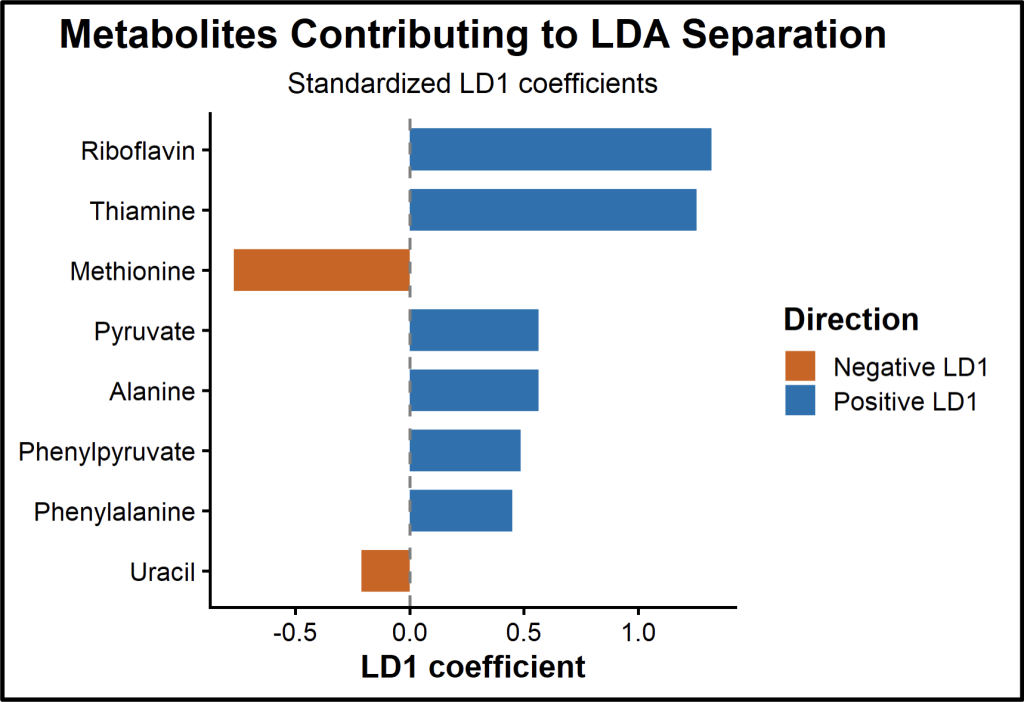
Figure 6. Standardized LD1 coefficients from LDA comparing Chow and WD samples. Riboflavin and thiamine had the largest positive coefficients, while methionine had the largest negative coefficient. Together with pyruvate and other metabolites, these predictors contributed most strongly to separation between the two diet groups.
Discussion
Box 1
| Riboflavin, vitamin B₂: Riboflavin helps form FAD and FMN, molecules required for many reactions involved in cellular energy metabolism. Changes in riboflavin may reflect alterations in vitamin metabolism or microbial activity. Methionine: Methionine is an essential amino acid used in protein synthesis, methylation reactions, and pathways involved in antioxidant defense. Changes in methionine can provide clues about amino acid metabolism and cellular redox balance. Pyruvate: Pyruvate is produced during glycolysis and connects glucose breakdown with the citric acid cycle. Because of its central role in energy metabolism, changes in pyruvate can signal broader differences in how nutrients are being processed. |
The statistical test results demonstrate significant changes in the cecal metabolome of mice fed a Western Diet. PCA revealed separation between the WD and Chow dietary groups, while ANOVA and LDA identified several metabolites that strongly contributed to these differences. Many of the statistically different metabolites are involved in vitamin metabolism, amino acid metabolism, and cellular energy production, suggesting that Western Diet consumption is associated with changes across multiple metabolic pathways.
Riboflavin, or vitamin B₂, was 4.1 times more abundant in Western diet samples than in Chow samples. Riboflavin is used to form the coenzymes FAD and FMN, which play an important role in cellular energetics. In addition to dietary sources, many gut microorganisms possess pathways for B-vitamin synthesis, including riboflavin production (Saedisomeolia & Ashoori, 2018). Therefore, the increased cecal riboflavin observed in this study could reflect differences in dietary composition, microbial metabolism, host metabolism, or interactions among these factors.
Methionine also possessed greater abundance in Western Diet samples, being 2.9 times higher than in Chow. Methionine is an amino acid involved in protein production and methylation and the production of antioxidants (Hoare et al., 2024). High dietary methionine turns into homocysteine, which in large amounts is linked to vascular and neurological stress (Nuru et al., 2018).
Pyruvate showed the largest change of the three metabolites, with levels 6.8 times higher in Western Diet samples. Pyruvate is primarily responsible for aiding in glucose metabolism and cellular energy production (Echlin et al., 2020). Its increase suggests that a Western Diet may disrupt how the body processes glucose for energy. Because problems with glucose metabolism are linked to insulin resistance and type 2 diabetes, this finding may provide an explanation for how Western dietary patterns contribute to metabolic disease.
Together, the increases in riboflavin, methionine, and pyruvate demonstrate that the metabolic differences associated with Western Diet consumption disrupt several biological pathways, including shifts in vitamins, amino acids, and cellular energy production. These findings demonstrate the value of metabolomics research because it allows changes across several pathways to be examined simultaneously, providing a comprehensive understanding of the biological effects of dietary patterns.
Several limitations should also be considered. The study used an existing metabolomics dataset with a relatively small number of 36 samples compared with the 200 metabolites measured. Analyzing many variables with a small sample increases uncertainty and the possibility that some observed differences may not generalize to other populations. In addition, this study measured metabolites in mouse cecal contents. Therefore, the findings cannot be assumed to represent metabolite concentrations in the blood, other tissues, or humans. Metabolomics alone also cannot determine why riboflavin, methionine, and pyruvate were more abundant in Western Diet samples. Because the LDA predictors were selected from the same ANOVA results used to identify group differences, the LDA should be interpreted as exploratory rather than as an independent validation of those metabolites. The changes could result directly from dietary composition, alterations in the gut microbiome, changes in host metabolism, or interactions among these factors. Future research combining metabolomics with microbiome sequencing and transcriptomics could help determine which biological mechanisms are responsible for these changes.
These findings also emphasize the importance of overall diet quality in supporting metabolic health. A well-balanced dietary pattern that includes fruits, vegetables, whole grains, fiber, and a variety of nutrient sources provides compounds needed for normal cellular function while also supporting a diverse gut microbiome. In contrast, Western dietary patterns that are high in saturated fats and refined carbohydrates and low in fiber have been associated with changes in microbial composition, inflammation, and metabolic function (David et al., 2014; Mills et al., 2019). This message is consistent with the Dietary Guidelines for Americans, 2025-2030, which emphasize whole, nutrient-dense foods and reducing reliance on highly processed and refined foods (U.S. Department of Health and Human Services [HHS] & U.S. Department of Agriculture [USDA], 2026). One practical takeaway is to build eating patterns around fruits and vegetables, fiber-rich whole grains, and minimally processed foods more often.
Conclusion
Overall, Western Diet consumption was associated with significant alterations in the cecal metabolome of mice. The increased abundance of riboflavin, methionine, and pyruvate illustrates the changes involving vitamins, amino acids, and glucose and energy metabolism induced by the Western Diet. These findings demonstrate how a Western Diet is associated with substantial alterations across several metabolic pathways. This emphasizes why making healthy, balanced food choices over time is important for supporting the body’s metabolism and overall health. Studying these early metabolic differences may help researchers better understand the biological processes linking long-term dietary patterns with insulin resistance, obesity, and other metabolic diseases.
Acknowledgements
I would like to thank Dr. Hong Pan at Boston University for his mentorship throughout my research process.
References
David, L. A., Maurice, C. F., Carmody, R. N., Gootenberg, D. B., Button, J. E., Wolfe, B. E., Ling, A. V., Devlin, A. S., Varma, Y., Fischbach, M. A., Biddinger, S. B., Dutton, R. J., & Turnbaugh, P. J. (2014). Diet rapidly and reproducibly alters the human gut microbiome. Nature, 505(7484), 559–563. https://doi.org/10.1038/nature12820
Echlin, H., Frank, M., Rock, C., & Rosch, J. W. (2020). Role of the pyruvate metabolic network on carbohydrate metabolism and virulence in Streptococcus pneumoniae. Molecular Microbiology, 114(4), 536–552. https://doi.org/10.1111/mmi.14557
Hoare, M., Tan, R., Welle, K. A., Swovick, K., Hryhorenko, J. R., & Ghaemmaghami, S. (2024). Methionine Alkylation as an Approach to Quantify Methionine Oxidation Using Mass Spectrometry. Journal of the American Society for Mass Spectrometry, 35(3), 433–440. https://doi.org/10.1021/jasms.3c00337
Hills, R. D., Jr., Pontefract, B. A., Mishcon, H. R., Black, C. A., Sutton, S. C., & Theberge, C. R. (2019). Gut microbiome: Profound implications for diet and disease. Nutrients, 11(7), 1613. https://doi.org/10.3390/nu11071613
Lamichhane, S., Sen, P., Dickens, A. M., Orešič, M., & Bertram, H. C. (2018). Gut metabolome meets microbiome: A methodological perspective to understand the relationship between host and microbe. Methods (San Diego, Calif.), 149, 3–12. https://doi.org/10.1016/j.ymeth.2018.04.029
Li, Z., Samui, S., Liu, J., Yang, Y., Liu, X., Chen, Q., Li, J., Gopinath, D., Luo, P., & Shan, D. (2026). Gut microbiome and metabolic health: Mechanisms and precision interventions. Gut Microbes, 18(1), 2644677. https://doi.org/10.1080/19490976.2026.2644677
Mills, S., Stanton, C., Lane, J. A., Smith, G. J., & Ross, R. P. (2019). Precision Nutrition and the Microbiome, Part I: Current State of the Science. Nutrients, 11(4), 923. https://doi.org/10.3390/nu11040923
Nuru, M., Muradashvili, N., Kalani, A., Lominadze, D., & Tyagi, N. (2018). High methionine, low folate and low vitamin B6/B12 (HM-LF-LV) diet causes neurodegeneration and subsequent short-term memory loss. Metabolic Brain Disease, 33(6), 1923–1934. https://doi.org/10.1007/s11011-018-0298-z
Saedisomeolia, A., & Ashoori, M. (2018). Riboflavin in Human Health: A Review of Current Evidences. Advances in Food and Nutrition Research, 83, 57–81. https://doi.org/10.1016/bs.afnr.2017.11.002
Yang, Q., Zhang, A., Miao, J., Sun, H., Han, Y., Yan, G., Wu, F., & Wang, X. (2019). Metabolomics biotechnology, applications, and future trends: A systematic review. RSC Advances, 9(64), 37245–37257. https://doi.org/10.1039/c9ra06697g
About the author
Maggie McIntyre
Maggie is a senior at Glenbard South High School with a passion for math and computer science. She teaches coding and robotics classes to elementary and middle school students, competes on her school’s math team, and enjoys baking and cooking in her free time.