

Author: Kelsey Staszak
Mentor: Dr. Tara Wells
Oak Park River Forest High School
Abstract
This paper will explore the psychology of interruptions. It will explore the difference between internal and external interruptions and how they impact us. Although interruptions are an unavoidable part of modern life, the combination of external technological distractions and internally generated self-interruptions can fragment attention, increase stress, and reduce performance; understanding how these two forms of interruption interact can help individuals protect their ability to engage in deep, sustained attention
From Notification to Self-interruption: Understanding Modern Distraction
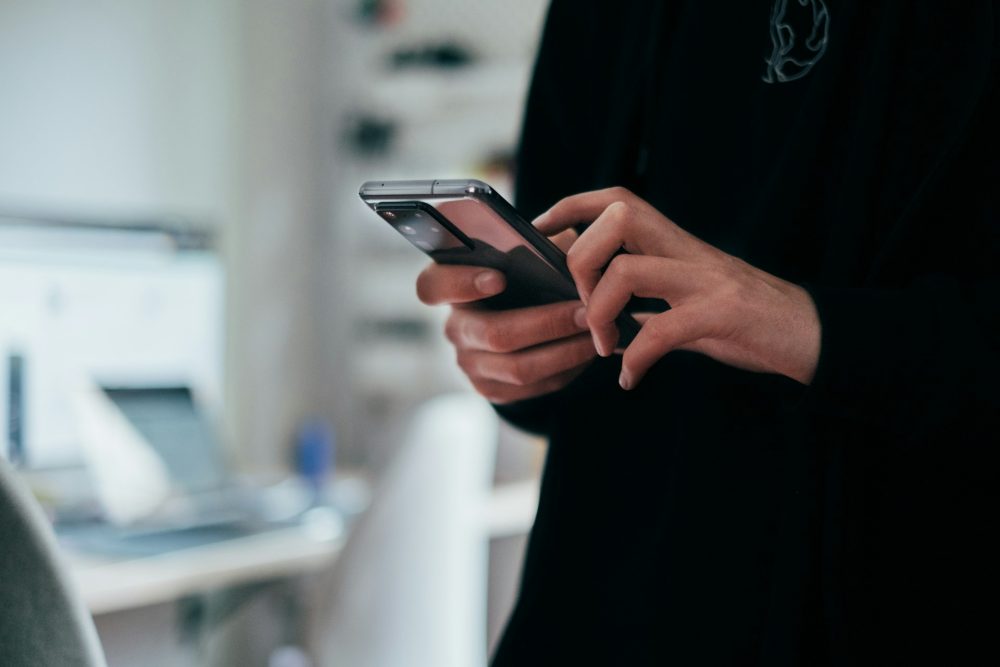
Do you ever feel a phantom vibration in your pocket, pull out your phone, and realize the screen is completely dark? Soon after you find yourself to have opened an app without even remembering opening it. You sit there scrolling for an hour, but to you it feels like 10 minutes. You keep refreshing your social media feed to monitor your “like” count, with absolutely no memory of making a conscious effort to do so. This is the new psychological battle that we are all facing every single day. The new workspace is no longer just threatened by external disruptions, such as a parent calling to check in or a colleague walking in during an important task. Instead, the combined efforts of external and internal distractions are undermining our cognitive capacity. We as humans are capable of so much, but we are constantly distracted. Because of this our full capacities are hindered by a continuous loop of environmental triggers and psychological impulses. To understand how this process has changed and affected so many people, a distinction needs to be made between the two forces constantly competing with our mental energy, external distractions, and internal distractions, or what are sometimes called self-interruptions.
External Distractions
External, or what psychologists formally classify as exogenous, distractions are environmental triggers that hinder what you are currently focused on. If you look back at how traditional workplaces and classrooms used to be operated, the external distractions were pretty simple and under control. Back then, an external distraction was almost always something physical or in immediate proximity to the person that is being distracted. It was a classmate walking around asking questions, a coworker physically popping their head over a cubicle wall, or a landline ringing in the background. Because these disruptions required people to be in a place at the right time, they were easier to avoid. Workers could close an office door, move to a quieter space, or simply leave the workplace altogether. Once people returned home, many of these distractions disappeared completely. This allowed people to experience hours of uninterrupted time.
Before distractions became so complex, they still posed a significant challenge to human attention. Even when someone is simply distracted by someone talking on the phone in another room, their attention is still grabbed. They are no longer focused on their important task at hand, but are now focused on a random call. Gloria Mark, a Chancellor’s Professor of Informatics at the University of California, Irvine, did one of the most profound research projects on external and internal interruptions. Through her research, she found that after an interruption, workers could take an average of 23 minutes and 15 seconds to return to their original task. The reason it takes this long is not necessarily because the brain is completely frozen. Instead, workers typically iterate through two intervening tasks before navigating back to their original project. On average when someone is interrupted, they focus on that interruption for ten and a half minutes. Soon, this person is distracted by something else and they are focused on that for ten and a half minutes. Then they find their way back to the original interrupted project. This process may seem insignificant, but its effects pile up over time. Our brains alter our mental framework to fit this “new” stimulus. Next, our brains must reconstruct that mental framework that existed before the distraction occurred. When this happens, important details can be forgotten, progress gets slower, and mistakes become more likely.
Researchers Meyer, Evans, and Rubinstein (2001) found that these frequent shifts in attention create what is known as a task-switching cost, a measurable decline in efficiency that occurs whenever an individual moves from one task to another. Meyer and the other researchers said that even a brief mental block that was created by an interruption or task switching can cost as much as 40 percent of someone’s productive time. These findings are important because it challenges the belief that interruptions only take up a few moments of our day. Every distraction makes our brain redirect attention and completely alter our mental framework. These minor external distractions are common, like someone talking next to them or knocking on a door. In Mark’s research she also finds that when someone is interrupted, they tend to try and work faster to compensate for lost time. This compensation comes at a cost though. It causes people to have higher levels of stress, frustration, perceived workload, and time pressure (Mark et al., 2008). Interruptions do more than reduce productivity; they also change how people feel while they work.
Mark, Gudith, and Klocke (2008) found that interrupted workers reported feeling considerably more stressed than workers that worked for a long period of time without interruptions. Researchers said that people that are becoming interrupted are stressed because they are constantly switching their mental framework. Our brains are getting confused and overstimulated, leading us to feel more stressed than we need to. Furthermore, interruptions increase frustration significantly. As people shift from one thing to another they are losing time at the real task at hand. This causes people to become overly stressed because all they are thinking about now is how they have to do too much in not enough time. Because people are anxious and feel that they have lost time, they will try and compensate and work at a faster rate. While this is good in the sense that the work gets done quicker and you can do other things within the time, overall this is not a well thought out strategy. According to Mark, when someone tries to make up for lost time it comes at a cost, a cost of feeling a greater workload, increased stress, and feeling more time pressure, and overall these people are exerting more effort. She also mentions that the work that is done is not done to its fullest potential.
Alan Keen, a behavioral scientist, believes that the stress and overload that comes from constantly expecting to multitask, the people that get interrupted all the time, is causing an “epidemic of rage” as Keen says. When people are constantly being interrupted by people talking or by background music, the task switching raises stress hormones and adrenaline, both things that make us more aggressive and impulsive.
In a controlled experiment involving fifty participants, Bailey, Konstan, and Carlis studied how interruptions affect both performance and emotional well being. Participants were told to complete tasks like reading comprehension, counting, and different problem solving activities. Some individuals were interrupted during the tasks and the others were interrupted only between tasks. The different ways the researchers measured the effects were completion time, error rate, annoyance, and anxiety. The participants ranked on a scale how much anxiety and how much annoyance they felt after completing the tasks. They found that although participants tried to complete the tasks as fast as they could, the ones interrupted in the middle of the task took between 3 to 27 percent longer. The interrupted participants also made twice the amount of errors, experienced 31 to 106 percent more annoyance, and reported twice the increase in anxiety (Bailey at al., 2006). The implications of this study go so much farther than just this laboratory. If even a single interruption can increase error, stress, annoyance, and so much more, the cumulative effect of dozens to hundreds of interruptions a day could substantially impair the performance and well-being of humans. These findings suggest that finding a place to not be interrupted is not just for the sake of our productivity, but also for our mental health. Together, these findings demonstrate that even a brief external distraction can reduce productivity while simultaneously increasing stress, frustration, and cognitive overload.
What Happens When the Source of the Interruption no Longer Has to be Physically Present?
Although these traditional external distractions were problematic, they were still limited by one important factor: physical presence. A coworker could only interrupt someone if they were nearby. A teacher could only be interrupted by a student who was physically in the classroom. Once an individual left school or work, many of these distractions disappeared. Social media and smartphones, however, completely transformed how people experience interruptions. External distractions are no longer confined to a specific place or time. Instead, they exist in a person’s pocket and follow them wherever they go. Today, the modern workspace is having to deal with notification after notification, such as Snapchat bings and Instagram alerts. The real problem here is that we bring these phones, laptops, and tablets with us 24 hours a day, 7 days a week, and we don’t even think about it. Your smartphone does not care if you are trying to write a research paper that will determine your whole grade for a class, analyze a complex data sheet, or sit through an important meeting; it is constantly blasting you with notifications, calls, and texts all day every day.
A research study was done on daily smartphone interactions, and one of the most important pieces of information found was that the average user now receives over 146 notifications every single day (Wheeler, 2025). This means that our concentration is not broken a few times a day, but on average, over hundred. These findings suggest that modern work environments are characterized by increasingly frequent shifts in attention. Research conducted by Gloria Mark further demonstrates how dramatically our attention spans have changed in the digital age. In 2004, Mark and other researchers at the University of California, Irvine, studied office workers to determine how long people remained focused on a single activity. When this study was first done, researchers physically shadowed participants and used stopwatches to record when people began and ended the activities. As technology advanced and became more and more common, the researchers used computer logging software that automatically tracked screen activity and had much greater precision than the stopwatches. In 2004, the average participant remained focused for two minutes and thirty seconds. However, in 2012, the average has fallen to about seventy-five seconds. In recent years it has dropped to forty-seven seconds. These findings suggest that as technology and society has grown, our attention spans have weakened. Humans are now constantly used to being able to shift their attention so quickly because of the addicting social media apps where people just aimlessly scroll. Our attention is also getting so much worse as phones just sit next to us, because we can always grab it and choose to do whatever it is that we feel like on them.
Although smartphones create unnecessary distractions, it is important to recognize that they can provide meaningful benefits as well. In many situations, phone notifications serve an important purpose. For example, a colleague could call someone in order to correct a mistake on an important project. In this case, the distraction was necessary and helped the worker in the long run. Phones also help people stay connected with family and friends and they also help keep people safe. Instead of just wondering where your kid is, you can just text them “Where are you?” and they can respond right back. A student may receive a message about a change in practice time, a parent may call with urgent news, or a teacher may send a reminder about an upcoming assignment. In these cases, the interruption provides a valuable piece of information that can improve communication and efficiency throughout someone’s day.
One could argue that every notification has the potential to be important because there is always a reason someone is getting a notification. Whether it is because their mom texts them, or because a brand is sending them a reminder on a sale, or they are just receiving a like on an instagram post, anyone could say that all of these are equally important. However, research suggests that the overwhelming majority of notifications are not urgent and can safely wait until a scheduled break. The challenge is not deciding whether that notification you go has value or more important than another, but whether or not that notification really needs an immediate response.
What Happens When the External Interruption Becomes Something we Begin to Create for Ourselves?
The growing number of notifications does more than interrupt people while they work. Over time, these repeated interruptions begin to shape behavior itself. Rather than simply responding to a notification when they appear, people gradually become conditioned to expect them. Eventually, checking a phone is no longer triggered by an external alert but by an internal urge. This shift marks the transition from external interruptions, which originate in the environment, to self interruptions, which originate within the individual.
Internal Distractions / Self-Interruptions
While external distractions force their way into your attention from the outside world, internal, or endogenous, distractions may be harmful because they come from inside your mind. An internal distraction happens when someone abandons what they are doing without seemingly anything from their environment prompting them to do so. Internal distractions can take form in many ways, like daydreaming, thinking about a future event, or just suddenly remembering an unrelated task. Because these interruptions come from our mind, they are harder to control and recognize when they are happening. A person may appear deeply focused on the outside, but on the inside they can be completely distracted.
Mark’s research into smartphone interaction indicates that people do not look at phone notifications randomly. Mark’s 2023 research identified three different patterns of which people self interrupt using a phone. One of the most common patterns is using a phone as a buffer before beginning a difficult task. Gloria Mark found through her research that people frequently turn to their phones immediately before starting the task at hand as a way of delaying the effort required to begin the task (Mark, 2023). Smartphones are also used for the complete opposite, a reward. People tend to look at their phone after they have completed a step on the task because they think they deserve it. Mark’s research also indicates that people go on their phones during or after tasks in order to self regulate their emotions and recover from the demanding tasks (Mark, 2023). Lastly, people use phones as a way of pacing and resting during extended periods of interrupted concentration. Research done by Kaplan indicates that intentional breaks can replenish cognitive resources and improve subsequent performance (Kaplan, 1995). However, these benefits only can be possible when the breaks are time limited. When interruptions become long, people’s attention can become fragmented and make it increasingly more difficult to return to deep work.
There are so many more distractions than there ever have been in the world, and it will only continue to go up from here. Not only are people getting 100 or more notifications a day, but they are also checking their phones when there isn’t even a ping or a call.
Internal distractions have changed dramatically since the invention of smartphones and technology. Our brains are trained to find something that stimulates it, so when we are bored, we want to do something. We used to be able to sit in silence and reflect deeply on life, or simply just daydream. Now when we are bored we just grab our phone and scroll. In fact, 89% of the time when someone interacts with their phone, it is just the user turning it on rather than prompted by a notification or call (Kelion, 2020). This internal, or what Dr. Marks refers to as self-interrupting, behavior is a direct result of how phones and notifications are altering how our brains’ respond to distractions. Every notification conditions our brains to expect another one in the future. Over time, checking our phones is becoming a habit, even when there isn’t that external stimulus. Eventually that external stimulus becomes internalized. Rather than technology demanding our attention like a notification or a call, we begin demanding it ourselves.
What Does Self-Interruption Actually Look Like in Everyday Life?
Self interrupting is the act of voluntarily abandoning a current task to shift focus to something else, without being prompted by an outside person or event. Researchers Jin and Dabbish studied self interruption and sorted it into seven specific categories.
The first is Inquiry, which is when someone pauses a task to actively seek information required to finish it. This is an example of how self-interrupting can affect us in a good way. For example, a student writing may look up a finding or statistic in order to continue with their paper. Although this interruption temporarily stopped the student from writing the paper or doing the task at hand, it ultimately supported the goal of the task. However, inquiry distractions can be problematic sometimes. When a quick search turns into unrelated browsing on the internet, it causes the person to spend far too much time on something unimportant.
The second category is recollections, which occurs when someone acts immediately on a sudden memory of another errand. While remembering an obligation is important, it often causes people to abandon their current work before officially completing it. For example, a student that is studying for their final exam, randomly remembers that they need to send an email to their professor. While this interruption is an important task, it causes the students attention to fragment and can actually make it harder to return to the original task or study for their final. Over time if this becomes a habit, constantly switching between activities will cause production to lower and time to be crammed.
The third category is Routine Habit. This is when someone reverts to a deeply ingrained routine, such as refreshing an inbox on Instagram. Unlike the first two, habitual interruptions usually provide little to no value. This is simply pulling you away from doing what is important, just to do something random that has been engraved into your mind. This has grown ever since phones have become a thing. There are many more habits with phones like checking a text, refreshing an inbox, or even just checking your calendar. This is why self interrupting is becoming more and more common each and everyday.
The fourth category is Trigger interruptions. This happens as an unplanned stimulus causes someone to think of an unrelated thought, causing attention to drift away from the task at hand. For example, while working on homework, a student might hear a conversation in the background that suddenly makes them think of their friend, then they begin to think about their weekend plans, and then it just goes into a cycle of thinking of anything else but the task at hand. Although this shift may seem natural because the person thinks they are doing something related, it actually results in a loss of time and reduced productivity on the original task. Trigger interruptions show how easy it is for our mind to move from one thought to another, even when there is no external interruption telling us to do so.
The fifth category is Emotional interruption. This is when feelings such as stress, anxiety, and excitement can cause someone to stop working on the task at hand. These people then try to focus their attention on their emotions and why they are feeling the way they are feeling. Emotional interactions are specifically powerful because strong feelings demand immediate attention. For example, a student may be worrying about an upcoming test, and this causes them to not focus on the studying itself, only the emotion at hand. While it is good to deal with emotions, doing it can be detrimental to entering a deep focused state on an important task.
The sixth category is Environmental interruptions. Unlike external interruptions that force attention away, environmental self-interruptions are when someone voluntarily chooses to focus their attention on something in their surroundings. This is much more common than it used to be. One example of how it used to be seen was when someone was working on an important task and in the background they hear people talking in the distance, and they decided to go join in. Now, people do this all of the time because phones exist. Someone could just have their phone next to them, and then they decide to go on it. This is troublesome because, even when something is not directly interrupting us, we are interrupting ourselves with something around us.
The final category is Idle Time interruption. This occurs when people become bored and seek stimulation. Smartphones have made this type of self interruption especially common because entertainment is just at the palm of our hands. Instead of pushing through a difficult task, many people immediately reach for their phones and headphones, reinforcing a continuous cycle of distraction. Over time, constantly seeking stimulation can cause a person’s tolerance for boredom to reduce. Instead of dealing with an emotion, people are just distracting themselves by going on their phones. As a result, idle interruptions are limiting us from entering that deep attention and leading us to not be able to sit with boredom (Alder, 2013).
If so Many Self-Interruptions Can Happen Without an External Stimulus, How Much of Our Internal Distraction is Actually Being Created by the External World?
Although external and internal distractions are usually seen as separate things, they are very much intertwined. In many cases external distractions create habits that eventually become internal distractions. For example, when we are constantly getting bombarded with a text message or a notification from Instagram, our body starts to expect them. Sometimes people feel vibrations coming from their phone, when there was never actually a vibration to begin with. This is called a phantom vibration. It is technically classified by psychologists as a tactile hallucination, meaning your brain registers a physical sensation that does not exist in reality. This is actually incredibly common amongst humans. Research shows that 89% of smartphone users experience this at least once to twice a week (Travers, 2024). This happens to us because our brains deal with an overwhelming amount of sensory input. Our brains get confused sometimes and try to fill in the gaps with what it reckons is appropriate. Since our phones are constantly pinging, our brains start to learn to expect this, even when it is not happening.
Ramifications
But what Does this Constant Cycle of External and Internal Interruption Actually do to Us Over Time?
Frequent notifications train the brain to expect rapid shifts in attention. This is causing people to distract themselves even when the external distractions, like the phone pinging, is not present. People are constantly thinking “Did someone text me?” or “How many likes have I gotten on my Instagram post since I last checked?” These frequent notifications train the brain to remain an alert state and a fragmented focus state. Sadly, this is severely damaging many people’s mental health. When one is constantly bombarded with notifications our brain anticipates the notifications. This constant anticipation triggers the release of stress hormones like cortisol. When the body experiences prolonged or repeated stress, persistently elevated cortisol can contribute to negative health effects. This can contribute to inflammations and a weakened immune system (Cleveland Clinic, 2025). Having too much cortisol can also cause stretch marks, weight gain, and high blood pressure. Some ways to reduce your high cortisol levels are getting good quality sleep, moving your body, and practicing deep breathing experiences
Researchers have also found that self-interruptions leave behind what psychologist Sophie Leroy calls attention residue. When people stop working on one task before mentally finishing it, part of their attention remains focused on that unfinished task, even after they have switched to something new. As a result, people are unable to devote their full cognitive capacity to the next activity, making it harder to think clearly, solve problems, and maintain deep concentration. Every unnecessary self-interruption, such as checking a phone or social media feed, increases this attention residue and makes it more difficult to regain full focus on the original task (Leroy, 2009).
If our Brains are Constantly Being Trained to Shift Attention, what Happens to Our Ability to Sustain it?
Flow State
The answer becomes especially clear when looking at flow state, a condition in which attention becomes deeply focused and sustained. The problem arises when people are getting notifications too often and they are not necessary. Like a Snapchat or Instagram notification telling them that a person liked their post. While this could make a person happy in the moment, in the long run these social media notifications are the reason we can never reach flow state. What was originally intended as a tool to communicate with others, has turned into a device that continuously demands attention throughout the day.
Our minds are constantly searching for stimulation, and when it is not satisfied we try to find the closest external distraction. People actively seek out phone notifications right before starting something heavy or cognitively demanding just to delay the effort. People also check notifications immediately after a heavy task as a form of personal reward. For example, if you have a multiple step project, you might think that you can sit down and complete this all in one sitting, but that is not true. Most people will go on their phones before and after each step, causing our brains to not be able to reach “flow state.”
Flow state is a psychological condition of optimal consciousness where you become fully immersed, deeply focused, and completely absorbed in said activity. Mihály Csíkszentmihályi calls it being “in the zone “ (Csikszentmihalyi, 1990). This is when someone is so immersed in an activity that they lose track of time, consciousness reaches its best point, and performance peaks. If we are consistently prevented from reaching this state, we may struggle to perform at our highest potential. “Flow state” is something that someone can learn. When children learn to get into flow, it becomes a lifelong habit (Kamel, 2024). To help kids and also full-grown adults reach flow state, they need to be given uninterrupted time and clear goals. Whether it is reading a book, performing in a musical, or creating artwork, children will maintain their highest performance level when in a place where they are fully uninterrupted and engaged.
Mark’s research shows that after an interruption, people often complete two additional tasks before returning to their original task (Mark, 2023). While it is impossible to limit all interruption, it is not impossible to return right away to the task at hand right after being interrupted. While flow is temporarily broken in this case, it is not broken for as long as it would be if the person focused on two unrelated tasks. By doing this, the person will then limit the amount of attention residue, the cognitive cost of switching between tasks, and allow the brain to rebuild the mental framework needed for deep concentration.
However, phones and electronics are making people entering adulthood struggle to ever reach this crucial flow state in the first place. Because getting “in the zone” requires a long, uninterrupted stretch of time, the constant presence of modern technology acts as a barrier to get into the deep focus state. Instead of people reaching this state of mind where they are so immersed that they lose track of time and they are at their highest level of performance, phones are limiting people to only get into this shallow mental state where every single step of the project feels like an ongoing uphill battle.
When someone truly reaches flow, there are three different neurochemicals that are released, dopamine, endorphins, and norepinephrine (Kotler, 2015). These neurochemicals make hard work feel automatic and rewarding. They are the reason our best work comes from when we reach flow state. Without flow, you have to rely on raw willpower, which quickly depletes and makes the process feel like you can never catch up (Cherry, 2023). Because these neurochemicals act like feel good drugs, flow can be a highly addictive state (Kotler, 2015). Norepinephrine and dopamine lower the signal-noise ratio. When this happens our pattern recognition is heightened. (Kotler, 2015).
Lastly, flow state can help us learn more quickly. When more neurochemicals are present during an experience, there is a better chance that the experience goes from short term to long term memory. Research shows that flow can cut the time to learn in half. This was proven when researchers at DARPA conducted an experiment with soldiers, and they measured how long it took them to learn how to reach an elite “expert” level of marksmanship. The researchers used noninvasive stimuli to have the experimental group reach flow state, and the control group did not receive these stimuli. They were then both set to learn how to reach an elite “expert” level of marksmanship. The experimental group, the one that was in flow state, reached elite expert-level marksmanship in exactly half the time it took the control group (Berka, 2003). This demonstrates that reaching a deep state of flow significantly increases the speed at which people learn and complete tasks.
Understanding flow state is important because it shows exactly what is being lost when interruptions become a normal part of everyday life. If interruptions continually prevent people from reaching deep concentration, then they are not simply just losing a few seconds every time they check a phone, but hours. They are losing the opportunity to reach a state where learning, creativity, and performance can reach their highest levels. This makes limiting unnecessary interruptions an important part of protecting deep attention.
Solutions
If Interruptions are Inevitable, how can we Protect our Ability to Reach Deep Attention Anyway?
Although interruptions always have and always will be a part of our life, research shows that their negative effects can be mitigated and reduced. Psychologists argue that eliminating distractions is unrealistic and almost impossible, so instead, individuals can find strategies to reduce the negative effects of interruptions and minimize unnecessary interruptions. Three particularly effective strategies include managing digital notifications, designing a workspace that supports deep work, and strengthening mindfulness skills.
Managing Notifications
The first strategy is managing smartphone notifications to the best of your abilities. While notifications can be important, like a parent or colleague texting you, there are many notifications that do not need to be dealt with right away, like social media notifications. Notifications that show when someone liked a post, posted a story, or commented on your photo are rarely a notification that needs an immediate response. Researchers Kushlev and Dunn conducted a study to see if limited social media notifications could increase well-being. In this study individuals either received notifications as usual or limited notification to scheduled times throughout the day. The researchers found that individuals who limited notifications to specific times throughout the day reported lower levels of stress and greater productivity compared to those who received notifications continuously (Kushlev et al., 2015). These findings suggest that people do not need to avoid notifications completely, but rather schedule times in their day to check these notifications and experience the benefits of them.
Limiting oneself to checking notifications right when you get them can decrease the harmful effects. Instead of choosing to answer or look at a notification right when it is delivered to you, a good strategy would be to check your phone’s notifications once every hour or after completing a major task. You can set your phone on Do Not Disturb for that hour and then allow yourself to check it after that hour is up. That way you are still responding and getting that dopamine rush, but you are also allowing yourself to enter deep concentration for much longer than before. While some people may worry that their relationships with people might be hindered because they are not responding right away, research shows that most messages are not urgent and can safely wait.
You might ask yourself why people don’t just turn off their notifications completely? There are many reasons for this. Without a sound or vibration to reassure the user, anxiety and stress is actually heightened (Saskovets et al., 2025). Notifications operate on what a psychologist calls a variable reward schedule. This is kind of like a slot machine. Because users never know if the next buzz is an emergency, a text from a loved one, or just junk, the brain becomes hooked on the anticipation. Also, responding quickly can signify that you like the person you are texting and doing so can create friendships and relationships. Because of this people worry that turning off notifications will alienate friends, make them look distant, or result in missing an emergency (Saskovets et al. 2022). Consequently, even though people realize that notifications are distracting and can affect them in so many ways, they may continue to keep them enabled because the psychological and social benefits often outweigh the perceived costs. But do they?
To maximize these interruptions and make them less harmful, we need to set a schedule for times to check devices. We also need to disable unnecessary notifications like social media. And lastly we need to work on our mindfulness and realize when it is appropriate to actually check our phones.
While this is a good strategy to not allow people to check their phones, research shows that the physical presence of a phone just on a desk, even if it is completely turned off and doesn’t have notifications, negatively impacts cognitive capacity and problem solving skills. The brain uses active energy just to resist checking it. The solution to this is leaving your phone in a separate room, so your brain is not constantly thinking about it and trying to resist it.
Adrian Ward and co authors conducted a research study with about 800 smartphone users in an attempt to measure how well people complete tasks when they have their phones nearby versus when they are not present at all. In the experiment people were instructed to sit at a computer and take a series of tests that required full concentration in order to score well. They were either told to place their smartphones on the desk face down, in their pocket or personal bag, or in a whole different room. All participants were told to put their phones on silent.
The research findings showed that participants that put their phones in a whole different room, completely outperformed those with their phones on their desk, and slightly outperformed those who put their phone in a pocket or bag (Ward et al., 2017). This evidence proves that even when a phone is just present our brains are constantly trying not to think about it and it is hindering our deep attention. It isn’t just the notifications but also the “mere presence” of a phone is enough to reduce cognitive capacity. To solve this, putting your phone in a different room when working or at least putting it in a bag or pocket can benefit your work product. When doing this, our brains feel like they are allowed to relax and focus on what is really important.
Creating an Environment That Makes Deep Attention Possible
The second strategy to minimizing distractions is designing a workplace that supports deep work. Research consistently shows that an environment that has constant interruptions significantly interferes with the ability to achieve flow. Because flow requires sustained concentrations, even brief distractions can force an individual to restart the process of becoming deeply engaged. Because most workspaces want people to collaborate, there are very limited spaces that people can go that limit these distractions.
Creating an environment that already helps limit distractions is what every workplace needs. While it may seem obvious that a quieter work space can help improve focus, there is research behind it that shows that a workspace has much more of an effect than most people think.
One study that demonstrates this was done by Hones, Marsh, and Hughes in 2012. The researchers wanted to determine how background noise and conversations affects a person’s ability to concentrate deeply.
To achieve this, participants were asked to complete memory and attention tasks while working under different sound conditions. Some were doing the tasks under the condition of no external noise, and others were doing the same activities and tests under the condition of irrelevant conversations played in the background. The study measured the participants’ accuracy, the number of errors they made, and how well they remembered information after completing the tasks and tests.
The results of this experiment showed that participants who worked while listening to background conversations performed significantly worse than those in silent work spaces. Even though they were instructed to ignore the voices in the background, the participants’ brains automatically processed the speech, which resulted in reduced attention.
This shows that workspaces and classrooms need specific spaces for quiet time. That way workers or classmates can enter that deep concentration level. While collaborative work is seen to help brainstorm ideas and make our minds more creative, work spaces need a specific time interval where quietness is enforced or at least encouraged so individuals can enter that deep concentration where flow is achieved.
Strengthening Our Ability to Control Where Our Attention Goes
The third strategy to control the negative effects of interruptions involves developing mindfulness skills to help reduce self interruptions. Unlike external distraction, self interruptions develop inside our mind which makes it harder to identify and control, but there are ways to control it.
Researchers wanted to determine if mindfulness helped with attention, not just helping people feel more relaxed. To test this, the researchers used students as their participants and randomly assigned them into one of two groups. One group did two weeks of mindfulness training. This included things like meditation, breathing exercise, and other activities that trained them to recognize when their mind wandered and gently redirect their attention to the present moment and what was actually important. The other group, which in this case was the control group, participated in an educational program so both groups were receiving some sort of education. The only difference was that one was specifically gaining deep attention skills. The researchers gave each group a set of tests before and after to see if their attention changed.
The results showed that students that completed the mindfulness training improved significantly in the working memory aspect, their reading comprehension scores went up substantially, and they had way less mind wandering than the control group (Mrazek et al., 2013). This shows that just two weeks of practicing mindfulness exercises can change how someone thinks. When one does this, the self interrupting goes down, meaning that all of the negative effects from self interrupting also go down. When someone learns mindfulness they can focus on where they want their attention to go, they become more aware of their own thoughts, and overall can enter flow so much easier.
Additional research supports these findings. Jha, Krompinger, and Baime found that individuals who participated in mindfulness training demonstrated significant improvements in sustained attention and working memory compared to those who did not receive the training (Jha et al., 2007). These findings suggest that mindfulness does more than simply reduce stress. It also strengthens the brain’s ability to maintain attention, making people less likely to engage in unnecessary self-interruptions and better able to redirect their focus after becoming distracted.
As people begin to realize when their attention is drifting, they can redirect themselves, so the interruption doesn’t turn into a lengthened self-interruption. Mindfulness gives an individual more control over their attention. When mindfulness becomes a habit is when concentration lasts longer, and self interruption becomes way less frequent.
The next time you feel a phantom vibration in your pocket, the most important thing may not be whether your phone actually went off. The more important question is whether you have control over where your attention goes. At the beginning of this paper, I described how easy it is to pick up a phone without even remembering why you opened it, only to spend an hour scrolling. This is what makes modern distraction so different from the interruptions of the past. The greatest threat is not just that our phones interrupt us from the outside, but that we learn to interrupt ourselves after becoming so connected to our phones. External notifications can become internal habits, and internal habits can make it increasingly difficult to sustain deep attention.
Learning to manage this cycle can give individuals an advantage in a world where attention is becoming increasingly more difficult to protect. If most people are constantly checking their phones, responding to notifications, and switching between tasks, the person who can remain focused on one difficult task for an extended period of time will have an advantage. They will be able to learn more deeply, complete work more efficiently, make fewer mistakes, and give more attention to the people and activities that actually matterin life. The ability to control our attention is a skill that can separate someone who is constantly reacting to their environment from someone who is intentionally deciding what deserves their attention.
The goal of managing distractions is not to reject smartphones or modern technology. Technology was created to make communication, work, and everyday life more efficient, and it can still do all of those things. A phone can allow someone to communicate with family instantly, receive important information, organize their schedule, and complete work that would have taken much longer in the past. The problem occurs when the tool designed to make our lives easier begins controlling where our attention goes. By managing notifications, creating environments that support deep attention, and strengthening our ability to recognize self-interruptions, we can begin to use technology for what it was intended to do rather than allowing it to use us.
Ultimately, mastering attention does not mean never getting distracted. Interruptions will always be a part of modern life whether we like it or not. Instead, it means becoming aware of when an interruption is actually important and when it is simply pulling us away from what matters. The person who can recognize the difference will be better prepared to learn, work, communicate, and create in a world filled with constant stimulationand interuptions. When we can put the phone down without feeling like we are missing something, return to a difficult task without immediately reaching for another distraction, and choose when technology deserves our attention, we are no longer fighting against technology. We are finally using it on our own terms.
References
Alder, A. (2013). The art of taking smart breaks. Psychology Today. https://www.psychologytoday.com/
Bailey, B. P., Konstan, J. A., & Carlis, J. V. (2006). Measuring the effects of interruptions on task performance in the user interface. In Proceedings of the IEEE International Conference on Systems, Man, and Cybernetics. https://ieeexplore.ieee.org/
Berka, C., Levendowski, D. J., Lumicao, M. N., Yau, A., Davis, G., Zivkovic, V. T., Olmstead, R. E., Tremoulet, P. D., & Craven, P. L. (2007). EEG correlates of task engagement and mental workload in vigilance, learning, and memory tasks. Aviation, Space, and Environmental Medicine, 78(5 Suppl.), B231–B244.
Cherry, K. (2023, November 27). What is ego depletion? Verywell Mind. https://www.verywellmind.com/ego-depletion-4175496
Csikszentmihalyi, M. (1990). Flow: The psychology of optimal experience. Harper & Row.
Heitmayer, M., & Lahlou, S. (2021). Why are smartphones disruptive? An empirical study of smartphone use in real-life contexts. Computers in Human Behavior, 116, 106637. https://doi.org/10.1016/j.chb.2020.106637
Jha, A. P., Krompinger, J., & Baime, M. J. (2007). Mindfulness training modifies subsystems of attention. Cognitive, Affective, & Behavioral Neuroscience, 7(2), 109–119. https://doi.org/10.3758/CABN.7.2.109
Jin, J., & Dabbish, L. (2009). Self-interruption on the computer: A typology of discretionary task interleaving. In Proceedings of the SIGCHI Conference on Human Factors in Computing Systems (pp. 1799–1808). https://doi.org/10.1145/1518701.1518971
Kamel, S. (2024, April 14). Harnessing the flow state: Unlocking the productivity potential of childlike engagement. Medium. https://medium.com/@sharon_kamel/harnessing-the-flow-state-192746b0ab7f
Kaplan, S. (1995). The restorative benefits of nature: Toward an integrative framework. Journal of Environmental Psychology, 15(3), 169–182. https://doi.org/10.1016/0272-4944(95)90001-2
Kelion, L. (2020, November 25). Phone addiction not driven by notifications, study finds. BBC News. https://www.bbc.com/news/technology-55073971
Kotler, S. (2015). The rise of Superman: Decoding the science of ultimate human performance. New Harvest.
Kushlev, K., & Dunn, E. W. (2015). Checking email less frequently reduces stress. Computers in Human Behavior, 43, 220–228. https://doi.org/10.1016/j.chb.2014.11.005
Leroy, S. (2009). Why is it so hard to do my work? The challenge of attention residue when switching between work tasks. Organizational Behavior and Human Decision Processes, 109(2), 168–181. https://doi.org/10.1016/j.obhdp.2009.04.002
Mark, G. (2023). Attention span: A groundbreaking way to restore balance, happiness and productivity. Hanover Square Press.
Mark, G., Gudith, D., & Klocke, U. (2008). The cost of interrupted work: More speed and stress. In Proceedings of the SIGCHI Conference on Human Factors in Computing Systems (pp. 107–110). https://doi.org/10.1145/1357054.1357072
Meyer, D. E., Evans, J. E., & Rubinstein, J. S. (2001). Executive control of cognitive processes in task switching. Acta Psychologica, 101(2–3), 179–195.
Mrazek, M. D., Franklin, M. S., Phillips, D. T., Baird, B., & Schooler, J. W. (2013). Mindfulness training improves working memory capacity and GRE performance while reducing mind wandering. Psychological Science, 24(5), 776–781. https://doi.org/10.1177/0956797612459659
Saskovets, M., Saponkova, I., & Liang, Z. (2025). Effects of sound interventions on the mental stress response in adults: Scoping review. JMIR Mental Health, 12, e69120. https://doi.org/10.2196/69120
Strobel, D. (2025, August 23). Time confetti: How notifications are shredding our free time and what to do about it. Psychological Counseling Services, Ltd. https://pcsintensive.com/time-confetti-how-notifications-are-shredding-our-free-time-and-what-to-do-about-it/
Travers, M. (2024, September 13). A psychologist explains “phantom vibration syndrome”—Smartphone hallucinations. Forbes. https://www.forbes.com/sites/traversmark/2024/09/13/a-psychologist-explains-phantom-vibration-syndrome-smartphone-hallucinations/
Ward, A. F., Duke, K., Gneezy, A., & Bos, M. W. (2017). Brain drain: The mere presence of one’s own smartphone reduces available cognitive capacity. Journal of the Association for Consumer Research, 2(2), 140–154. https://doi.org/10.1086/691462
About the author

Kelsey Staszak
Kelsey is a high school senior at Oak Park River Forest High School. She has been doing club soccer ever since she was 10 years old. At school, she spends her time in clubs including Best Buddies, a club that helps kids with special needs feel included, Tau Gamma, a volunteer club, and Huskie Athletic Council, a club that helps the school sports teams with events.
Kelsey also started an out of school organization with her friend called, High Schoolers for Health. They aim to raise money for health equipment for underprivileged communities overseas. She aim to help my community always and make sure everyone feels included and welcomed.