

Author: DongHan Li
Mentor: Dr. Piotr Mocny
Harrow International School of Beijing
Abstract
The automotive industry is rapidly changing together with increasingly tougher environmental regulations; including, among others, the shift towards use of low-carbon-footprint products, and ban of per- and polyfluoroalkyl substances (PFAS). The remarkable thermal stability, chemical resistance, and mechanical durability of fluorocarbon elastomers (FKMs) are essential in seals, hoses and tubings of internal combustion engines. These are difficult to match by any other materials making them so far irreplaceable. The new regulations on PFAS, however, stimulated researchers to test the alternative non-fluorinated elastomers. These materials are additionally challenged by developments of new fuels, i.e. higher energetic synthetic e-fuels, which compromise their long-term performance. This manuscript summarizes use of FKMs in passenger cars, regulatory challenges and environmental concerns on PFAS, as well discussed technical challenges associated with substitution of fluorinated materials to be exposed with ethanol-based fuel, such as E85. Material replacement strategies, implications for road and race cars, and future developments in sealant technologies are discussed.
Introduction
Fluoroelastomers in Automotive Sealing Applications
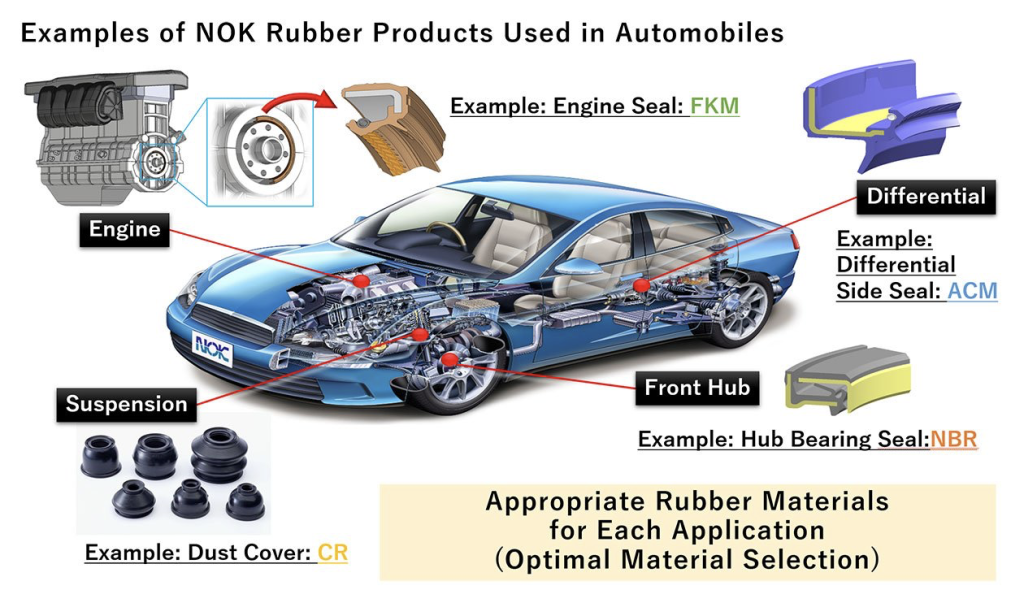
Fluoroelastomers (FKMs) are a class of high-performance synthetic elastomers characterized by a fluorine-rich polymer backbone (60-75 wt.% fluorine), typically comprising vinylidene fluoride and hexafluoropropylene units (Scheme 1). FKMs were specifically developed to address sealing challenges in environments involving high temperatures, aggressive chemicals, and long service lifetimes, particularly in the automotive and aerospace sectors (Drobny, 2007). Places where, FKM-based parts are used in a combustion engine car are presented in Figure 1. Sealing materials used in the automotive engines and fuel systems are subjected to high temperatures, variable pressure, aggressive lubricants, and fuel compounds that are growing in complexity (Nishina, 2008). The FKMs, which are elastomers with fluorine-based polymer backbone, are characterized by an exceptional mix of heat resistance, chemical inertness, low permeability, and long service life (Moon et al., 2021). These properties have made FKMs the material of choice in critical components like O-rings, gaskets, shaft seals, injector seals, and fuel hoses, especially in areas of the engine where a failure would lead to leakage, emissions, or even safety hazards. Their elasticity and resistance to swelling and degradation have seen them become a standard material in the sealing technology of automobiles. However, currently FKM alternative sealants are also considered, such as silicone-based or nitrile-butadiene rubbers (Scheme 1). Their performance will be discussed in the sections below.
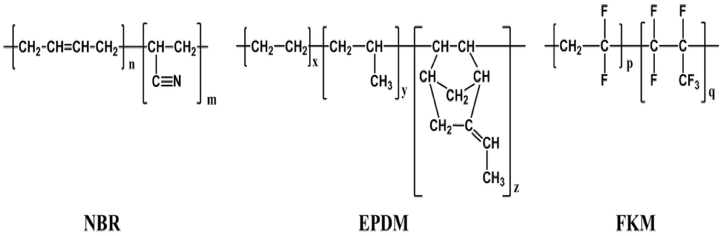
Scheme 1. Representative chemical structures of fluorinated and non-fluorinated elastomers (Yang et al., 2019)
Influence of Alternative and Ethanol-Based Fuels on Elastomer Performance
The relevance of FKMs has escalated further with the diversification of automotive fuels. Blended fuels like E5, E10, and E85, biodiesel, and new synthetic e-fuels have been progressively replacing or supplementing conventional gasoline and diesel (Czerwinski et al., 2016; Muelaner, 2023). Fuel containing alcohol, e.g. higher concentration of ethanol, poses new threats to elastomeric materials because they are polar, hygroscopic, and may behave as swelling solvents. Ethanol can enter into elastomer networks, remove additives, and enhance swelling or embrittlement, ultimately degrading seal integrity (U.S. Department of Energy (DOE), n.d.). FMKs with high concentrations of fluorine (usually 69-71% fluorine) are less susceptible to these effects and have longer-lasting dimensional stability and mechanical performance even in long-term contact with alcohol-containing fuels (Stevens, 2006). This is the reason why they find extensive application in the fuel system parts, such as in-tank seals and tubing, where they are likely to be subjected to hostile fuel environments over extended periods.
PFAS Regulatory Pressure and Environmental Concerns
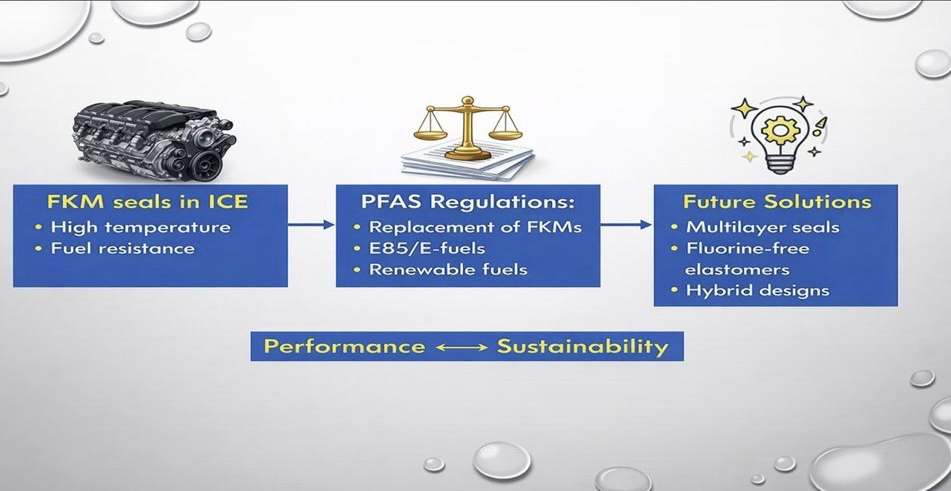
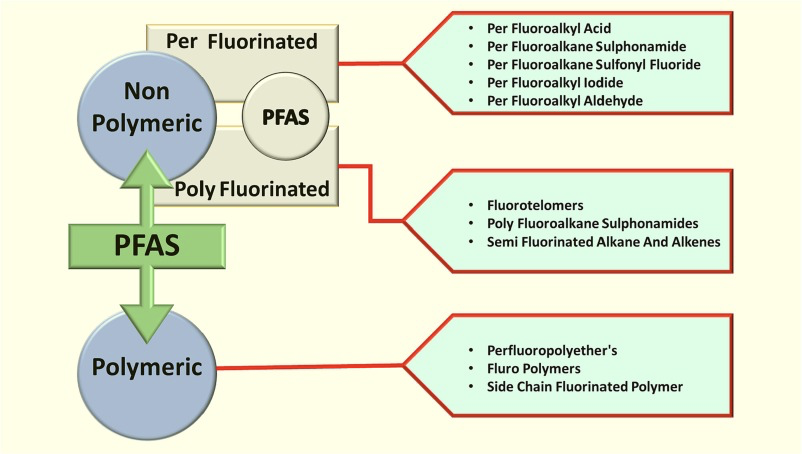
Although fluorinated materials have technical benefits, there is a growing wave of questioning the use of fluorinated materials because of the environmental and regulatory factors related to per- and polyfluoroalkyl substances (PFAS) (Améduri, 2023). PFAS have been referred to as “forever chemicals” due to their environmental persistence and their resistance to degradation and low bioaccumulation possibilities (Brun et al., 2023; Lee et al., 2025). Regulatory agencies, especially the European Union, are working towards general bans on PFAS that have cast doubt on the future use of fluorinated polymers in industries (European Commission, 2025). One of the main controversies is whether high-molecular-weight fluoropolymers like FKMs should be considered together with low-molecular-weight PFAS that are already known to be dangerous to the environment and health. Fluoropolymer can be subdivided into polymers where perfluorination resides either in the main chain or in the side chain (Figure 2). This differentiation is important, as in the advent of hydrolytic degradation, the perfluorinated side chains are released to the environment and their mobility and accumulation may be similar to other small molecular weight PFAS. In contrast, main-chain fluoropolymers, such as FKMs, do not hydrolyse and the risk of release of similar small molecular weight compounds is rather small.In turn, FKMs do not have high mobility and have low bioaccumulation; nevertheless, they are fluorinated in nature, which puts them in an ever-tighter regulatory environment.” FKMs do not have high mobility and have low bioaccumulation; nevertheless, they are fluorinated in nature, which puts them in an ever-tighter regulatory environment.
Sustainability Challenges and the Need for Material Substitution
This regulatory pressure is in line with an overall shift to sustainable mobility, such as the use of biofuels and e-fuels as solutions to lower greenhouse gas emission levels in internal combustion engines (Yılbaşı, 2025). Although these fuels have environmental advantages, they tend to cause compatibility challenges with materials, because they are more corrosive and chemically aggressive. This, in effect, makes it a significant technical challenge to replace fluorinated materials, as their unique performance characteristics remain difficult to replicate with non-fluorinated alternatives (Améduri, 2023). Any alternative substance cannot be inferior in terms of thermal stability, chemical resistance, elasticity, low permeability, and long durability, especially when subjected to fuels that are ethanol-based, like E85 (Sahu et al., 2022). This paper discusses the multifaceted nature of the relationship between material operation, fuel development, and regulatory requirements and explains why the substitution of FKMs remains one of the most pressing and unsolved issues in automotive material development.
Discussion
Currently Used Sealant Materials
Elastomers in Use: FKM and NBR
Fluoroelastomers (FKM) and nitrile butadiene rubber (NBR) (Scheme 1) are the most common elastomers used in automotive fuel and engine systems, chosen through a performance-to-cost ratio (Białecki et al., 2021). FKMs are normally utilized in the critical sealing processes that are subjected to high temperature, aggressive fuel, and extended working time (Asthana et al., 2025). Their fluorine content is high, and this gives them high thermal stability, which means that they can run continuously above 200 C, and are also highly resistant to oils, fuels, and additives. Such characteristics render FKMs applicable in injector seals, O-rings, shaft seals, and in-tank fuel components. Conversely, NBR has found extensive use as a cost-sensitive component in certain applications because it is less expensive and good enough for non-polar hydrocarbon resistance of petroleum-based fuels and lubricants.
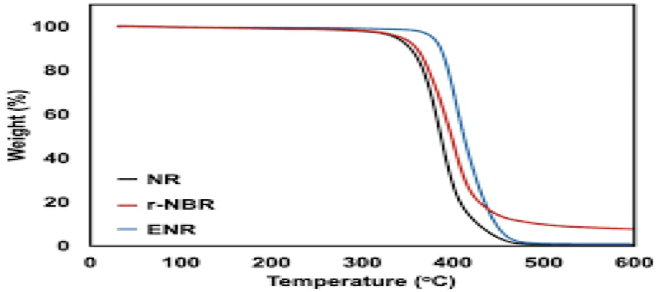
NBR reveals evident limitations despite the benefits in its economy, which is relevant in the contemporary operating conditions (Akhlaghi et al., 2015). It is rather thermally unstable with a maximum service temperature of approximately 120 °C, above which it becomes hardened and loses elasticity and acquires a high compression set. “Compare static thermal stability of NBR with FKM in TGA, Figure 3.” NBR is also highly susceptible to polar solvents and, therefore, is prone to swelling and degrading when subjected to fuels containing ethanol, like E10 or E85, which reduces the life of seals. On the other hand, FKMs are highly mechanically stable, have low fuel permeability, recover elastically at high temperature and alcohol-based fuels, and have a high service life covering mileage of over 100,000 km (Lee et al., 2022). Compare mechanical properties of NBR and FKM in Table 1. In turn, NBR is suitable for low-stress, low-cost applications, whereas FKMs are needed in high-performance, high-reliability automotive sealing system applications.
| Property | FKM (Fluoroelastomer) | NBR (Nitrile Butadiene Rubber) | HNBR (Hydrogenated NBR) |
| Typical continuous service temperature | −20 to 200–230 °C (Drobny, 2007; Ameduri, 2018) | −40 to 120 °C | −30 to 150–165 °C |
| Swelling in ethanol (E85), vol.% | < 5–10 % | 30–80 % (Akhlaghi et al., 2015) | 10–25 % (Lee et al., 2022) |
| Chemical resistance to alcohol fuels | Excellent | Poor–moderate | Moderate |
| Elongation at break (%) | 150–300 % | 300–600 % | 200–400 % |
| Young’s modulus (MPa) | 6–15 MPa | 2–6 MPa | 5–12 MPa |
| Compression set (70 h @ 150 °C) | 10–25 % | 30–60 % | 20–35 % |
| Fuel permeability | Very low | High | Moderate |
| Typical service lifetime (automotive) | > 100,000 km (Ameduri, 2018; Lee et al., 2022) | 40,000–60,000 km | 60,000–80,000 km |
| Recycling potential | Limited; controlled incineration with fluorine capture | Good; mechanical recycling | Moderate; limited devulcanization |
| Typical automotive applications | Injector seals, O-rings, fuel hoses, shaft seals | Low-cost gaskets | Upgraded fuel seals |
(Data compiled from Drobny, 2007; Ameduri, 2018; Akhlaghi et al., 2015; Lee et al., 2022)
Fuel Types and Their Impact
The modern internal combustion engines use a wider variety of fuels, such as gasoline-ethanol mixtures (E5 and E10), high-ethanol fuels (E85), biodiesel, and synthetic fuels (Laskowski & Zimakowska-Laskowska, 2025). Chemical and physical characteristics of each fuel also have different values that affect engine performance and material behavior (Table 2). The ethanol fuels have a lower caloric value compared to gasoline, and thus, they consume more fuel to produce the same amount of energy (Yakın et al., 2022). On the other hand, higher octane rating of ethanol enables some engines to operate at higher compression ratios and even better efficiencies. Although E5 and E10 produce moderate variation of fuel system conditions, E85 produces a significant exposure of polar solvents and water absorption that can aggravate the chemical stress on elastomeric fuel-system components.
Synthetic fuels and biodiesel present a new range of problems. Biodiesel is more lubricious than standard diesel, which may be advantageous in fuel pumping and injecting, but it oxidizes more easily and is susceptible to microbial growth where there is water. These may result in the production of acidic by-products, which hasten the breakdown of elastomers, especially those of low chemical resistance. Biofuels are classified according to their physical state, technology maturity, the generation of feedstock, and the generation of products (Awogbemi et al., 2023). Synthetic fuels, such as e-fuels made of renewable electricity and captured carbon dioxide, are developed to attain similar properties to the conventional hydrocarbons without causing lifecycle greenhouse emissions (US Department of Energy, 2019). Despite being relatively cleaner and relatively chemically inert, they react to certain extent with elastomer alternatives according to certain formulations and additive packages
| Fuel type | Ethanol content | Lower heating value (MJ/kg) | Energy density (MJ/L) | Typical engine efficiency | Impact on elastomers |
| Gasoline | 0 % | 42–44 (US DOE, 2019) | 32–34 | 25–30 % | Baseline compatibility |
| E5 | 5 % | 41–42 (Awogbemi et al., 2021) | 31–32 | 25–30 % | Minor swelling in NBR |
| E10 | 10 % | 40–41 | 30–31 | 26–31 % | Increased swelling in NBR/HNBR |
| E85 | 85 % | 26–28 | 21–23 | 30–38 % (optimized engines) | Severe swelling in non-FKM elastomers |
| Diesel | 0 % | 42–43 (European Commission, 2023) | 35–36 | 35–45 % | Generally compatible |
| Biodiesel (FAME) | 0 % | 37–40 | 32–33 | 35–40 % | Oxidative aging, hardening |
| Synthetic e-fuels | 0 % | 42–44 (European Commission, 2023) | 33–35 | 30–40 % | Formulation-dependent |
(Data compiled from Awogbemi et al., 2021; US DOE, 2019; MDPI Energies, 2021; European Commission, 2023)
FKMs, PFAS, and Regulatory Debate
Fluoroelastomers are extremely resistant to alcohol-based fuels, have low permeability, and have a long service life, so they are an essential component in the automotive fuel system (Ameduri and Sawada, 2016). However, their fluorinated structure makes them the object of the extended regulations of PFAS. Even though the FKMs do not have the same mobility, bioavailability, and environmental behavior as low-molecular-weight PFAS, the regulatory definitions are generic. This has brought about confusion among manufacturers and suppliers, where alternative materials and fluorine-reduction strategies are being researched, even though there are no similar non-fluorinated substitutes with the same level of performance.
Strategies to Replace FKMs
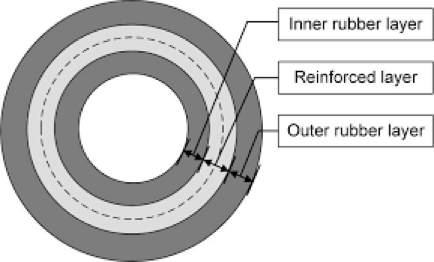
Several alternatives are under development that will eliminate or limit the use of FKMs in automobiles. These consist of hydrogenated nitrile butadiene rubber (HNBR, Scheme 1), high-performance thermoplastic elastomers, and silicone elastomers that have improved fuel resistance (Joshi, 2025; Gao et al., 2025). Other mitigation strategies include hybrid seal or multilayer seal construction or surface coating, whereby the traditional elastomers are coupled with thin barrier seals to restrict fuel permeation (Figure 4). The compatibility of elastomers with various fuels indicates that most alternative rubbers (including HNBR and other engineered types) change their mechanical properties significantly under exposure to renewable and blended fuels, which makes it challenging to find alternatives with more or less the same performance as FKM ( Müller et al., 2024). Although they may partially reduce the effects of chemical attack and swelling, none of these solutions can be considered as having the same thermal stability, chemical resistance, and durability as FKMs, especially when exposed to ethanol-rich fuels like E85. Other alternative engineered elastomers such as HNBR, as well as most alternative rubbers, vary their mechanical properties greatly when in contact with renewable and blended fuels, especially when in extended contact with fuels high in ethanol (Conen, Haefele and Dahlmann, 2025).
Road Cars versus Race Cars
The operational and regulatory aspects vary significantly, and this difference in priorities leads to a significant difference between the selection of materials used in road vehicles and race cars. In racing use, performance, high temperature performance, and high temperature performance are crucial factors, and the need to match rapidly evolving fuel compounds is often the reason why FKMs or perfluoro elastomers are continued to be employed despite the cost or regulatory pressure (Katon, 2025). In contrast, road vehicles have to weigh between performance and cost-effectiveness, compliance with regulations, and durability during the long run due to the long service life (Adebowale, 2025). Although race cars still almost entirely use FKMs, the continued development of fluorine-free polymers and multilayer seal technologies implies that road vehicles can use other types of elastomer systems in the future (Mandlekar, Joshi & Butola, 2022; Valentini & Lopez-Manchado, 2020).
Summary
Fluor elastomers have been very important in providing reliability and safety of automotive engines, especially those with high temperatures in the fuel system and hostile fuels (Drobny, 2023). The shift to the use of ethanol-based and synthetic fuels, coupled with stricter regulations on PFAS, has put a lot of pressure on the need to substitute or redesign fluorinated substances. Although the FKMs are still unrivaled in terms of total performance, more so when it comes to accommodating E85 compatibility, regulatory and environmental issues are driving the development of alternative elastomers and hybrid solutions. Even in the near future, it is not probable that FKMs can be fully replaced without performance loss (Puga et al., 2025). Rather, the future of automotive sealants will be characterized by incremental changes in materials and an application-specific approach in both road and race applications.
References
Adebowale, O. J. (2025). Battery module balancing in commercial EVs: strategies for performance and longevity. Int J Eng Technol Res Manag, 9(4), 162.). https://doi.org/10.5281/zenodo.15186621
Akhlaghi, S., Gedde, U. W., Hedenqvist, M. S., Braña, M. T., & Bellander, M. (2015). Deterioration of automotive rubbers in liquid biofuels: A review. Renewable and Sustainable Energy Reviews, 43, 1238-1248. https://doi.org/10.1016/j.rser.2014.11.096
Améduri, B. (2023). Fluoropolymers as unique and irreplaceable materials: challenges and future trends in these specific per or poly-fluoroalkyl substances. Molecules, 28(22), 7564.
Ameduri, B., & Sawada, H. (Eds.). (2016). Fluorinated Polymers: Applications: Volume 2. Royal Society of Chemistry. https://doi.org/10.1039/9781782626718-FP001
Asthana, P., McCormick, J., Salazar, O., & Verma, H. (2025). Application specific rapid gas decompression testing for oilfield elastomers under ultra-high H2S environment. Middle East Oil, Gas and Geosciences Show (MEOS GEO). https://doi.org/10.2118/227003-ms
Awogbemi, O., Kallon, D. V., Onuh, E. I., & Aigbodion, V. S. (2021). An overview of the classification, production and utilization of Biofuels for internal combustion engine applications. Energies, 14(18), 5687. https://doi.org/10.3390/en14185687
Białecki, T., Sitkiewicz, A., Giemza, B., Sarnecki, J., Skolniak, M., & Gawron, B. (2021). Compatibility of different automotive elastomers in paraffinic diesel fuel. Applied Sciences, 11(23), 11312. https://doi.org/10.3390/app112311312
Brunn, H., Arnold, G., Körner, W., Rippen, G., Steinhäuser, K. G., & Valentin, I. (2023). PFAS: Forever chemicals—persistent, bioaccumulative and mobile. Reviewing the status and the need for their phase out and remediation of contaminated sites. Environmental Sciences Europe, 35(1). https://doi.org/10.1186/s12302-023-00721-8
Conen, T., Häfele, B., & Dahlmann, R. (2025). Review on compatibility considerations of fuel system elastomers with paraffinic fuels. SAE International Journal of Fuels and Lubricants, 18(3). https://doi.org/10.4271/04-18-03-0017
Dhiman, S., & Ansari, N. G. (2024). A review on extraction, analytical and rapid detection techniques of per/poly fluoro alkyl substances in different matrices. Microchemical Journal, 196, 109667. https://doi.org/10.1016/j.microc.2023.109667
Drobny, J. G. (2007). Fluoropolymers in automotive applications. Polymers for Advanced Technologies, 18(2), 117-121. https://doi.org/10.1002/pat.807
Drobny, J. G. (2023). Fluorocarbon elastomers. Technology of Fluoropolymers, 133-186. https://doi.org/10.1201/9781003204275-12
European Commission. (2025). Biofuels. Energy. https://energy.ec.europa.eu/topics/renewable-energy/bioenergy/biofuels_en
Gao, X., Wang, X., Pan, W., Wang, M., Xu, X., Li, Z., & Zhao, S. (2025). Highly hydrogenated, solvent-resistant, low-temperature conductive nitrile rubber for multifunctional sensors. Chemical Engineering Journal, 504, 158735. https://doi.org/10.1016/j.cej.2024.158735
Joshi, A. M. (2024). Rubbers and elastomers in specialty applications. Specialty Polymers and Materials, 293-314. https://doi.org/10.1201/9781003561361-15
Katon. (2025). FFKM vs FKM: Key differences, properties, and applications. FFKM O-Ring Supplier | Advanced FFKM O-Rings at Smarter Prices – Katon®. https://katonseal.com/en/news/3/20
Kitajima, Y. (2023). Applying seal technology to meet needs: Supporting automobiles with NOK. NOK × Nikkan Kogyo Shimbun Journagram. https://www.nokgrp.com/en/technology/tec_column/000005/
Laskowski, P., & Zimakowska-Laskowska, M. (2025). Simulation study of the effect of ethanol content in fuel on petrol engine performance and exhaust emissions. Combustion Engines, 201(2), 129-135. https://doi.org/10.19206/ce-204049
Lee, P. C., Kim, S. Y., Ko, Y. K., Ha, J. U., Jeoung, S. K., Lee, J. Y., & Kim, M. (2022). Durability and service life prediction of fluorocarbon elastomer under thermal environments. Polymers, 14(10), 2047. https://doi.org/10.3390/polym14102047
Lee, J. C., Smaoui, S., Duffill, J., Marandi, B., & Varzakas, T. (2025). Forever chemicals PFAS global impact and activities, cascading consequences of colossal systems failure: Long-term health effects, food-systems, eco-systems. https://doi.org/10.20944/preprints202501.1698.v1
Mandlekar, N., Joshi, M., & Butola, B. S. (2022). A review on specialty elastomers based potential inflatable structures and applications. Advanced Industrial and Engineering Polymer Research, 5(1), 33-45. https://doi.org/10.1016/j.aiepr.2021.05.004
Masa, A., Hayeemasae, N., Ahmad, H. S., & Ismail, H. (2023). Nitrile glove waste as blending component for natural rubber and epoxidized natural rubber: functionality and thermal stability. MJCHEM, 25(4), 135-43. https://doi.org/10.55373/mjchem.v25i4.135
Moon, Y. I., Jung, J. K., Kim, G. H., & Chung, K. S. (2021). Observation of the relaxation process in fluoroelastomers by dielectric relaxation spectroscopy. Physica B: Condensed Matter, 608, 412870. https://doi.org/10.1016/j.physb.2021.412870
Muelaner, J. E. (2023). Decarbonized power options for non-road mobile machinery. https://doi.org/10.4271/epr2023002
Müller, M., Mishra, R. K., Šleger, V., Pexa, M., & Čedík, J. (2024). Elastomer-based sealing o-rings and their compatibility with methanol, ethanol, and hydrotreated vegetable oil for fueling internal combustion engines. Materials, 17(2), 430.
https://doi.org/10.3390/ma17020430
Nishina, H. (2008). Trends in automotive sealing materials technology. International Polymer Science and Technology, 35(3), 51-60. https://doi.org/10.1177/0307174×0803500315
Sahu, T. K., Shukla, P. C., Belgiorno, G., & Maurya, R. K. (2022). Alcohols as alternative fuels in compression ignition engines for sustainable transportation: A review. Energy Sources, Part A: Recovery, Utilization, and Environmental Effects, 44(4), 8736-8759. https://doi.org/10.1080/15567036.2022.2124326
Stevens, R. D. (2006). Fuel and Permeation Resistance of Fluoroelastomers to Ethanol Blends. In Rubber Mini Expo 06: 170 th Technical Meeting of the American Chemical Society, Rubber Division 2006.
U.S. Department of Energy (DOE). (n.d.). Biofuels: Energy for transportation. Energy.gov. https://www.energy.gov/cmei/fuels/biofuels-energy-transportation
US Department of Energy. (2019). Leveraging Biofuels for a cleaner mobility future. Energy.gov. https://www.energy.gov/cmei/articles/leveraging-biofuels-cleaner-mobility-future
Valentini, L., & Lopez-Manchado, M. A. (2020). Classification of rubbers and components for harsh environmental systems. High-Performance Elastomeric Materials Reinforced by Nano-Carbons, 1-14. https://doi.org/10.1016/b978-0-12-816198-2.00001-3
Vega Puga, E., Wachtendorf, V., Kömmling, A., Brendelberger, S., Jaunich, M., & Sattler, C. (2025). Lifetime prediction and degradation assessment of FKM and FFKM O-rings under high temperature thermo-oxidative ageing. Polymer Testing, 147, 108820. https://doi.org/10.1016/j.polymertesting.2025.108820
Xu, G. M., & Shuai, C. G. (2021). Axial and lateral stiffness of spherical self-balancing fiber reinforced rubber pipes under internal pressure. Science and Engineering of Composite Materials, 28(1), 96-106.
Yakın, A., Behcet, R., Solmaz, H., & Halis, S. (2022). Testing sodium borohydride as a fuel additive in internal combustion gasoline engine. Energy, 254, 124300. https://doi.org/10.1016/j.energy.2022.124300
Yang, G., Tong, L., You, Y., Lei, X., & Liu, X. (2019). A study on fluoroelastomer/MWCNTs-COOH dielectric composite with high temperature and acid resistance. Journal of Materials Science: Materials in Electronics, 30(17), 16359-16368.
Yılbaşı, Z. (2025). Biofuels, E-fuels, and waste-derived fuels: Advances, challenges, and future directions. Sustainability, 17(13), 6145. https://doi.org/10.3390/su17136145
About the author
DongHan Li
DongHan is currently Grade 11 student, studying in Beijing, China. During the course of high school, he has studied the A-level Curriculum in subjects such as physics and chemistry. DongHan has a strong interest in Engineering, especially in Chemical Engineering. Additionally, he has also found himself very intrigued by theories related to Nanotechnology along with fluid dynamics that have facilitated the process of completing this dissertation.
At the same time, DongHan’s interest in motorsports (Grand Touring 3 race cars ) has helped develop the general aim of this dissertation. As motorsports develop continuously over time, it is very promising and exciting to dig into and challenge the theories that already exist, hoping to offer alternative solutions to existing engineering challenges.