


Author: Kethan Sai N
Mentor: Dr. Caglar Ozturk
National Public School Whitefield
1. Introduction
Heating, Ventilation, and Air Conditioning (HVAC) systems are essential across residential, commercial, healthcare, industrial, laboratory, and data-center environments, where maintaining thermal comfort, indoor air quality, and controlled operating conditions is critical (Lee & Chen, 2022). They regulate temperature, humidity, ventilation, and air quality, improving occupant comfort and well-being. As urbanization and living standards continue to rise, the demand for heating and cooling has increased significantly. Consequently, HVAC systems have become one of the largest consumers of energy in modern buildings (Lu et al., 2025). Buildings account for a major share of global energy consumption and carbon emissions. For this reason, improving HVAC efficiency has become an important research area, especially in regions experiencing rapid growth in cooling demand (Adelekan et al., 2022).
HVAC systems have largely relied on fixed schedules, thermostats, rule-based controls, and proportional-integral-derivative (PID) controllers. Although these methods are reliable, they may not respond effectively to change in conditions like room occupancy, outdoor weather and decline in equipment performance (Gharbi et al., 2025). As a result, these systems often continue operating for longer than required, resulting in excess energy consumption.
Recent advances in artificial intelligence (AI), machine learning (ML), the internet of things (IoT), cloud computing, and big data analytics are transforming HVAC operation. Instead of only relying on fixed settings, AI-based systems continuously analyse sensor data, control cooling and heating demands, and automatically adjust operation in real time (Lee & Tsai, 2020). Studies show that these systems can reduce energy consumption while maintaining occupant comfort (Kannan et al., 2020). AI applications have expanded from traditional ML models to advanced techniques such as deep learning (DL), reinforcement learning (RL), digital twins (DT), and cloud-based optimization, pushing HVAC management toward autonomous operation(Lu et al., 2025). This change has made AI-enabled HVAC systems an important area of research, especially for smart buildings, sustainable development, and achieving carbon neutrality. In addition, AI-based HVAC systems support many United Nations Sustainable Development Goals (SDGs), namely SDG 7 (Affordable and Clean Energy), SDG 9 (Industry, Innovation and Infrastructure), SDG 11 (Sustainable Cities and Communities), SDG 12 (Responsible Consumption and Production), and SDG 13 (Climate Action) (Hauashdh et al., 2024). Figure 1 shows how AI-enabled HVAC systems contribute to these goals.
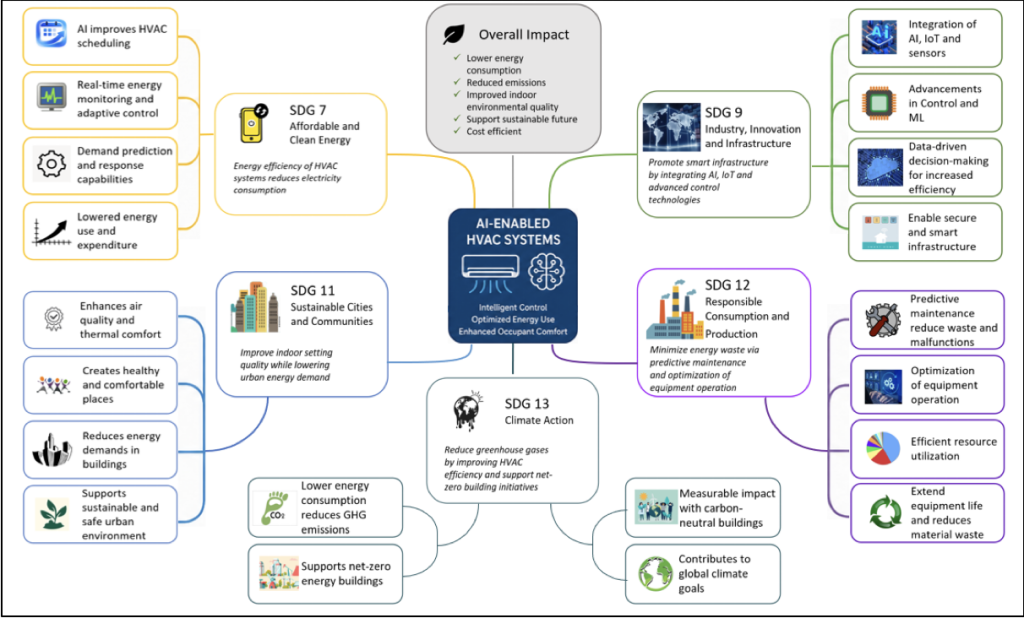
Figure 1: Contribution of AI-enabled HVAC systems to the United Nations Sustainable Development Goals
This review explains the basic working of HVAC systems, the main factors affecting their energy use, and how AI is making them more intelligent, adaptive, and energy-efficient.
2. HVAC Principles and Energy Use
2.1 Fundamentals and Working Principles
The main purpose of an HVAC system is to maintain comfortable indoor conditions by controlling temperature, humidity, airflow, and air quality. It works based on principles of thermodynamics like heat transfer, refrigeration, and automatic control. A typical HVAC system consists of four main parts: heating, cooling, ventilation, and a control system that manages their operation.
The cooling process usually uses the vapor-compression refrigeration cycle, which includes a compressor, condenser, expansion valve, and evaporator. These components work together to remove heat from indoor air and release it outside. Heating can be provided by boilers, furnaces, electric heaters, or heat pumps. Ventilation supplies fresh outdoor air while removing stale air, pollutants, and excess moisture to maintain a healthy indoor environment.
In commercial buildings, HVAC systems are more sophisticated and include equipment such as chillers, cooling towers, air handling units, variable air volume systems, pumps, duct-network, and a building management system (BMS) (Lu et al., 2025). These parts respond to shifts in thermal loads from occupants, equipment, lighting, and the outdoor environment. Since all these parts interact with each other in a complex way, operating the system efficiently is a challenging task (Nashruddin et al., 2025).
2.2 Fundamentals of HVAC Energy Consumption
HVAC systems are one of the largest energy-consuming systems in buildings, this energy is used for cooling, heating, ventilation, pumping, and other supporting controls (Lu et al., 2025). Among these, cooling consumes the highest amount of energy, especially in tropical and subtropical regions where air conditioners operate for most of the year (Chua et al., 2013).
The energy consumption of an HVAC system depends on several factors, namely:
- Outdoor temperature and weather patterns
- Building orientation and insulation
- Occupancy and schedules
- Internal heat gains from equipment and lighting
- Ventilation requirements
- Equipment efficiency and maintenance condition
Many buildings still use fixed temperature settings and pre-set schedules for operation, which cannot adjust to change in conditions in real time. As a result, problems such as over cooling and ventilation, and inefficient operation are common. Legacy buildings have an increased effect due to outdated equipment, poor insulation, and uneven load distribution (Nashruddin et al., 2025).
Efficiency of HVAC systems is commonly evaluated using performance indicators like the energy efficiency ratio (EER), seasonal energy efficiency ratio, coefficient of performance, and cooling seasonal performance factor (CSPF) are used across the literature. AI-based controls improve the same metrics through predictive scheduling, adaptive control, and demand forecasting (Raza & Khosravi, 2015).
3. AI Application and Enabling Technologies in HVAC Systems
3.1 Functions of AI-Enabled HVAC Systems
AI-based approaches can provide predictive and adaptive capabilities that are limited in traditional non-AI-based systems. Unlike traditional controllers, which work using fixed rules and preset values, AI-based controllers continuously analyze system data and improve their performance over time. Accordingly, depending on the system design applications may include:
- Real-time optimization
- Predictive energy management
- Occupancy-aware control
- Thermal comfort optimization
- Fault detection and diagnosis (FDD)
- Predictive maintenance
- Demand response management
- Self-learning and adaptation
These features allow HVAC systems to respond to changes in building conditions, instead of following a fixed schedule, helping reduce energy consumption while maintaining occupant comfort (Lu et al., 2025). According to Lee & Chen (2022), AI-based energy-saving methods can be grouped into six main categories: model predictive control (coupled with AI) (MPC), thermal comfort control, model-free predictive control, control optimization, multi-agent control (MAC), and knowledge-based systems (KBS). These techniques have been reported to achieve energy-savings ranging from 8.8% to 25.5%, although the actual savings depend on the building type, operating conditions, and control strategy employed (Lee & Chen, 2022).
3.2 Hardware–Software Integration and Model Development
AI-based HVAC systems rely on both hardware and software to collect, process, and analyze data for intelligent control. These components work together to monitor building conditions and optimize HVAC operations.
Hardware Infrastructure
AI-based HVAC system hardware typically includes temperature, humidity, airflow and air-quality sensors, occupancy sensors, smart thermostats, power meters, edge controllers, and IoT gateways, which continuously collect environmental and operational data and send it to the control system for analysis (Lu et al., 2025).
Software Architecture
The software design may include the BMS itself, cloud computing platforms, data acquisition modules, ML frameworks, visualization dashboards, DT environments, and optimization engines. Cloud-based systems allow control algorithms to be updated remotely without replacing physical equipment, making upgrades more efficient and potentially reducing maintenance costs (Lee & Tsai, 2020). However, this may also introduce subscription costs and requires reliable internet connectivity and cybersecurity measures for secure operation.
Model Development Workflow
AI models are generally developed through data collection, preprocessing, feature extraction, model training, validation, testing, deployment, and continuous optimization. Performance of prediction models depend largely on data quality, feature normalisation, and the model chosen in the first place (Nashruddin et al., 2025).
3.3 Current AI Approaches and Technologies
Different AI techniques are used in HVAC systems depending on the intended application. Applications such as prediction, optimization, system control, fault detection, and energy management require different AI methods. Traditional ML technologies are still widely used because of their simplicity and interpretability. However, as HVAC systems have become more complex and IoT devices generate larger amounts of data, techniques like DL and RL have gained prominence. The table below summarizes the main AI techniques reported in the literature and their common applications in HVAC systems.
| Category | Methods | Main Purpose | Target Question |
| Prediction | ANN, DNN, LSTM, RNN, SVM, RF, DeT | Predict building energy demand, cooling/heating loads, indoor temperature, occupancy, and equipment behavior | What will the future energy demand or system state be? |
| Control | AI-based MPC, RL, MAC, KBS, Fuzzy logic | Optimize HVAC operation while maintaining thermal comfort and minimizing energy consumption | What should the system do next? |
| Optimization | GA, PSO, Bayesian Optimization, Multi-objective Optimization, Whale Optimization Algorithm (WOA) | Determine optimal operating parameters, schedules, and control strategies | Which operating parameters maximise the selected performance objectives? |
| Fault Detection & Diagnostics (Monitoring) | SVM, CNN, LSTM, RF, DL, Computer Vision (CV) | Detect abnormal operation, diagnose faults, and enable predictive maintenance | Is the HVAC system working efficiently? |
| Maintenance | LSTM, DT, Predictive Analysis | Estimate equipment health, predict failures, and schedule maintenance | Is the system working properly, and when is maintenance due? |
| Occupancy & Comfort Management | CV, RL, ANN, Infrared Thermography | Detect occupants, estimate thermal comfort, and personalize HVAC operation | How can occupant comfort be maintained while reducing energy use? |
| Digital Modeling and Analysis | DT, TL | Create virtual models for simulation, optimization, and real-time decision support | How can system performance be improved? |
Table 1: Major AI approaches reported in the HVAC literature, by application. (Lu et al., 2025; Manmatharasan et al., 2025; Kannan et al., 2020; Lee & Chen, 2022; Nashruddin et al., 2025; Lee & Tsai, 2020)
3.4 Data Requirements and Method Selection
The performance of an AI-based HVAC system depends on both the algorithm, and the quality, quantity and variety of the data it receives. Data collected from IoT sensors, smart meters, weather services, occupancy sensors, and BMS provide the information needed for intelligent decision-making and system optimization. This data typically covers:
- Indoor temperature
- Indoor humidity
- Outdoor weather conditions
- Occupancy information
- Energy consumption records
- Equipment operating status
- Indoor air quality measurements
- User preference and comfort settings
Some AI models are trained using very large datasets. For example, one cloud-based study developed energy-saving recommendations using operational data collected from 37,748 AC units (Kannan et al., 2020).
The choice of an AI technique depends on the type and amount of available data. Traditional ML methods such as SVM, decision trees (DeT), and random forests (RF) are commonly used for energy prediction, load forecasting, fault detection, and system optimization (Nashruddin et al., 2025; Lu et al., 2025). DL methods, LSTM networks specifically, need large time-series datasets to learn changes in weather, occupancy, and energy demand over time. RL learns a control policy through interactions with an environment. This process may require substantial training data or simulation and can create safety concerns when learning directly in occupied buildings (Lu et al., 2025). MPC combines prediction and optimization to plan future control actions. In current HVAC systems, MPC is often coupled with AI techniques like ML and DL to improve prediction accuracy and system adaptability, this makes it one of the most effective control methods (Lee & Tsai, 2020). Hybrid approaches like combining ML with fuzzy logic, genetic algorithms (GA), or Particle Swarm Optimization can further improve system performance (Lu et al., 2025).
Overall, the most suitable AI method depends on data availability, computing resources, and the application requirements. Among the available methods, AI-based MPC is currently among the most practical solutions (Lee & Chen, 2022). Hybrid frameworks hold promising results as they improve prediction accuracy and control performance, although their effectiveness depends on the application and available computational resources. While DL, RL, transfer learning (TL), federated learning (FL), edge AI, and occupant-centric control hold the potential, hence drive future research (Lu et al., 2025).
4. Key Findings and Inference
This section compares several studies to understand how AI techniques employed in HVAC systems have developed. It examines the most widely used control strategies, applications and reported results. Comparing these findings of different review papers also helps identify the AI techniques and research trends that appear consistently across studies, providing a better understanding of how the field has evolved.
4.1 Comprehensive Comparison of AI-Based HVAC Studies
Table 2 presents a comparative analysis of the selected review papers, shedding light on their research focus, AI techniques, results, and reported performance improvements. This comparison provides an overview of current advancements in AI-driven HVAC systems and identifies the strengths and contributions of each study.
| Reference | AI Technique(s) | Main Objective | Major Findings | Quantitative Results | Practical Implications |
| Lee & Tsai, 2020 | Cloud-based MPC, Cloud AI, Fuzzy Logic | Improve cooling efficiency using cloud-based AI control | Cloud-based MPC optimization outperformed conventional fuzzy control on energy performance while keeping indoor temperature stable. | 9.12% increase in EER; 7.37% improvement in CSPF | Shows cloud-based AI can improve existing AC systems remotely, without new hardware. |
| Kannan et al., 2020 | DNN, Preference Map, IoT Analytics | Develop personalized energy-saving recommendations while maintaining occupant comfort | The model learned occupant preferences and generated personalized recommendations with substantial energy savings. | 57.38% median energy saving using AI’s highest-ranked recommended AC setting | Suggests potential for large-scale AI deployment for personalized smart-home HVAC control. |
| Nashruddin et al., 2025 | DeT, RF, SVM, DL, Gradient Boosting, GLM | Compare ML algorithms for energy optimization of existing HVAC systems | DeT makes the best use of prediction accuracy, computational simplicity, and energy reduction. | 12% energy reduction (normal operation); 18% after renovation | Shows AI can retrofit older HVAC systems without major infrastructure replacement. |
| Lee & Chen, 2022 | AI-based MPC, MFPC, ANN, RL, KBS, MAC, ML | Evaluate AI technologies for sustainable HVAC operation | AI-based MPC suggested the most mature and consistently effective control strategy; hybrid AI further improved comfort and efficiency. | Typical reported energy savings of 8.8–25.5% | Highlights the potential of AI-enabled HVAC to improve energy efficiency and maintain comfort. |
| Lu et al., 2025 | ML, DL, RL, DT, CV, Intelligent Control | Review AI applications in HVAC optimization, fault diagnosis, comfort control, and predictive maintenance | AI meaningfully strengthens predictive control, occupancy-aware optimization, and fault detection; DT integration stands out as an emerging direction. | Across 184 studies reviewed, reported energy savings ranged from 6-73%, reflecting substantial variation in methods, and operating conditions such as energy optimization, comfort, and fault diagnosis. | Identifies DT as an emerging direction for improving AI-based HVAC optimization. |
| Manmatharasan et al., 2025 | ANN, Surrogate Models, Bayesian Optimization, RL, GA | Apply AI during building design to minimize operational energy demand and carbon emissions | AI accelerates design optimization and enables multi-objective tradeoffs across energy, daylight, and emissions; operational energy demand was optimized most often. | 56 studies optimized operational energy demand, alongside daylight performance and carbon emissions | Shows AI can optimize HVAC operations as well as building energy use. |
Table 2: Comparative summary of key review studies on AI applications in HVAC systems
4.2 AI Techniques: Energy-Saving Potential vs Legacy Building Implementation Difficulty
Figure 2 provides a comparative overview of the primary AI techniques discussed in the selected studies by relating their reported maximum energy-saving potential to the inferred estimated difficulty of implementation in legacy buildings. The energy-saving values are based on either experimentally reported results or representative ranges summarized in the respective review papers, while the implementation difficulty is qualitatively assessed from factors such as retrofit requirements, sensor infrastructure, computational complexity, and integration with existing HVAC systems. The figure also highlights that simpler AI methods are easier to implement in existing buildings but usually provide moderate energy savings. In contrast, advanced techniques such as predictive control, DL, and RL can achieve much higher energy savings, although they require more complex implementation and greater computational resources.
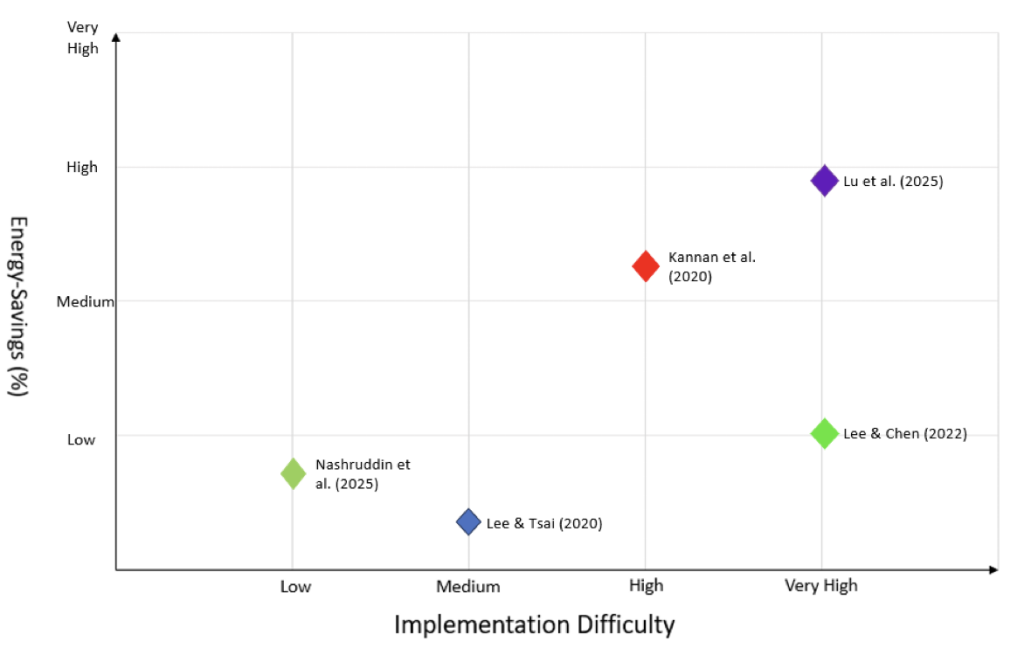
Figure 2: Plot of energy-savings and implementation difficulty of AI techniques used in the reviewed studies.
5. Challenges, Limitations, and Future Directions
The selected literature indicates that AI-based approaches have potential to improve HVAC energy management and operational performance. The reviewed studies consistently show that AI-based control performs better than conventional rule-based and PID controllers in terms of energy efficiency, thermal comfort, fault detection, and system reliability. However, several challenges still limit its large-scale implementation.
The major challenge is data availability and quality. AI models depend on accurate data collected from sensors, BMS, and IoT devices. Many legacy buildings lack this infrastructure, making it difficult to collect reliable data for training AI models (Nashruddin et al., 2025). Retrofitting such buildings with modern sensors, communication networks, and automation systems is often expensive and technically challenging. In addition, differences between building automation platforms create interoperability issues, while concerns over data privacy and cybersecurity further slow down AI adoption (Lu et al., 2025).
Generalization is another recurring gap. Most models are trained on one building or one climate and often perform poorly when applied to different buildings or environmental conditions (Lu et al., 2025). For this reason, TL and domain adaptation have become important research areas, as they allow knowledge gained from one building to be adapted to another with less retraining.
Improving energy efficiency should not compromise occupant comfort. Several studies considered comfort using indoor temperature stability, humidity control, Predicted Mean Vote, and Predicted Percentage Dissatisfied(Homod et al., 2012). AI techniques such as AI-based MPC, RL, fuzzy logic, and occupant-aware optimization consistently maintained or improved comfort while reducing energy use. Quantitative data supports this claim: Lee & Tsai (2020) reported a 9.12% gain in EER and 7.37% in CSPF without sacrificing indoor stability; Kannan et al. (2020) reached a 57.38% median energy saving by incorporating occupant preferences; and Lee & Chen (2022) found AI-based strategies typically cutting energy use by 8.8% to 25.5% while comfort held steady or improved.
Future research should focus on improving the practical adoption of AI in HVAC and air-conditioning systems through real-world validation, especially in legacy buildings. Greater emphasis is needed on integrating AI with IoT sensors, DT, Building Information Modeling , and 5G-enabled smart infrastructure for real-time monitoring and adaptive control. Advanced techniques such as TL can adapt knowledge from one building to another with less retraining, while FL can train models across multiple buildings without directly sharing sensitive data. Explainable AI can make AI decisions easier to understand and increase user trust, while novel neural network architectures can improve prediction and control for complex HVAC conditions. Surrogate models can provide faster approximations of complex building or HVAC simulations, supporting quicker optimization. However, these approaches still require further research to address limited historical data, differences between buildings, privacy concerns, model complexity, and real-world validation. Researchers should also develop multi-objective optimization frameworks that simultaneously consider energy efficiency, thermal comfort, indoor air quality, and carbon emissions. Occupant-aware control using richer behavioural data, computer vision, and personalized comfort models can further enhance system performance. Finally, more studies should evaluate AI solutions across diverse building types and climates, while addressing security, uncertainty, fault diagnosis, commercialization, and seamless integration with existing HVAC infrastructure.
6. Conclusion
This review shows that AI-based methods have the potential to improve the adaptability and energy performance of HVAC systems. Unlike most of the traditional controllers that rely on fixed schedules and predefined rules, AI-based systems learn from real-time data and continuously adjust their operation to meet changing building conditions. The reviewed studies demonstrate the successful use of AI-based methods for energy management, thermal comfort optimization, occupancy prediction, fault detection, and predictive maintenance (Lu et al., 2025).
Several studies reported noticeable improvements in HVAC performance, with higher EER, improved energy, and efficiency metrics, while maintaining or improving occupant comfort (Lee & Tsai, 2020). The integration of cloud computing, IoT, and DT technologies has further increased the practicality and effectiveness of AI-driven HVAC systems(Lu et al., 2025).
Despite these benefits, several challenges remain. Data quality, limited sensing infrastructure, interoperability between different platforms, cybersecurity concerns, and poor model generalization continue to limit wider adoption. In addition, implementing AI in legacy buildings is difficult because many lack the sensors, communication networks, and BMS required for intelligent control, making retrofitting expensive and technically challenging (Akbulut et al., 2025).
Future research should focus on developing more transparent, secure, and adaptable AI systems through the integration of DT, IoT, Building Information Modeling, renewable energy, and smart grids. Technologies such as Explainable AI, FL, TL, and multi-agent RL can further improve system reliability and scalability. As these technologies continue to develop, AI-driven HVAC systems are expected to play an important role in reducing building energy consumption, lowering carbon emissions, and supporting sustainable buildings(Lu et al., 2025).
7. References
Adelekan, D. S., Ohunakin, O. S., & Paul, B. S. (2022). Artificial intelligence models for refrigeration, air conditioning and heat pump systems. Energy Reports, 8, 8451–8466. https://doi.org/10.1016/j.egyr.2022.06.062
Akbulut, L., Taşdelen, K., Atılgan, A., Malinowski, M., Coşgun, A., Şenol, R., Akbulut, A., & Petryk, A. (2025). A Systematic Review of Building Energy Management Systems (BEMSs): Sensors, IoT, and AI Integration. Energies, 18(24), 6522. https://doi.org/10.3390/en18246522
Chua, K. J., Chou, S. K., Yang, W. M., & Yan, J. (2013). Achieving better energy-efficient air conditioning – A review of technologies and strategies. Applied Energy, 104, 87–104. https://doi.org/10.1016/j.apenergy.2012.10.037
Gharbi, A., Ayari, M., Albalawi, N., Touati, Y. E., & Klai, Z. (2025). Intelligent HVAC Control: Comparative Simulation of Reinforcement Learning and PID Strategies for Energy Efficiency and Comfort Optimization. Mathematics, 13(14), 2311. https://doi.org/10.3390/math13142311
Hauashdh, A., Nagapan, S., Jailani, J., & Gamil, Y. (2024). An integrated framework for sustainable and efficient building maintenance operations aligning with climate change, SDGs, and emerging technology. Results in Engineering, 21, 101822. https://doi.org/10.1016/j.rineng.2024.101822
Homod, R. Z., Mohamed Sahari, K. S., Almurib, H. A. F., & Nagi, F. H. (2012). RLF and TS fuzzy model identification of indoor thermal comfort based on PMV/PPD. Building and Environment, 49, 141–153. https://doi.org/10.1016/j.buildenv.2011.09.012
Kannan, R., Roy, M. S., & Pathuri, S. H. (2020). Artificial Intelligence Based Air Conditioner Energy Saving Using a Novel Preference Map. IEEE Access, 8, 206622–206637. https://doi.org/10.1109/ACCESS.2020.3037970
Lee, D., & Chen, L. (2022). Sustainable Air-Conditioning Systems Enabled by Artificial Intelligence: Research Status, Enterprise Patent Analysis, and Future Prospects. Sustainability, 14(12), 7514. https://doi.org/10.3390/su14127514
Lee, D., & Tsai, F.-P. (2020). Air Conditioning Energy Saving from Cloud-Based Artificial Intelligence: Case Study of a Split-Type Air Conditioner. Energies, 13(8), 2001. https://doi.org/10.3390/en13082001
Lu, S., Zhou, S., Ding, Y., Kim, M. K., Yang, B., Tian, Z., & Liu, J. (2025). Exploring the comprehensive integration of artificial intelligence in optimizing HVAC system operations: A review and future outlook. Results in Engineering, 25, 103765. https://doi.org/10.1016/j.rineng.2024.103765
Manmatharasan, P., Bitsuamlak, G., & Grolinger, K. (2025). AI-driven design optimization for sustainable buildings: A systematic review. Energy and Buildings, 332, 115440. https://doi.org/10.1016/j.enbuild.2025.115440
Nashruddin, S. N. A. M., Salleh, F. H. M., Sulaiman, R., Zaiddy, M. I. B. M., Ramasamy, A., & Yahya, A. A. (2025). AI-driven optimization of air-conditioning systems in legacy Buildings: Evaluating machine learning models for enhanced energy efficiency. Journal of Building Engineering, 108, 112839. https://doi.org/10.1016/j.jobe.2025.112839
Raza, M. Q., & Khosravi, A. (2015). A review on artificial intelligence based load demand forecasting techniques for smart grid and buildings. Renewable and Sustainable Energy Reviews, 50, 1352–1372. https://doi.org/10.1016/j.rser.2015.04.065
About the author
Kethan Sai N
Kethan is a Grade 12 student majoring in Physics, Mathematics, and Chemistry, with Physics as his favorite subject. His curiosity for how the world works has led him to explore robotics, machine learning, and artificial intelligence, alongside a growing passion for sustainability. His research focuses on how AI and ML can be leveraged to build smarter, more sustainable systems, an interest reflected in his current paper on AI-driven approaches to energy-efficient HVAC systems.
Outside academics, he enjoys coding and losing himself in documentaries and videos exploring scientific mysteries and unknowns, a habit that fuels his constant search for new ideas and questions worth solving. He is equally active on the field and court, playing football, badminton, and basketball, believing that sharp thinking is best paired with an active body.
Combining a scientist’s curiosity with an engineer’s drive to build, he is passionate about using emerging technologies not just to innovate, but to create a more sustainable future for everyone. Looking ahead, he aims to build a career in robotics, AI, and machine learning, driven by a desire to turn these technologies into real, sustainable solutions for the world’s biggest challenges.