

Author: Vasisht Batchu
Mentor: Dr. Zion Tse
Newark Academy
Abstract
Background. Bionic systems that restore lost sensorimotor function are increasingly converging on a bidirectional architecture in which different signals from the user are interpreted to control the prosthesis, while afferent signals from the device are returned to the user through stimulation of the nervous system. This review examines the assumption that the more closely an artificial system imitates its biological counterpart, the better it will perform in terms of user adoption, practicality in everyday tasks, longevity of use, and sense of bodily ownership.
Objective. This review synthesizes fourteen primary and secondary sources published between 2021 and 2024 and argues that the components required to achieve these outcomes are already identifiable, although their contributions are not evenly distributed across the field. Bidirectional interfacing implemented at the surgical layer—through targeted muscle reinnervation (TMR), targeted sensory reinnervation (TSR), the agonist–antagonist myoneural interface (AMI), and osseointegration—provides some of the largest and most reliable functional gains and does so through procedures that have already entered clinical practice or translational use. Biomimetic control mapping is the more practical route to intuitive use for most users because it can be learned rapidly and requires comparatively little training. Arbitrary control has demonstrated equal or superior ceiling performance in experimental settings, but only after several days of structured training. Because residual anatomy and available control signals vary among individuals with limb loss, arbitrary control is most viable when individualized training is deliberately incorporated into rehabilitation rather than assumed, making it less readily generalizable.
Scope. Work on artificial sensory organs, including neuromorphic bionic eyes and electronic skins, is excluded from the proposed near-term translational pathway. Bionic eyes remain limited by the complexity of interfacing artificial sensors with the visual nervous system, whereas electronic skins are constrained by the difficulty of routing high-dimensional tactile information into sensory nerves and by the limited evidence demonstrating their necessity for everyday prosthetic function.
Conclusion. The most useful near-term research agenda may not be the development of a more capable prosthesis, but rather a more deliverable one: bidirectional systems assembled from established surgical techniques and commercially available hardware, validated during prolonged unsupervised use, and designed so that they can plausibly be integrated into existing U.S. regulatory and health-insurance reimbursement pathways.
Keywords: bionic limb; bidirectional interface; targeted muscle reinnervation; targeted sensory reinnervation; agonist–antagonist myoneural interface; osseointegration; biomimetic control; prosthetic abandonment; translation
1. Introduction
Limb loss is common and is expected to become increasingly prevalent. Europe has approximately 4.66 million people living with limb loss, with roughly 431,000 amputations performed annually, while the United States has approximately 2 million people with limb loss and roughly 185,000 amputations annually. The population of people with limb loss is projected to double by 2050 as a result of vascular disease and diabetes alone [1]. An estimated 58 million people worldwide were living with amputation as of 2017 [2].
Despite decades of engineering progress, prosthetic abandonment rates remain high, and the reasons reported throughout the literature are consistent: unreliable control, discomfort, high cognitive load, and absent or inadequate sensory feedback [1,3,4]. Importantly, many of these problems arise not from the mechanical capabilities of modern prostheses but from the interface between the prosthesis and the user. Multiarticulated hands with independently driven digits and powered ankles capable of generating substantial mechanical work already exist. What has not advanced at the same rate is the bidirectional connection between these devices and the user’s nervous system—the extraction of reliable efferent motor commands and the return of meaningful afferent sensory information [5].
This gap defines the central question addressed in this review. Rather than asking how technically capable or advanced a bionic limb can become, this review asks a narrower and more clinically consequential question: How much bidirectional interfacing and biomimetic control are actually required for a person with limb loss to live a “normal life”?
The term normal life is used here in a deliberately functional rather than normative sense. It refers to the ability to wear a prosthesis comfortably for prolonged periods, operate it without sustained visual monitoring or excessive cognitive effort, use it across everyday tasks at home and at work, experience reduced phantom-limb and residual-limb pain where possible, and continue using the device months or years after fitting.
The argument advanced in this review is that many of the necessary components are already visible in the literature and that the most promising near-term pathway relies more heavily on established surgical reconstruction and commercially available prosthetic hardware than on the most technically novel systems currently under development.
2. Scope and Method
This article is a narrative review of fourteen works published between 2021 and 2024, including primary research articles, reviews, perspectives, an editorial, and commentary pieces. The literature considered is weighted toward high-impact journals and upper-limb prosthetic research.
Two decisions regarding scope reflect the central argument of this review rather than merely the availability of literature and are therefore stated explicitly.
First, the technologies discussed are evaluated according to a translational standard: whether an approach could plausibly reach patients within existing clinical, regulatory, and reimbursement systems. Novelty alone is not treated as the primary measure of value.
Second, work on artificial sensory organs is addressed separately in Section 6 and deliberately excluded from the proposed near-term translational pathway. These technologies are considered important areas of biomedical engineering research, but their current limitations make them less directly relevant to the immediate goal of restoring everyday function after limb loss.
3. Bidirectional Interfacing at the Surgical Layer
3.1. The Signal-Scarcity Problem
A modern prosthetic hand may provide six or more independently controllable degrees of freedom, whereas a residual forearm contains only a limited number of muscles that can be recorded noninvasively and voluntarily activated independently. Dosen describes this mismatch directly: advanced prostheses require numerous control signals, while the number of readily accessible muscles remaining after amputation is limited [5].
The surgical techniques discussed below address this problem by creating or reorganizing biological signal sources. Importantly, they do so by reconstructing physiological relationships disrupted by amputation. In this sense, their biomimicry occurs not merely at the level of software mapping but at the level of biological structure and function.
3.2. Established Procedures With Demonstrated Functional Gains (Fig. 1-2)
Targeted muscle reinnervation (TMR) reroutes severed peripheral motor nerves into nearby intact muscles, which subsequently function as biological amplifiers of neural commands. Motor signals carried by the transferred nerves become electromyographic (EMG) signals at new recording sites, which can then be measured using surface or implanted electrodes. TMR appears in the literature both as a prosthetic-control strategy and as a treatment for neuroma and phantom-limb pain [3]. This dual role is particularly important to the reimbursement considerations discussed in Section 7.
Targeted sensory reinnervation (TSR) similarly reroutes severed sensory nerves but directs them toward nearby skin, creating regions in which stimulation can evoke sensations perceived as originating from the missing limb. This phenomenon can produce a so-called phantom map. Because the brain can localize an elicited sensation according to the original projection of the stimulated afferent fibers, stimulation of reinnervated skin can produce sensations referred to the missing hand [6,7]. Sensory feedback can therefore be delivered through surface-mounted actuators applied to these reinnervated skin regions, avoiding some of the additional complexity associated with fully implanted stimulating electrodes.
The agonist–antagonist myoneural interface (AMI) surgically couples agonist and antagonist muscle pairs using residual muscles within the residuum. Contraction of one muscle stretches its antagonist, partially reconstructing the reciprocal muscle dynamics that ordinarily generate proprioceptive information [1,4,8].
Osseointegration anchors the prosthesis directly to bone through an implanted fixture and percutaneous connection. Mechanically, it eliminates the conventional socket interface and can improve load transfer and comfort for selected users [1,9]. Electrically, osseointegration can also provide a stable pathway through which wires from implanted electrodes communicate with an external prosthesis. Dosen identifies signal transmission across the skin as one of the major challenges that has limited otherwise functional implanted systems [5].
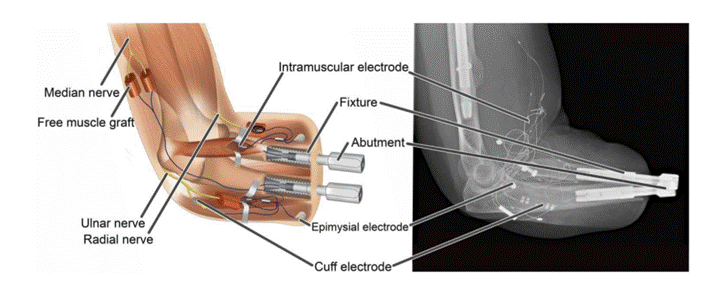
Fig. 1. Schematic illustration and x-ray of a highly integrated human-machine interface in a patient with transradial amputation. Four monopolar epymisial and four monopolar intramuscular electrodes were sutured on/in native residual muscles to provide myoelectric signals for prosthetic control. Furthermore, fascicles of the median, ulnar, and radial nerves were transferred into nonvascularized muscle graft to create additional myoelectric sites. Each nonvascularized muscle graft was instrumented with a monopolar intramuscular electrode. Part of the ulnar nerve was wrapped with a cuff electrode for sensory feedback. A titanium fixture was implanted into both the radius and the ulna bones and left to osseointegrate. In addition, a percutaneous abutment was installed into each fixture, allowing for skeletal attachment of a prosthetic hand. Feedthrough connectors allow for wired electrical communication from the proximal end of the fixtures (inside the body) to the distal end of the two abutments (outside the body), creating a bidirectional communication between the human and the prosthetic hand. [9]
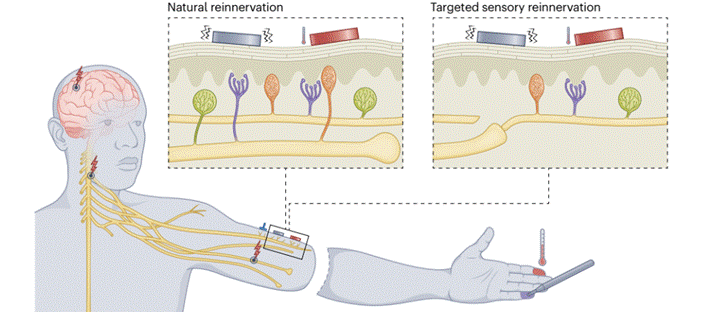
Fig. 2. Somatosensory stimulation for eliciting perceptions after amputation. Sensations distally referred in the missing limb can be elicited by stimulating biological sensors that take advantage of natural (left inset) or surgically created (right inset) ‘phantom maps’, or by stimulating (as indicated by red thunder-ray symbols) the brain, the spinal cord or a peripheral nerve through implanted electrodes or transcutaneously with electrodes placed on the skin’s surface. Tactile and thermal stimulations (as indicated by black and red coin-like objects, respectively) on the phantom maps produce the corresponding tactile and thermal sensations perceived as naturally occurring in the missing limb. Image courtesy of Mirka Buist. [7].
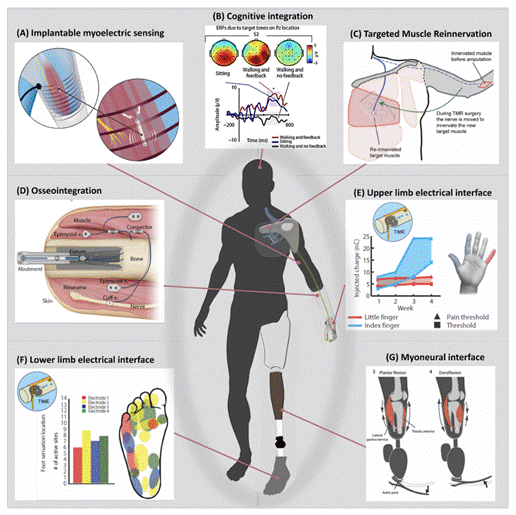
Fig. 3. Current advances in bidirectional control of limb prostheses. The combined efforts of engineers, neurosurgeons and orthopedists are represented in the different approaches to restore the sensorimotor control of the missing limb. (A) The IMES technology. [4].
3.3. Magnitude of the Functional Effect (Fig. 4-6)
Some of the strongest quantitative evidence in the literature reviewed here comes from Song and colleagues, who evaluated continuous neural control of a powered ankle in seven participants with below-knee amputations who had undergone AMI surgery and compared them with seven matched participants without AMI reconstruction [8].
Instead of relying solely on a finite-state machine or pattern-recognition algorithm to detect gait phase and reproduce predefined movements, EMG signals from the residual tibialis anterior and lateral gastrocnemius continuously modulated the prosthetic ankle through an impedance-control architecture.
The AMI procedure restored agonist–antagonist afferent signaling to approximately 18% of biologically intact values. Despite this comparatively modest restoration, participants demonstrated a 41% increase in maximum neuroprosthetic walking speed relative to the matched comparison group, reaching peak speeds comparable to those of people without amputation. Participants also adapted to slopes, stairs, and obstructed pathways without requiring terrain-specific control logic [8].
Fig. 4. Neuroprosthesis. a, Schematic diagram showing the neuroprosthetic interface and a bionic leg fully driven by the human nervous system. Enhancing residual muscle afferents boosted the primary feedback modality for motor gait control and adaptation. Through continuous neural control of the bionic leg, individuals could effectively fine-tune their residual motor control to achieve a biomimetic bionic gait. Mechanical information was conveyed to the nervous system through pressure gradients within the prosthetic socket during ground contact, which mechanically stimulated residual tissues. Such an additional afferent signaling apparatus may provide perceptual experiences for sensorimotor adaptation. b, The neuroprosthetic interface consists of the AMI and skin-mounted EMG flexible electrodes. The AMI is shown to augment agonist-antagonist afferent signaling compared with the non-AMI, CTL cohort (bars, mean; error bars, s.e.m.; n = 7 per cohort, two-sided unpaired t-test, ***P = 7.7 x 10⁻⁷). Note that four of the seven CTL muscle afferents increased (non-biomimetic) when working as agonists, resulting in negative values for agonist-antagonists. [8].
This finding provides central evidence for the argument advanced in this review. A relatively modest improvement in the biological interface produced a substantial functional gain, in part by reducing the amount of explicit control logic required from the prosthetic system. In this case, the limiting factor appeared to be the biological interface rather than the sophistication of the control algorithm.
Marasco and colleagues provide a corresponding upper-limb example [6]. Two participants with high-level upper-limb amputations used a self-contained bionic arm integrating TMR-based motor control, TSR-mediated tactile feedback delivered by robotic tactors that applied pressure to reinnervated skin, and kinesthetic feedback produced by vibration of reinnervated deep muscle. When these modalities were integrated, participants relied less heavily on visual monitoring of the prosthesis and exhibited movement behaviors that more closely resembled intrinsic biological motor patterns [6].
Reduced dependence on vision is particularly relevant to the functional definition of normalcy adopted in this review. A prosthetic limb that does not require continuous visual attention reduces cognitive demand and is more compatible with multitasking and natural interaction with the surrounding environment.
Ortiz-Catalan and colleagues reported one of the most highly integrated clinical systems represented in this literature [9]. Their system combined osseointegrated fixtures in the radius and ulna, epimysial and intramuscular electrodes associated with native muscles, nerve fascicles transferred into muscle grafts to create additional myoelectric recording sites, and neural stimulation for sensory feedback. The authors reported reliable unsupervised daily use and reductions in phantom-limb and residual-limb pain [9].
The study involved a single participant, and its results must therefore be interpreted cautiously. Nevertheless, it provides an important demonstration that an integrated bidirectional prosthetic system can function outside a laboratory environment.
Fig. 5. The simultaneous integration of touch, kinesthesia, and movement intent within a neurorobotic human-integrated bidirectional bionic upper limb prosthetic system. The combination of targeted muscle reinnervation (TMR) and targeted sensory reinnervation (TSR) creates a bidirectional connection between the participants’ nervous systems and their robotic prosthetic limbs. They think about moving their arm (TMR-motor intent), and the electrical signals from the neurally reassigned limb muscles are read by electromyographic surface electrodes and translated to the appropriate prosthetic movements. Prosthetic fingertip sensors recognize touch events and relay them to touch robots that translate the sensory events into displacements that activate neurally reassigned touch receptors in the target skin of the proximal limb (TSR-touch). A potentiometer reads prosthetic hand movement to activate a kinesthetic robot that sends 90-Hz vibration to the deep sensory receptors of the muscles reinnervated by TMR (TSRm-kinesthesia) for activation of complex kinesthetic hand closure percepts. [6].
3.4. Why the Surgical Layer Should Be Prioritized
Several characteristics distinguish these body-facing interventions from many other approaches in the field.
First, they directly modify the biological interface rather than relying exclusively on external decoding algorithms. Second, the signals they create or reorganize can often be used with existing myoelectric controllers and commercially manufactured prosthetic components. Third, these interventions can provide relatively durable structural changes. A successfully reinnervated muscle, reconstructed agonist–antagonist pair, or osseointegrated attachment does not depend on continuous algorithmic recalibration in the same manner as some external signal-decoding systems.
For a patient seeking reliable function in everyday life rather than optimal performance during a short laboratory experiment, this durability is a primary consideration rather than a secondary advantage.
4. How Much Biomimetic Control Is Necessary?
4.1. The Assumption and the Experimental Test (Fig. 6)
Bionic-limb development has often favored biomimetic control: the idea that a user should control a prosthesis in a manner resembling control of the original biological limb. Schone and colleagues identified this assumption as insufficiently tested and examined it directly [10].
Sixty-one non-disabled participants learned to operate an i-LIMB Quantum prosthetic hand using an eight-channel EMG pattern-recognition system. The participants’ biological hands were constrained during testing to control for visual appearance. In the biomimetic group, the controller was calibrated so that performing a biological gesture resembling the desired prosthetic gesture generated that corresponding movement. In the arbitrary-control group, unrelated biological gestures were mapped to the same prosthetic gestures.
Training occurred across four days and was followed by a generalization session involving a new mapping. Biomimetic users initially demonstrated faster and more intuitive control. With training, however, the arbitrary-control group reached comparable performance and demonstrated stronger generalization to the novel mapping. Participants in both groups showed evidence of reduced cognitive dependence and increased embodiment over time [10].
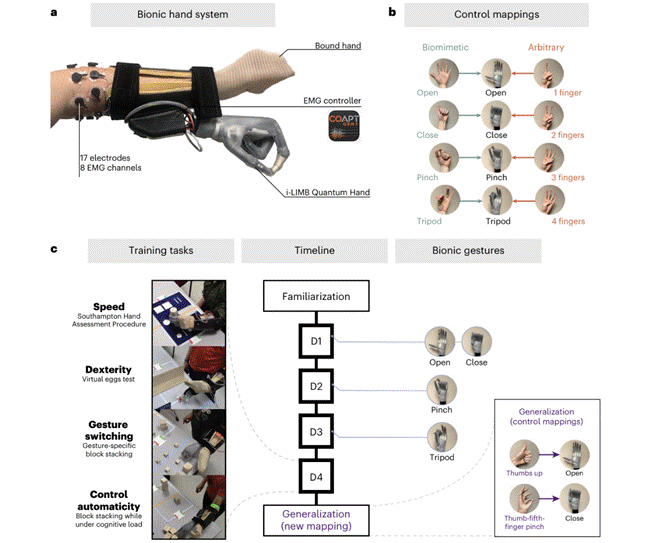
Fig. 6. Experimental design of the study. a, Bionic hand system attached to the participant’s left arm. The i-LIMB Quantum bionic hand is controlled by a Coapt pattern-recognition controller (Coapt, Complete Control Gen2) using signals from surface EMG electrodes (eight channels) positioned around the muscles of the forearm (for a detailed breakdown of device components, see Methods). The biological hand was bound to minimize visual differences between the two control strategies. b, Biomimetic and arbitrary users calibrated their EMG controller so that specific biological hand gestures would engage specific bionic hand gestures (for the biomimetic strategy, these were matched). c, Experimental design for the trained groups. Left: examples of the training tasks included in a daily training session. Middle: the timeline for each of the study visits. Right: depicts when the bionic hand gestures were introduced to participants in their training (on D1, open and close; D2, pinch; D3, tripod). In the post-training generalization session, all participants (including the untrained participant group) learnt to control the hand using a new set of hand gestures (that is, new mapping). Coapt Gen2 used with the permission of Coapt LLC. [10].
4.2. Interpreting the Findings in the Context of Everyday Function
A possible interpretation of these results is that biomimetic control is unnecessary. When evaluated according to the everyday-functional endpoint used in this review, however, the conclusion is more nuanced.
The principal advantage of biomimetic mapping is its immediate intuitiveness. A user who intends to close the prosthetic hand performs a biologically corresponding action. This relationship may facilitate initial incorporation of the prosthesis into daily activities, reduce early cognitive demand, and limit the amount of specialized training required beyond conventional prosthetic calibration and rehabilitation.
For these reasons, biomimetic mapping remains a reasonable default strategy for a broad population of prosthesis users.
The performance achieved through arbitrary control is nevertheless important. Participants were eventually able to attain comparable performance, and their stronger generalization suggests that learned non-biomimetic mappings may offer advantages when control configurations change.
That benefit, however, emerged after four days of structured, supervised, task-specific training. Furthermore, the experimental configuration used biological movements that would not necessarily remain available after clinical amputation. In real-world application, arbitrary mappings would have to be developed around the residual motor signals available to an individual user.
Arbitrary control is therefore better understood as a strategy that should be paired with individualized rehabilitation, much as other complex motor skills are deliberately trained. Its use may be justified when an individual’s functional requirements, residual anatomy, available signals, and rehabilitation resources support such an approach.
Two limitations of the evidence should also be emphasized. First, the participants were non-disabled and operated an experimental wearable device; therefore, factors including post-amputation cortical reorganization, residual-limb anatomy, pain, and dependence on the prosthesis for daily activities were not represented. Second, the study primarily evaluated motor learning rather than long-term retention or home use.
4.3. The Important Asymmetry
Considering the findings of Sections 3 and 4 together reveals an important distinction.
Biomimicry that reconstructs physical biological relationships—including reciprocal muscle dynamics, skeletal load transmission, and anatomically meaningful sensory stimulation—is associated with substantial and potentially durable benefits. These relationships generally require surgical or biological intervention because software alone cannot recreate them fully.
Biomimicry at the level of control mapping, by contrast, is comparatively inexpensive to implement and appears to offer its strongest advantage in immediate accessibility rather than ultimate performance.
Song and colleagues demonstrated that participants did not require complex biomimetic gait-state programming once a more physiological neuromuscular interface had been restored [8]. Schone and colleagues, conversely, demonstrated that a biomimetic control mapping was not essential for high performance once users had received sufficient training [10].
The practical implication is therefore to prioritize the body-facing interface, use biomimetic control mappings as an intuitive default, and treat arbitrary mappings as individualized, trainable alternatives rather than universal system-level design requirements.
5. Technologies That Should Be Deprioritized for Near-Term Clinical Translation
Two technically advanced research areas considered in this review remain, in the author’s assessment, outside the most direct near-term pathway toward restoring everyday function after limb loss.
5.1. Neuromorphic Bionic Eyes (Fig. 7)
Recent neuromorphic visual devices demonstrate impressive engineering capabilities. Long and colleagues developed a spherical artificial eye combining tunable liquid-crystal optics with a hemispherical perovskite-nanowire retina, achieving filter-free color vision, a field of view greater than 140°, and a focal range extending from approximately 15 cm to infinity [12].
Zhang and colleagues developed a neuromorphic visual sensor capable of photosensitivity across approximately the human-visible 380–740 nm spectrum using a TIPS-pentacene-based phototransistor array and integrated sensing, memory, and processing within a flexible system. [13].
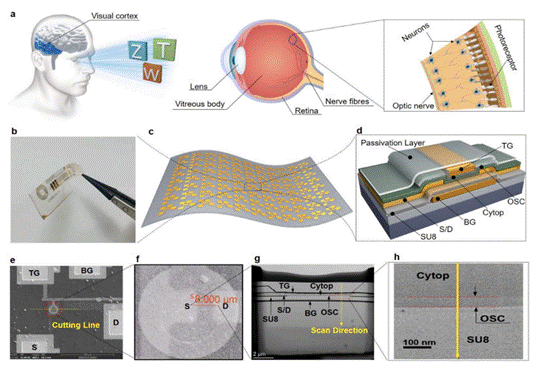
Fig. 7. (a) Schematic illustrations of human visual perception systems, especially the detailed eye bulb, and retinal structure. The role of neurons is to transmit light-dependent signals to the visual cortex. (b) The original photograph of a conformal device array, demonstrating the stretchable and curlable properties. (c) The schematic diagram of fabricated stretchable and curlable device array. (d) The schematic diagram of our dual-gated TFT-based optoelectronic neuromorphic device. “TG”, “BG”, “S” and “D” represent the top gate, bottom gate, source and drain electrodes, respectively. Optical microscopy image of the full optoelectronic neuronic component in a fabricated array. (e, f) Scanning electron microscope (SEM) image of a top view of the whole dual-gated TFT device and focused source/drain area. (g, h) High-resolution cross-sectional transmission electron microscopy (HRTEM) images of the active area and zoom-in of the channel layer, respectively. The red dashed box and yellow line indicate the area and direction of the energy dispersive X-ray (EDX) mapping analysis. [13].
Both systems, however, remain primarily device-level demonstrations. Neither establishes the complete biological interface required for restoring human vision through direct communication with retinal, optic-nerve, or cortical neural populations.
The engineering problem of producing a sensor that encodes optical information is therefore distinct from the neuroprosthetic problem of delivering that information to the human nervous system in a form that produces useful perception. For the specific translational objective considered in this review—near-term restoration of everyday function—these technologies remain less mature than peripheral-limb interfaces.
5.2. Electronic Skin (Fig. 8)
Xu and colleagues developed a self-powered triboelectric electronic skin capable of resolving two-dimensional liquid-sliding trajectories using a co-layer, interlaced branched-electrode network. The system supported applications including flow-direction warning and closed-loop leak control [14].
This represents a significant advance in robotic sensing. As a component of a human bionic limb, however, it faces two major translational challenges.
The first is neural interfacing. A high-density electronic skin may generate large quantities of spatially distributed tactile data, but an established method for delivering information of comparable dimensionality into the peripheral sensory nervous system has not yet been demonstrated in routine clinical use. By contrast, experimentally demonstrated approaches such as pressure or vibration delivered through reinnervated sensory maps operate at substantially lower information bandwidth [6].
The second challenge is functional relevance. Detecting the trajectory of liquid droplets may be valuable for robotic perception, but its direct importance to everyday prosthetic use is less evident. Clinically relevant sensory information may instead include whether contact has occurred, whether an object is slipping, how strongly it is being grasped, and whether it is excessively hot or cold.
The argument is therefore not that electronic-skin research lacks value. Rather, for a research program whose immediate objective is restoration of everyday human function after limb loss, the neural interface currently represents a more direct constraint than the sophistication of the external tactile sensor.
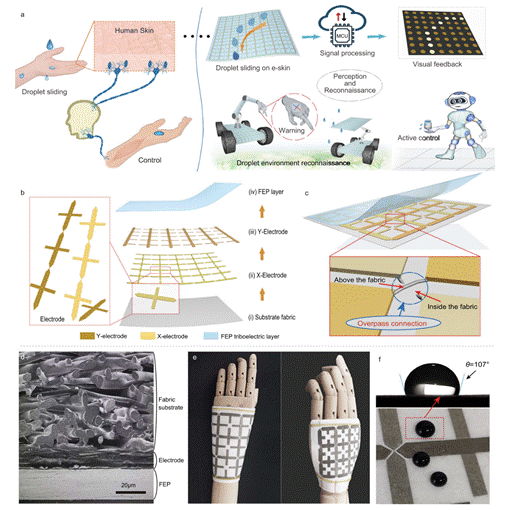
Fig. 8. Design of the self-powered bionic DES. a) Schematic illustration of the human tactile nervous system, and the bionic DES sensing system for droplet environment perception and reconnaissance. b) Detailed structure of the bionic DES. The electrode unit is delicately designed as a branching structure. c) Co-layer interlaced electrode configurations, and enlarged view of overpass connection. d) Scanning electron microscopy (SEM) image of the cross-sectional structure of bionic DES. e) Flexible and curved fit performance. f) Desirable hydrophobic properties of bionic DES. [14].
6. Translation and Reimbursement
A technology that cannot ultimately reach patients cannot meaningfully restore daily function. Regulatory and reimbursement considerations should therefore influence research priorities from the beginning rather than being postponed until a final commercialization stage.
One potential advantage of the surgical-interface approach is that several of its components can be related to clinical categories already recognized within the U.S. healthcare system.
TMR, for example, is used not only to create additional prosthetic-control signals but also to address neuroma-related and phantom-limb pain [3]. This therapeutic indication is important because its clinical value does not depend exclusively on improved prosthetic performance.
Likewise, myoelectric prostheses and powered prosthetic components already exist within established durable-medical-equipment frameworks. Osseointegration has also progressed toward clinical and regulatory use, although access and insurance coverage remain dependent on patient characteristics, indication, institution, payer, and current regulatory status.
By contrast, a fully implanted bidirectional neural prosthetic interface of the degree of integration demonstrated experimentally by Ortiz-Catalan and colleagues [9] is not yet a routinely available commercial prosthetic system in the United States. Such technologies would require appropriate regulatory authorization before widespread reimbursement could become realistic.
This distinction suggests a useful translational design principle: whenever equivalent clinical function can be achieved, a system that combines established clinical procedures with commercially manufactured prosthetic components is likely to have a shorter pathway to widespread patient use than one requiring multiple entirely novel implanted components.
Given the persistent prosthetic-abandonment problem motivating this field, the ability to deliver technology to patients should be considered part of engineering performance rather than merely a downstream commercialization concern.
7. Limitations
This article is a narrative review of fourteen works identified through directed reading rather than a systematic literature search. It does not employ reproducible database-search terms, dual-reviewer screening, formal risk-of-bias assessment, or structured quality appraisal.
Sample sizes in much of the underlying literature are small. The highly integrated clinical system reported by Ortiz-Catalan and colleagues involved one participant [9], the multimodal sensory-feedback demonstration reported by Marasco and colleagues involved two participants [6], and the AMI study by Song and colleagues included seven AMI participants and seven matched comparison participants [8]. The largest study by participant number included 61 non-disabled individuals using an experimental wearable prosthetic hand [10].
The scope decisions presented in Sections 5 and 6 are interpretive positions rather than findings of a systematic comparative analysis. A reviewer who placed greater emphasis on long-term technological potential rather than near-term clinical deliverability could reasonably reach different conclusions regarding neuromorphic visual systems, electronic skin, or experimental neural implants.
Finally, the reimbursement discussion in Section 7 describes broad structural considerations within the U.S. healthcare system and should not be interpreted as a determination of insurance coverage for any particular patient, procedure, or device.
8. Conclusion
The evidence reviewed here supports a specific and relatively narrow answer to the question posed at the outset. Bidirectional interfacing appears to be an important requirement for restoring naturalistic everyday function, and some of its greatest value arises when physiological relationships are reconstructed at the biological interface.
TMR, TSR, AMI, and osseointegration address functions that external hardware alone cannot fully replace. Within the literature reviewed here, an approximately 18% restoration of agonist–antagonist afferent signaling was associated with a 41% increase in maximum walking speed in an AMI cohort [8], while multimodal sensory feedback reduced reliance on continuous visual monitoring during upper-limb prosthetic use [6].
Biomimetic control is necessary in a more limited but still practically important sense. Current evidence does not demonstrate that biomimetic mappings are required to achieve maximum learned performance, because arbitrary mappings can reach comparable performance and may generalize effectively after sufficient training [10]. Biomimetic control nevertheless provides a major accessibility advantage: it offers an intuitive relationship between intent and prosthetic movement and can reduce the amount of specialized learning required at initial fitting.
Arbitrary control should therefore be considered an individualized option that can be deliberately trained when a user’s residual anatomy, functional requirements, and rehabilitation resources justify it, rather than a universal default.
The resulting research priority is not necessarily the invention of an entirely new prosthetic technology but the integration and rigorous evaluation of components that already exist. Systems intended to restore everyday function should combine effective biological interfacing with practical manufactured hardware, be evaluated during prolonged unsupervised home use using outcomes such as comfort, cognitive demand, task performance, and continued wear, and be designed from the beginning with regulatory and reimbursement pathways in mind.
The most clinically valuable bionic limb may therefore not be the system with the greatest theoretical capability, but the system that a patient can obtain, learn to use, wear comfortably, trust, and continue using as part of everyday life.
References
Amin KR. Bionic limb replacement: an evolving concept in lower extremity reconstruction. Plast Aesthet Res. 2022;9:24. doi:10.20517/2347-9264.2021.119.
Freitag K, Laezza R, Zbinden J, Ortiz-Catalan M. Improving bionic limb control through reinforcement learning in an interactive game environment. Presented at: Interactive Learning with Implicit Human Feedback Workshop, 40th International Conference on Machine Learning (ICML); 2023.
Frossard L, Conforto S, Aszmann OC. Editorial: Bionic limb prostheses: advances in clinical and prosthetic care. Front Rehabil Sci. 2022;3:950481. doi:10.3389/fresc.2022.950481.
Pasluosta C, Kiele P, Čvančara P, Micera S, Aszmann OC, Stieglitz T. Bidirectional bionic limbs: a perspective bridging technology and physiology. J Neural Eng. 2022;19(1):013001. doi:10.1088/1741-2552/ac4bff.
Dosen S. Toward self-contained bidirectional bionic limbs with high information throughput. Sci Robot. 2023;8:eadk6086. doi:10.1126/scirobotics.adk6086.
Marasco PD, Hebert JS, Sensinger JW, Beckler DT, Thumser ZC, Shehata AW, Williams HE, Wilson KR. Neurorobotic fusion of prosthetic touch, kinesthesia, and movement in bionic upper limbs promotes intrinsic brain behaviors. Sci Robot. 2021;6:eabf3368. doi:10.1126/scirobotics.abf3368.
Ortiz-Catalan M. Thermally sentient bionic limbs. Nat Biomed Eng. 2024;8(8):938–940. doi:10.1038/s41551-023-01174-3.
Song H, Hsieh TH, Yeon SH, Shu T, Nawrot M, Landis CF, et al. Continuous neural control of a bionic limb restores biomimetic gait after amputation. Nat Med. 2024;30(7):2010–2019. doi:10.1038/s41591-024-02994-9.
Ortiz-Catalan M, Zbinden J, Millenaar J, D’Accolti D, Controzzi M, Clemente F, et al. A highly integrated bionic hand with neural control and feedback for use in daily life. Sci Robot. 2023;8:eadf7360. doi:10.1126/scirobotics.adf7360.
Schone HR, Udeozor M, Moninghoff M, Rispoli B, Vandersea J, Lock B, et al. Biomimetic versus arbitrary motor control strategies for bionic hand skill learning. Nat Hum Behav. 2024;8(6):1108–1123. doi:10.1038/s41562-023-01811-6.
Cho Y, Jeong HH, Shin H, Pak CJ, Cho J, Kim Y, et al. Hybrid bionic nerve interface for application in bionic limbs. Adv Sci (Weinh). 2023;10(35):e2303728. doi:10.1002/advs.202303728.
Long Z, Qiu X, Chan CLJ, Sun Z, Yuan Z, Poddar S, et al. A neuromorphic bionic eye with filter-free color vision using hemispherical perovskite nanowire array retina. Nat Commun. 2023;14:1972. doi:10.1038/s41467-023-37581-y.
Zhang H, Ju X, Chi D, Feng L, Liu Z, Yew K, et al. A neuromorphic bionic eye with broadband vision and biocompatibility using TIPS-pentacene-based phototransistor array retina. Appl Mater Today. 2023;33:101885. doi:10.1016/j.apmt.2023.101885.
Xu Y, Sun Z, Bai Z, Shen H, Wen R, Wang F, et al. Bionic e-skin with precise multidirectional droplet-sliding sensing for enhanced robotic perception. Nat Commun. 2024;15:6022. doi:10.1038/s41467-024-50270-8.
About the author

Vasisht Batchu
Vasisht Batchu is an ambitious and highly motivated student at Newark Academy with a deep commitment to mechanical engineering, mechatronics, and computer science. His research and practical work focus on robotic locomotion, biomimetics, and affordable prosthetic research through his founding and running of the 3D-Printing club at his school over the last 2 years. He uses 3D-printing to transform innovative ideas into practical solutions for everyday use, educating his peers and helping others along the way. He has manufactured and sent multiple upper limb prostheses to recipients in Uganda. An award-winning International Competition team leader and runner-up driver for 4+ years in 3 different teams with Worlds Qualifications, Vasisht utilizes CAD software to manufacture innovative robotic systems, programs advanced control algorithms in C++, and leads the operation and communication of the team. These experiences bolster his ability to solve complex issues, cooperate effectively, and adhere to a high pressure timeline. Alongside his primary focus on biomechatronics and physics, he is equally driven by his enthusiasm for aerospace, having built and piloted custom FPV aircraft. Dedicated to STEM education, he actively teaches C++ and CAD to children in his community, developing his own curriculums, and has volunteered at over 15 local robotics events for elementary and middle school students, inspiring students to pursue engineering. Vasisht has also spent time working for his family business SSK Exports Ltd. in Kolkata, India as an Inventory Management Specialist, using his programming knowledge to build efficiency and save 1 full day of work in the company weekly. Now, he helps to expand operations to the US through Chai Chini Co. Outside the lab, Vasisht is an avid jazz trombone player, having competed at the international 2025 Essentially Ellington Festival. With the same dedication to music as to his studies and STEM career, he aided the band to place 5th.